
How high should you mow your grass?
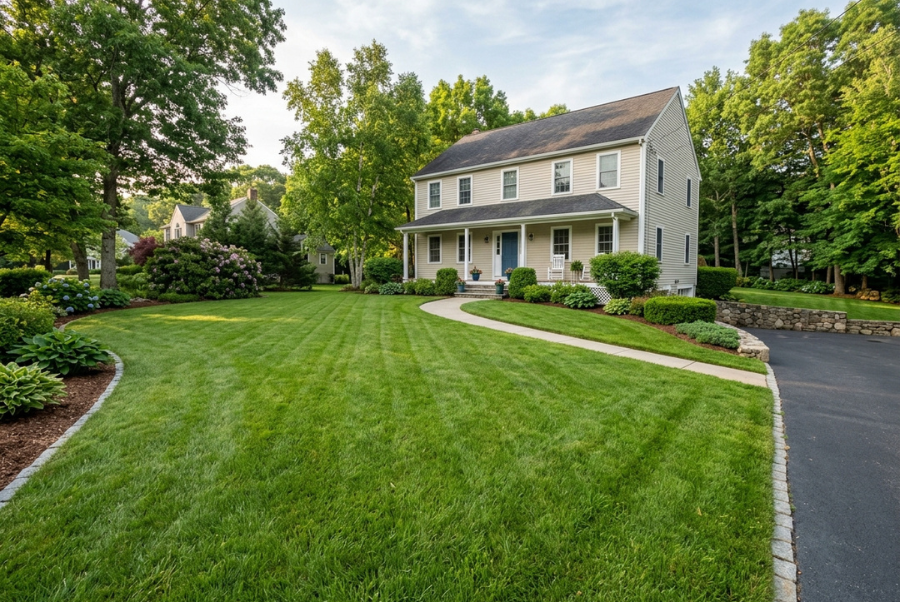
There is no single mowing height that works equally well for every lawn. The optimal mowing height depends largely on the type of grass growing in the lawn, along with site and growing conditions.
For homeowners in Rhode Island and throughout New England, cool-season turfgrasses such as Kentucky bluegrass, perennial ryegrass, fine fescues, and tall fescue are common choices for residential lawns. Many of these grasses are generally maintained within a range of about 2½ to 3½ inches, although specific recommendations can vary by turfgrass and conditions.
The goal is not simply to make the lawn as short as possible.
The goal is to maintain an appropriate height that leaves enough leaf area for the grass to remain healthy while providing a practical and attractive lawn.
Why Does Mowing Height Matter?
Mowing height affects more than the appearance of a lawn.
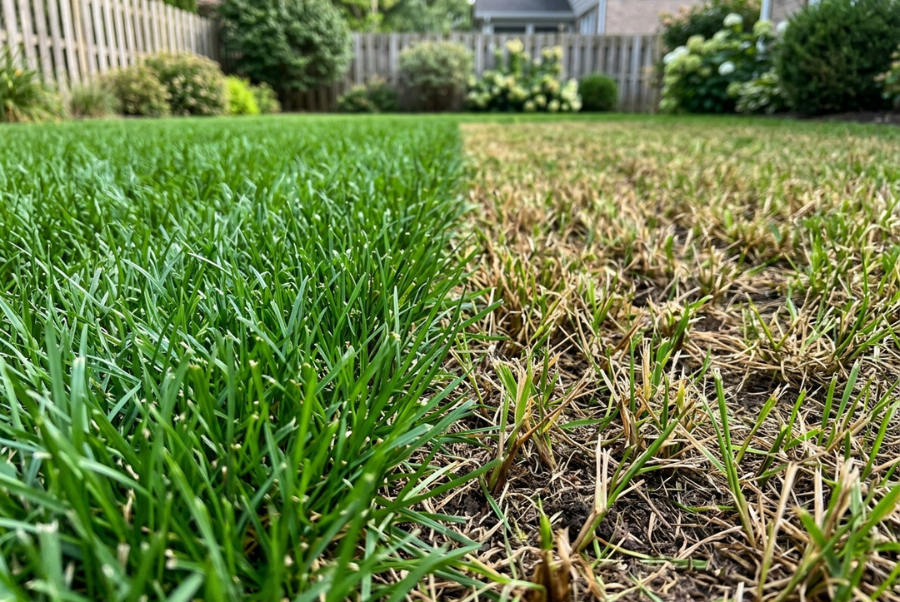
Grass leaves capture sunlight and support photosynthesis. When too much leaf tissue is removed, the plant has less leaf area available to support growth.
Mowing height also affects turf characteristics such as leaf area, shoot density, and the relationship between shoots and roots. Maintaining the higher end of an acceptable range can be beneficial when conditions, turf species, site, and use allow it.
Maintaining an appropriate height can help a lawn:
- Retain adequate leaf area
- Support healthy growth
- Maintain turf density
- Handle environmental stress
- Compete with weeds
- Maintain a consistent appearance
Mowing height also has a relationship with root development. Lower cutting heights can result in shorter and less-developed root systems.
That is why setting the mower as low as possible is not automatically better for the lawn.
What Is the Recommended Mowing Height for Common Cool-Season Grasses?
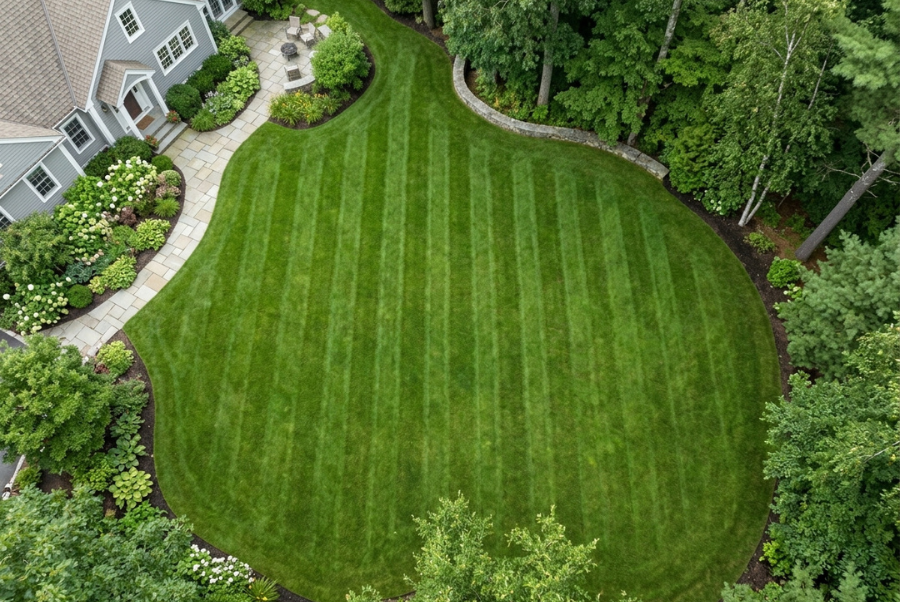
For many cool-season residential lawns, mowing height generally falls between 2½ and 3½ inches. Tall fescue is commonly maintained around 3 to 3½ inches.
The following ranges provide useful general guidelines for established lawns.
Mowing Height Guide for Common Cool-Season Grasses
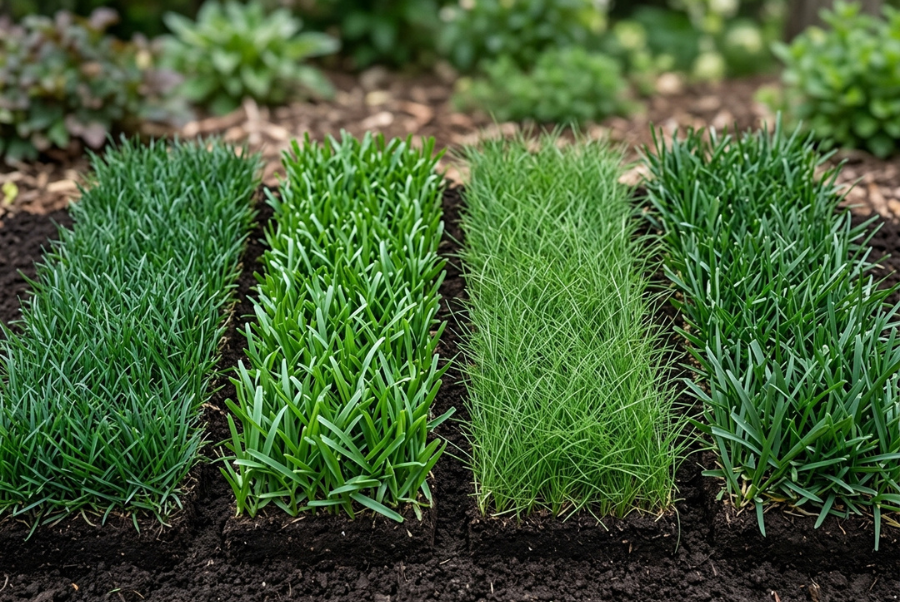
| Cool-Season Grass Type | General Mowing Height | Key Consideration |
| Kentucky bluegrass | 2½–3½ inches | Maintain within the appropriate range for the cultivar and growing conditions |
| Perennial ryegrass | 2½–3½ inches | Height can vary with cultivar and growing conditions |
| Fine fescues | 2½–3½ inches | Appropriate height depends on species, cultivar, and site conditions |
| Tall fescue | 3–3½ inches | Commonly maintained around this range |
These are general guidelines rather than universal rules. Specific cultivars, site conditions, intended use, and environmental conditions can affect the appropriate mowing height.
Kentucky Bluegrass
General mowing-height range: 2½ to 3½ inches.
Kentucky bluegrass is a common cool-season turfgrass used in northern regions.
For many residential lawns, maintaining Kentucky bluegrass within this range provides a practical balance between lawn appearance and turf health.
The best setting can still vary depending on the cultivar and growing conditions.
Perennial Ryegrass
General mowing-height range: 2½ to 3½ inches.
Perennial ryegrass is another cool-season turfgrass used in lawns throughout the Northeast.
The important consideration is to maintain the grass within an appropriate mowing-height range for the turfgrass and growing conditions.
Fine Fescues
General mowing-height range: 2½ to 3½ inches.
Fine fescues include grasses such as creeping red fescue, Chewings fescue, and hard fescue.
Tall Fescue
General mowing-height range: 3 to 3½ inches.
Tall fescue is commonly maintained somewhat higher than the lower end of the mowing range used for some other cool-season grasses.
For many residential tall fescue lawns, the upper portion of the acceptable range is a useful starting point.
Does a Higher Mowing Height Always Mean a Healthier Lawn?
Not necessarily.
The goal is to stay within an appropriate range for the grass rather than assuming that taller is always better.
Using the higher end of an acceptable range can help maintain greater leaf area when conditions allow. However, the correct height still depends on the turfgrass.
For example, tall fescue is commonly maintained around 3 to 3½ inches, while Kentucky bluegrass, perennial ryegrass, and fine fescues generally have a broader range around 2½ to 3½ inches.
The objective is appropriate height, not simply maximum height.
What Happens When Grass Is Mowed Too Short?
Cutting grass below its appropriate range can create unnecessary stress.
One concern is reduced leaf area. When less leaf tissue remains after mowing, the plant has less surface area available for photosynthesis.
Mowing too low can also reduce plant vigor and contribute to shorter, less-developed root systems.
Scalping Warning: Mowing cool-season turf below its appropriate height removes too much leaf tissue at once. This can reduce the plant’s photosynthetic capacity, weaken turf vigor, and contribute to shorter, less-developed root systems.
Maintaining grass too short can therefore contribute to:
- Reduced leaf area
- Reduced plant vigor
- Shorter root systems
- Greater dependence on available water and nutrients
- Increased vulnerability to environmental stress
- Thinner or less resilient turf
A lawn that looks freshly cut after being mowed very short is not necessarily a lawn that is being maintained at its healthiest height.
Why Does Grass Type Affect the Recommended Height?
Grass species have different growth characteristics and management requirements.
That is why homeowners should identify the grass before choosing a mowing height.
For example:
- Kentucky bluegrass generally falls within a 2½- to 3½-inch range.
- Perennial ryegrass generally falls within a 2½- to 3½-inch range.
- Fine fescues generally fall within a 2½- to 3½-inch range.
- Tall fescue is commonly maintained around 3 to 3½ inches.
The recommended height should therefore be based on the turfgrass rather than simply copying the mower setting used on another lawn.
For a broader look at mowing practices, see our guide to lawn mowing techniques. For grass-specific approaches, see lawn mowing methods by grass type.
How Can You Tell If Your Mowing Height Is Appropriate?
Start by identifying the dominant grass growing in the lawn.
Then consider:
- Identify the dominant grass type.
- Check the recommended mowing-height range.
- Set the mower within the appropriate range.
- Favor the higher end when conditions and the turf allow it.
- Observe how the lawn responds over time.
The mower’s height setting should be based on the needs of the turf rather than simply on how short the lawn should look.
If the lawn repeatedly appears stressed or thin after mowing, the mowing height may deserve closer attention along with the property’s other lawn-care conditions.
If you’re unsure what type of grass you have, Penn State Extension’s cool-season turfgrass identification guide can help you compare common turfgrass characteristics.
What Is the Best Mowing Height for Rhode Island Lawns?
For homeowners in Coventry and throughout Rhode Island, cool-season turfgrass is the most relevant context.
For many established cool-season lawns in Rhode Island, a general starting range is about 2½ to 3½ inches, while tall fescue is commonly maintained around 3 to 3½ inches.
However, there is no single Rhode Island mowing height that applies to every lawn.
The appropriate height depends on the turfgrass, cultivar, site conditions, and condition of the lawn.
Homeowners who are unsure what type of grass they have can benefit from identifying the turfgrass before changing the mower setting.
Common Mowing-Height Questions
What is the best height to mow grass?
For many cool-season residential lawns, a general mowing range is 2½ to 3½ inches. Tall fescue is commonly maintained around 3 to 3½ inches. The appropriate height depends on the grass type and growing conditions.
Is it better to mow grass high or low?
It is generally better to maintain grass within an appropriate range for its species rather than choosing the lowest possible mower setting. Maintaining sufficient leaf area can support turf health.
What happens if you mow grass too short?
Mowing too short reduces the amount of leaf area remaining on the plant and can contribute to reduced vigor and shorter root systems. The lawn may also become less capable of handling environmental stress.
What height should tall fescue be mowed?
Tall fescue is commonly maintained around 3 to 3½ inches. Individual cultivars and site conditions can affect the appropriate height.
What height should Kentucky bluegrass be mowed?
A commonly recommended range for Kentucky bluegrass is 2½ to 3½ inches. The exact setting can depend on the cultivar and growing conditions.
What height should perennial ryegrass be mowed?
Perennial ryegrass is generally maintained around 2½ to 3½ inches for residential turf, although specific conditions and cultivars can affect the appropriate height.
What height should fine fescue be mowed?
Fine fescues generally fit within the 2½- to 3½-inch range used for many cool-season lawns. The appropriate setting can vary depending on the species, cultivar, and site.
Key Takeaways
The optimal mowing height is not simply the shortest height that produces a freshly cut appearance.
It should be based on the grass growing in the lawn and the conditions affecting that turf.
For many cool-season lawns in Rhode Island and the Northeast:
- Kentucky bluegrass: 2½–3½ inches
- Perennial ryegrass: 2½–3½ inches
- Fine fescues: 2½–3½ inches
- Tall fescue: 3–3½ inches
These ranges provide useful starting points, but individual cultivars and site conditions can affect the best setting.
The most important takeaway is simple:
Do not choose a mowing height based only on how short you want the lawn to look. Choose a height appropriate for the grass you are maintaining.
For homeowners who are unsure what grass they have or have difficulty maintaining a consistent mowing height, professional lawn care can provide a practical alternative.
Maintaining the Right Mowing Height in Coventry, RI
For homeowners in Coventry, RI, maintaining the right mowing height can be an important part of keeping cool-season turf healthy and attractive throughout the growing season.
The appropriate height still depends on the grass type and the conditions of the lawn, but maintaining a consistent height can help homeowners avoid unnecessary stress from cutting the turf too aggressively.
Doug Greenwood Landscaping Co. provides Lawn Care & Maintenance services that include lawn mowing and trimming, along with aeration, overseeding, fertilization, weed control, and irrigation system maintenance. The company emphasizes personalized service, communication, reliability, and quality workmanship, backed by more than 55 years of landscaping experience.
Doug Greenwood Landscaping Co.
33 Carr St
Coventry, RI 02816
Phone: (401) 441-9580
Need Help Maintaining Your Lawn?
If keeping your lawn at the right mowing height has become difficult to manage, Doug Greenwood Landscaping Co. can help with consistent lawn care and maintenance.
Schedule a consultation to discuss your property and lawn-care needs.
Related Lawn Mowing Resources
- What Is Lawn Mowing and Why Is It Important?
- What Are the Best Lawn Mowing Techniques for a Healthier Lawn?
- Which Lawn Mowing Methods Work Best for Different Grass Types?
- What Lawn Mowing Mistakes Can Damage Your Lawn?