
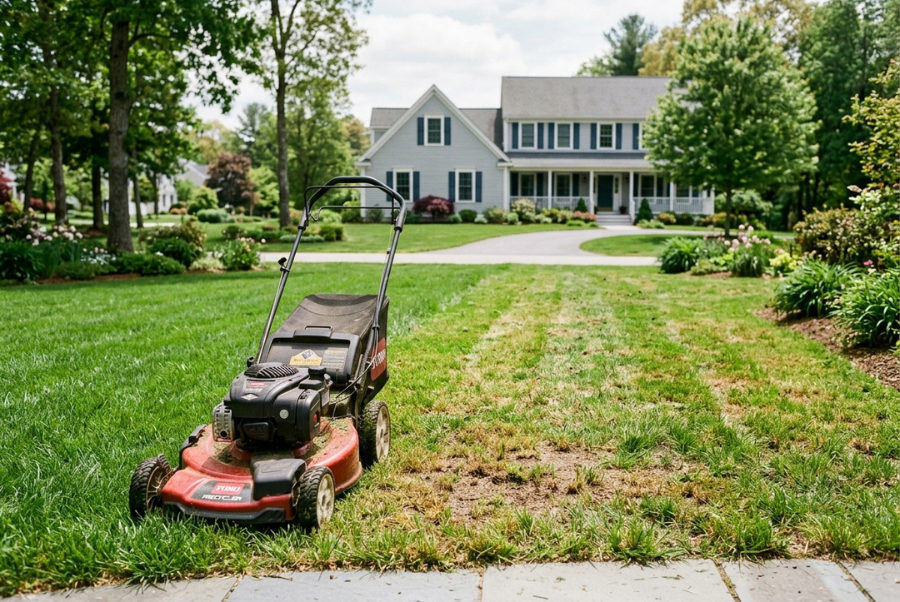
Regular mowing is one of the most basic parts of lawn care, but simply cutting the grass on a regular schedule does not guarantee a healthy lawn.
The way grass is cut can affect how well it grows and how well it handles stress. Cutting too much at once, mowing too short, using dull blades, or mowing when conditions are unfavorable can all create problems that become visible over time.
For homeowners who handle their own lawn care, knowing the most common lawn mowing mistakes can help prevent unnecessary stress and keep the lawn looking more consistent.
How Can Improper Lawn Mowing Damage Grass?
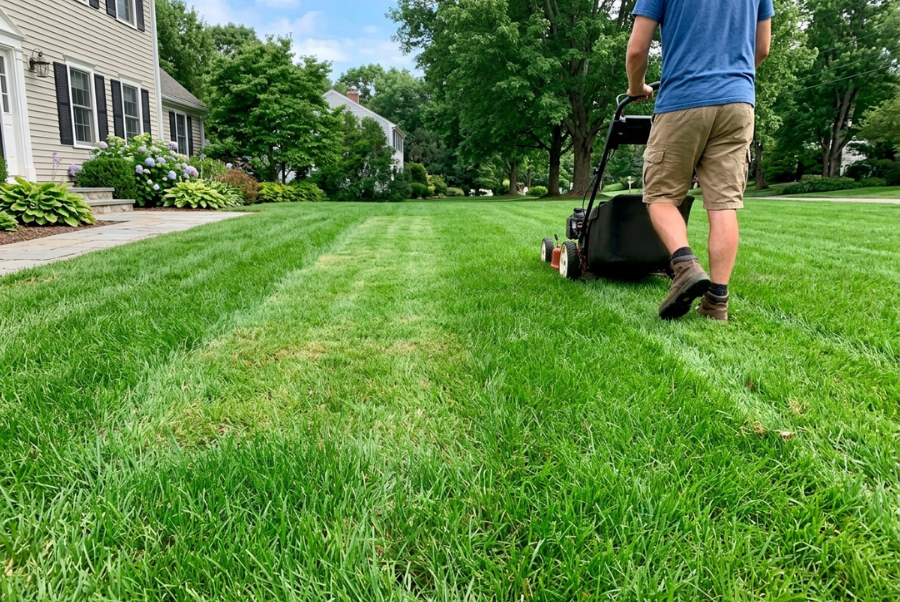
Grass needs enough leaf tissue to continue growing and enough healthy growth to recover after mowing. When mowing removes too much of the plant at once, the lawn may have a harder time recovering.
The 1/3 Rule: Avoid removing more than one-third of the grass blade during a single mowing. Cutting substantially more can increase plant stress and make recovery more difficult.
Mowing practices also need to account for grass type, growing conditions, and the current condition of the lawn.
That makes the following mistakes particularly important.
1. Cutting the Grass Too Short
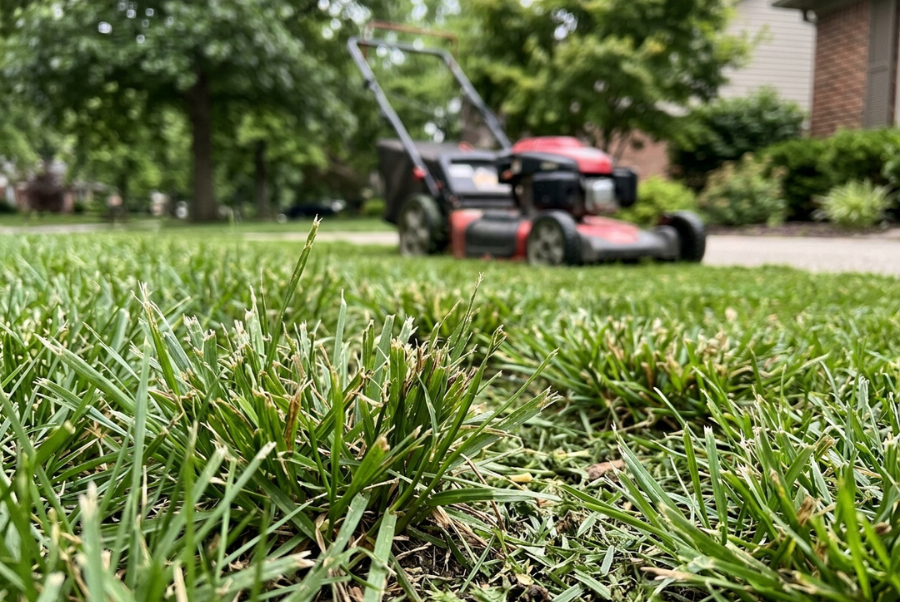
One of the most common lawn mowing mistakes is setting the mower too low.
Cutting grass extremely short, sometimes called scalping, removes a large portion of the leaf surface and can stress the plant. Low mowing can also weaken grass and reduce its ability to tolerate environmental stress.
The appropriate mowing height depends on the type of grass, so learning how to set the optimal mowing height can help homeowners avoid cutting too aggressively.
2. Removing Too Much Grass at Once
Letting the lawn grow too tall and then cutting it dramatically can create another problem.
The one-third rule is a useful guideline: avoid removing more than one-third of the grass blade during a single mowing. If a lawn has become significantly overgrown, cutting it back to the desired height all at once can remove too much leaf tissue and stress the plants.
For example, if you normally maintain a lawn at a certain height, allowing it to become substantially taller before mowing can make the next mowing more aggressive than it should be.
Regular mowing during active growth helps prevent this situation.
3. Ignoring the Type of Grass You Have
Not every lawn should be mowed exactly the same way.
Different turfgrass species have different preferred mowing heights and growth characteristics. Tall fescue, Kentucky bluegrass, fine fescue, zoysia, and Bermudagrass, for example, do not all have the same recommended mowing ranges.
This means a mower setting that works well for one lawn may not be appropriate for another.
Before choosing a mowing height or routine, identify the grass growing in your lawn and learn more about mowing methods by grass type.
4. Using Dull Mower Blades
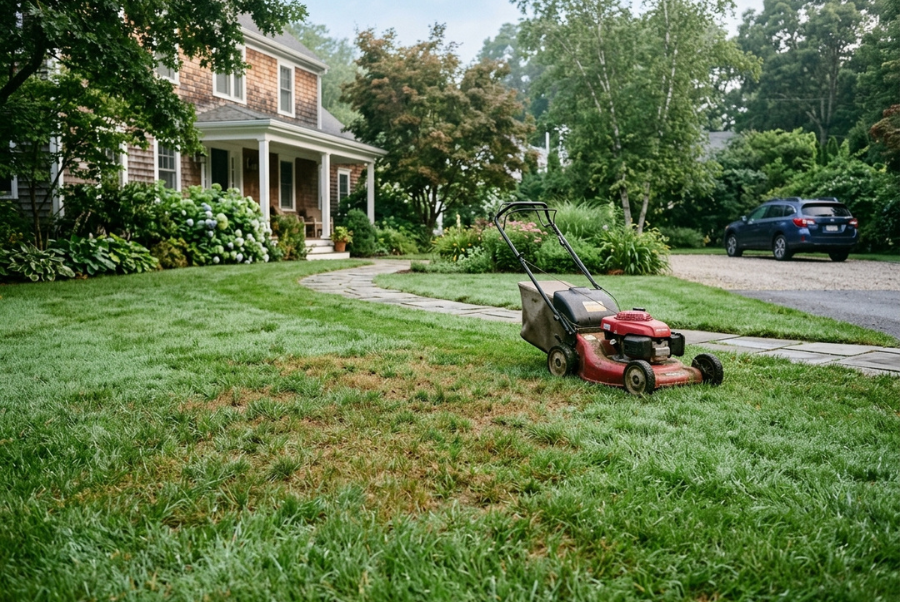
A mower blade should cut grass cleanly rather than tearing or shredding it.
Dull blades can leave grass with ragged or damaged ends instead of a clean cut. They can also contribute to a less consistent appearance after mowing.
A simple visual clue can be the appearance of the grass after mowing. If the lawn consistently looks unevenly cut or the ends of the blades appear torn rather than cleanly cut, the mower blade may need attention.
Keeping equipment maintained is therefore part of maintaining the lawn itself. Rhode Island homeowners can also find lawn-care recommendations through the Rhode Island Department of Environmental Management
5. Mowing When the Lawn Is Wet or Under Severe Stress
Timing matters.
It is generally better to wait until the lawn is dry before mowing, particularly when the grass is already under stress. Growth rate varies with grass type and environmental conditions, so mowing should respond to how the lawn is actually growing rather than following a rigid schedule.
During periods of drought, extreme heat, or other unfavorable conditions, the lawn may need to be treated differently from one that is actively growing under favorable conditions.
Rather than mowing simply because a certain number of days have passed, pay attention to the condition and growth of the grass. This is especially important in Rhode Island, where seasonal conditions can affect how lawns grow and how much care they need. The University of Rhode Island’s healthy lawn care guidance offers additional information for maintaining lawns in the local environment.
6. Waiting Too Long Between Mowings
Infrequent mowing can create a cycle where too much grass has to be removed during the next cut.
When grass grows substantially taller between mowings, the next mowing may remove more leaf tissue than recommended. Allowing grass to become too tall and then removing excessive leaf surface can result in plant stress, dried-out leaf tips, and reduced grass health.
The right mowing frequency is not necessarily a fixed number of days.
Growth depends on factors such as grass species, season, temperature, moisture, and fertility. During periods of rapid growth, a lawn may need to be mowed more frequently.
7. Mowing in the Same Direction Every Time
Mowing patterns are another part of good lawn management.
Repeatedly traveling in exactly the same direction can create a repetitive traffic pattern and encourage the grass to grow in the same orientation. Changing direction from one mowing to the next can help vary the mowing pattern and create a more intentional appearance.
This does not mean homeowners need to create elaborate stripes every time they mow. The important point is to avoid treating the same mowing path as the only possible route. Learn more about lawn mowing patterns.
8. Treating Every Part of the Lawn Exactly the Same
A lawn may look like one continuous area, but growing conditions can vary across the property.
One section may receive full sun while another remains shaded. Some areas may dry out faster, while others retain more moisture. Slopes and uneven ground can also affect how the mower cuts the grass.
Using the same mowing approach across every part of the lawn can increase the risk of cutting some areas too aggressively. Uneven ground, for example, can cause the mower blade to cut elevated sections much shorter than intended.
Paying attention to these differences can help homeowners avoid applying the same mowing approach everywhere.
What Are the Signs That Mowing Is Stressing Your Lawn?
Mowing problems do not always appear immediately.
Instead of looking for one definite symptom, homeowners can look for changes in the lawn that may indicate a mowing problem.
| What You Notice | Possible Mowing Issue |
| Ragged or torn-looking grass tips | Dull mower blades |
| Grass cut noticeably shorter in some areas | Uneven ground or mower set too low |
| Brown or dried-looking tips after mowing | Grass may have been cut too aggressively |
| Thinning or stressed-looking turf | Mowing height, frequency, or timing may need review |
These signs do not automatically mean mowing is the cause. If they repeatedly appear after mowing, review the mowing height, frequency, equipment condition, and timing.
How Can Homeowners Avoid Common Lawn Mowing Mistakes?
A few simple habits can make mowing more consistent:
- Avoid cutting more than one-third of the grass blade at a time.
- Use a mowing height appropriate for the grass type.
- Keep mower blades sharp.
- Avoid mowing when the lawn is wet or under severe stress.
- Mow often enough to prevent excessive growth between cuts.
- Change mowing direction periodically.
- Pay attention to uneven areas of the property.
- Adjust your approach based on seasonal and growing conditions.
These practices do not require complicated lawn-care equipment. They mainly require paying attention to how the lawn is growing and how the mower is being used.
When Does Lawn Mowing Become Difficult to Manage Yourself?
For some homeowners, the problem is not knowing how to mow correctly. It is finding the time and maintaining the consistency required to do it.
A larger property, rapid seasonal growth, limited free time, or the ongoing responsibility of maintaining equipment can make regular mowing difficult.
In those situations, homeowners may want to compare DIY and professional lawn mowing before deciding how to handle regular maintenance.
The decision ultimately depends on the size of the property, available time, equipment, and expectations.
Frequently Asked Questions About Lawn Mowing Mistakes
Can mowing too short damage a lawn?
Yes. Cutting grass too short can stress the plants and weaken their ability to tolerate environmental conditions.
How much grass should you remove when mowing?
A common recommendation is to remove no more than one-third of the grass blade during a single mowing. This helps avoid excessive stress from removing too much leaf tissue at once.
Can dull mower blades damage grass?
Dull blades can tear or shred grass instead of making a clean cut. This can leave ragged, brown-tipped grass and contribute to an uneven appearance.
Does grass type affect how you should mow?
Yes. Different turfgrass species have different recommended mowing heights and growth characteristics. Mowing practices should be adjusted according to the type of grass in the lawn.
Should you mow when the grass is wet?
It is generally better to wait until the lawn is dry. Wet conditions can make mowing more difficult and may affect the quality of the cut.
How do I know if my mowing habits are stressing my lawn?
Look for recurring signs such as excessive browning after mowing, scalped areas, thinning turf, or grass that struggles to recover. If these problems continue, review your mowing height, frequency, equipment, and timing.
Key Takeaways
Good lawn mowing is about more than keeping the grass short.
The biggest mistakes are often simple ones: cutting too much at once, mowing too short, using dull blades, waiting too long between cuts, mowing under poor conditions, or ignoring the characteristics of the grass itself.
A consistent mowing routine that matches the lawn’s growing conditions can help reduce unnecessary stress and maintain a healthier, more attractive lawn.
For homeowners who do not have the time, equipment, or desire to handle regular mowing themselves, professional lawn maintenance can also be an option worth considering.
Need Help Keeping Your Lawn Properly Maintained?
Avoiding common mowing mistakes is one part of keeping a lawn healthy and well-maintained. If you don’t have the time, equipment, or consistency to handle regular lawn care yourself, professional maintenance can make the job easier.
Doug Greenwood Landscaping Co. provides personalized lawn care and maintenance for homeowners and properties in Coventry, RI.
Doug Greenwood Landscaping Co.
33 Carr St
Coventry, RI 02816
(401) 336-6032
Ready to Take the Work Out of Lawn Maintenance in Coventry, RI?
If your lawn needs consistent mowing and maintenance, talk with Doug Greenwood Landscaping Co. about your property and what you need.