

A freshly mowed lawn can look very different depending on the pattern left behind.
Straight lines can give a property a clean, orderly appearance. Diagonal lines can create a more dynamic look, while alternating directions can produce visible stripes across the turf. These effects can make a well-maintained lawn look more intentional and contribute to the overall curb appeal of a property.
Lawn mowing patterns are primarily about how the lawn looks after mowing. They do not replace the basic mowing practices needed to maintain healthy turf.
If your goal is to make your lawn look more polished, understanding how different mowing patterns work can help you choose an appearance that fits your property.
What Is a Lawn Mowing Pattern?
A lawn mowing pattern is the visual arrangement created by the direction of the mower’s passes across the lawn.
Instead of viewing mowing as simply cutting grass, think of each pass as creating a line or visual direction across the turf. When those directions are consistent, they can create recognizable patterns.
Common examples include:
- Straight lines
- Alternating stripes
- Diagonal lines
- Checkerboard patterns
- Border-and-interior mowing patterns
The pattern you choose can affect how formal, casual, simple, or distinctive the lawn looks.
The focus here is the visual effect of mowing patterns and how they can influence the appearance of a property.
Why Do Mowing Patterns Create Stripes?
The stripes visible on some lawns are primarily a visual effect created by the direction of the grass blades.
When grass is mowed in one direction, the blades can lean in that direction. When an adjacent section is mowed in the opposite direction, the blades can reflect light differently.
This can make one section appear lighter while the neighboring section appears darker.
The result is the familiar striped appearance seen on some carefully mowed lawns.
The strength of the effect can vary depending on the lawn and viewing conditions. The important point is that the stripes come from differences in the visual direction of the grass rather than from adding a separate treatment to the lawn.
5 Lawn Mowing Patterns That Can Improve Curb Appeal
Different patterns create different visual impressions. The best choice depends on the shape of the lawn and the overall appearance you want.
1. Straight-Line Pattern
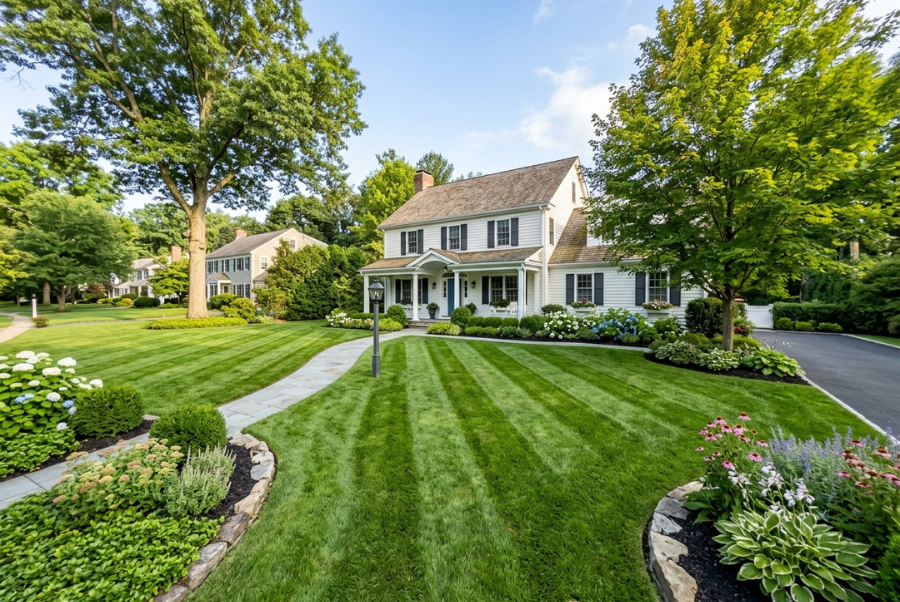
Straight lines are one of the simplest ways to create a neat lawn appearance.
The mower travels in parallel passes across the lawn, creating a series of consistent lines.
This pattern works well when you want the lawn to look:
- Clean
- Orderly
- Traditional
- Well maintained
Straight lines can be especially effective on open front lawns where the mowing pattern is easily visible from the street.
2. Alternating Stripe Pattern

Alternating stripes are created when adjacent mowing passes run in opposite directions.
Because the grass blades can lean differently from one pass to the next, the lawn may show alternating light and dark bands.
This can give the lawn a more noticeable finished appearance without requiring an elaborate design.
Alternating stripes can work particularly well when:
- The lawn has a relatively open layout
- Long mowing passes are possible
- The homeowner wants visible striping
- The lawn is an important part of the property’s front-facing appearance
3. Diagonal Pattern
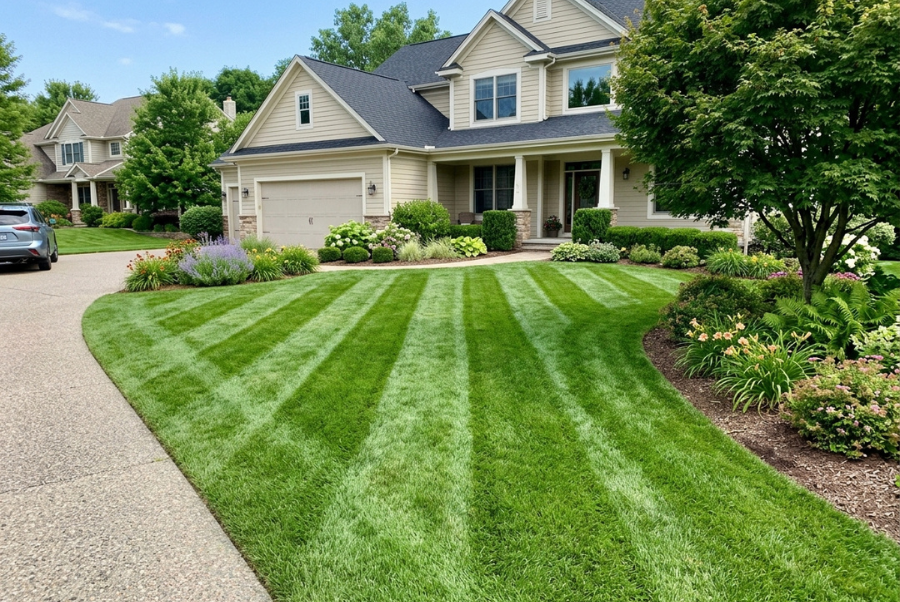
A diagonal pattern changes the visual direction of the lawn by creating lines that run across the property at an angle.
Instead of looking straight across the lawn from one side to the other, the eye follows the diagonal lines.
This can create a more dynamic appearance and may work well on larger, open sections of lawn.
A diagonal pattern can also make the lawn look visually different without introducing a complicated geometric design.
4. Checkerboard Pattern
A checkerboard effect combines two sets of contrasting mowing directions to create a more pronounced geometric appearance.
The intersecting lines can produce a stronger visual effect than simple straight lines or stripes.
This pattern is more visually dramatic, so it may be best suited to homeowners who specifically want the lawn pattern to stand out.
Because the effect depends on consistent lines and sufficient open space, it may be easier to achieve on a lawn with a relatively simple layout.
5. Border-and-Interior Mowing Pattern
A border-and-interior approach combines a defined perimeter with a consistent pattern across the main lawn area.
The border can help visually separate the lawn from features such as:
- Driveways
- Walkways
- Garden beds
- Property edges
- Other landscape areas
The interior can then use straight, striped, or diagonal lines.
This approach can create a more finished appearance when the lawn is part of a larger landscape design.
Which Lawn Mowing Pattern Looks Best?
There is no single pattern that looks best on every property.
The right choice depends on the lawn’s shape, visibility, surrounding landscape, and the style you want to create.
| Pattern | Visual Effect | Best Fit |
| Straight lines | Clean and traditional | Open residential lawns |
| Alternating stripes | Defined and noticeable | Lawns where striping is desired |
| Diagonal lines | Dynamic and distinctive | Open lawn areas |
| Checkerboard | Bold and geometric | Feature lawns |
| Border + interior | Finished and defined | Lawns surrounded by landscape features |
For many residential properties, simple straight lines are enough.
A more elaborate pattern is not automatically better. The goal is to create a visual effect that complements the property rather than distracting from the rest of the landscape.
How Do You Choose a Mowing Pattern for Your Lawn?
Before choosing a pattern, look at the lawn as part of the entire property.
Consider the Shape of the Lawn
A rectangular or open lawn may make long, straight passes easier to establish.
An irregular lawn may not provide enough uninterrupted space for a complicated pattern.
The pattern should follow the natural layout of the property rather than forcing the lawn into an unsuitable design.
Consider What Is Visible From the Street
Front lawns often contribute significantly to curb appeal because they are one of the first parts of the property people see.
If the lawn is highly visible from the street, consistent lines or stripes may have a stronger visual impact.
A backyard that is primarily viewed from the house may call for a different approach.
Consider Landscape Features
Trees, planting beds, walkways, driveways, and other features can interrupt mowing lines.
A pattern should work visually with those elements.
For example, a straight-line pattern may complement formal landscape beds, while diagonal lines may create a more dynamic appearance across a large open area.
Consider the Overall Style of the Property
The mowing pattern should complement the property’s existing appearance.
A simple pattern may suit a traditional residential landscape.
A stronger geometric pattern may work when the homeowner wants the lawn itself to become a more noticeable visual element.
What Makes a Lawn Mowing Pattern Look Clean?
A mowing pattern generally looks better when the lines appear deliberate and consistent.
The goal is not necessarily to create the most complicated design.
Instead, focus on the visual qualities that make a pattern recognizable:
- Consistent lines
- Even spacing
- A clear direction
- A pattern that fits the lawn’s shape
- A design that works with surrounding landscape features
If the pattern becomes difficult to recognize because the lawn contains too many obstacles or changes in direction, a simpler design may produce a better result.
Should You Change Your Lawn Mowing Pattern?
Changing the pattern occasionally can give the lawn a different visual appearance and create different striping effects. For example, a lawn that normally has horizontal lines could later have vertical or diagonal lines.
The reason to change the pattern in this context is visual variation, rather than general lawn-health management.
Changing the pattern can:
- Give the lawn a refreshed appearance
- Prevent the property from looking visually repetitive
- Create different striping effects
- Allow homeowners to compare different patterns
Common Lawn Mowing Pattern Mistakes
A pattern can lose its visual impact when the design does not match the property.
Choosing a Pattern That Does Not Fit the Lawn
A complicated design may not work well on a small or irregular lawn.
The available space should determine how simple or elaborate the pattern can be.
Creating Inconsistent Lines
Lines that wander significantly can make the pattern look accidental rather than intentional.
Consistency is more important than complexity.
Ignoring the Surrounding Landscape
A mowing pattern should complement the rest of the property.
If the pattern conflicts visually with garden beds, walkways, or other landscape elements, it may not improve the overall appearance.
Overcomplicating the Design
A homeowner does not need a checkerboard or diagonal pattern simply because it is more noticeable.
A clean, simple pattern can often provide stronger curb appeal than an elaborate design that does not suit the property.
Treating Stripes as a Sign of Lawn Health
Visible stripes are primarily a visual effect.
A striped lawn is not automatically a healthier lawn, and the absence of visible stripes does not mean the lawn is poorly maintained.
The mowing pattern should therefore be considered a presentation choice, while lawn health depends on the broader maintenance practices appropriate for the turf.
Do Lawn Mowing Patterns Really Improve Curb Appeal?
They can.
A consistent mowing pattern can make a lawn look more organized and intentionally maintained. Visible stripes can add visual interest, while straight or diagonal lines can help define the appearance of an open lawn.
But mowing patterns are only one part of curb appeal.
The overall appearance of a property also depends on the condition of the lawn and the surrounding landscape.
A mowing pattern works best as a finishing detail that enhances an already maintained outdoor space.
Which Mowing Pattern Should You Try?
If you are unsure where to start, keep it simple.
For a classic appearance: try straight lines.
For visible striping: use alternating passes that create contrasting directions.
For a more dynamic appearance: consider diagonal lines.
For a stronger geometric effect: consider a checkerboard pattern where the lawn is large and open enough to support it.
For a defined landscape appearance: combine a border with a consistent interior pattern.
The best choice is the one that looks natural on your property and fits the overall landscape.
Frequently Asked Questions About Lawn Mowing Patterns
What is the best mowing pattern for a residential lawn?
Straight lines are a simple choice for many residential lawns because they create a clean and orderly appearance. The best pattern ultimately depends on the shape and layout of the property.
What creates stripes in a freshly mowed lawn?
Stripes are primarily created by grass blades being oriented in different directions. The difference in how the blades reflect light creates alternating light and dark areas.
Do lawn mowing stripes make grass healthier?
Stripes are primarily a visual effect. They should not be treated as an indication that the lawn is healthier simply because the pattern is visible.
Should you change your mowing pattern from time to time?
Changing the pattern occasionally can give the property a different appearance and create different visual effects. The best approach depends on the lawn’s layout and the appearance you want.
Can a small lawn have mowing patterns?
Yes. Smaller lawns can still use simple patterns such as straight lines or alternating directions. More complicated designs may be harder to make visually distinct when space is limited.
Does every lawn show visible mowing stripes?
No. The visibility of mowing patterns can vary depending on the lawn and conditions. Some lawns may show strong stripes, while others may show a much subtler effect.
Lawn Mowing Patterns and Overall Curb Appeal
A consistent mowing pattern can act as a finishing detail that helps the lawn look more orderly from the street.
Straight lines create a clean, traditional appearance, while stripes and diagonal patterns add visual interest. A carefully chosen border can also help the lawn fit more naturally into the surrounding landscape.
The key is not to choose the most complicated pattern.
Choose a pattern that fits the property, works with the existing landscape, and creates the appearance you want.
Lawn Mowing in Coventry, RI
For homeowners in Coventry, Rhode Island, lawn mowing is part of maintaining a neat and attractive property.
Doug Greenwood Landscaping Co. provides lawn care and maintenance services that include lawn mowing and trimming. The company emphasizes personalized service, quality work, communication, reliability, and attention to customer needs.
If you want help keeping your lawn consistently maintained, you can discuss your property and lawn-care needs with Doug Greenwood Landscaping Co.
Doug Greenwood Landscaping Co.
33 Carr St
Coventry, RI 02816
Phone: (401) 336-6032
Call Doug Greenwood Landscaping Co. at (401) 336-6032 or schedule a consultation.
Related Lawn Mowing Resources
- What Is Lawn Mowing and Why Is It Important?
- What Are the Best Lawn Mowing Techniques for a Healthier Lawn?
- What Should Homeowners Know About Lawn Mowing Large Properties?
- What Are the Benefits of Professional Lawn Mowing Services?
- Lawn Mowing Services in Coventry RI