
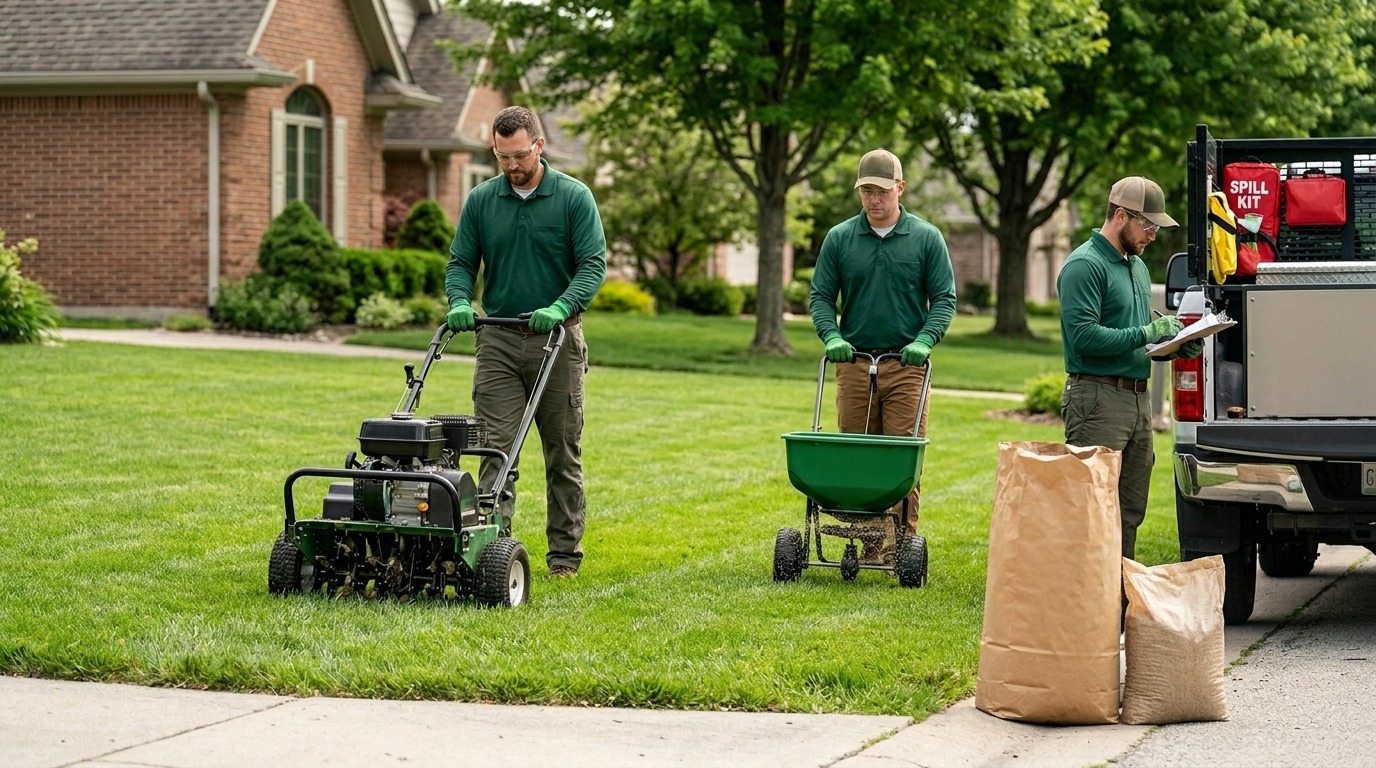
More homeowners are paying closer attention to what goes into their lawn.
It’s no longer just about having green grass. It’s about knowing what’s being applied, how it affects the soil, and whether it’s safe for kids, pets, and the environment. Many people want healthier lawns—but not at the cost of harsh chemicals or long-term damage.
This is where organic lawn care enters the conversation.
Organic lawn care isn’t about neglecting a lawn or letting nature “figure it out.” When done correctly, it’s a thoughtful, science-based approach that works with soil and plants instead of forcing quick results. That’s why professional landscapers play such an important role in using organic methods safely and effectively.
The Real Problem: Confusion Around Organic Lawn Care
Organic lawn care is often misunderstood.
Some homeowners worry it won’t work. Others assume it means doing nothing at all. There’s also confusion about safety—what’s truly organic, what’s just labeled that way, and what actually benefits the lawn.
The external problem is uncertainty about results.
The internal problem is hesitation: “I want safer care, but I don’t want my lawn to suffer.”
The philosophical problem is simple: caring for your lawn shouldn’t require choosing between safety and effectiveness.
Professional landscapers help remove that uncertainty by applying organic methods correctly and responsibly.
You’re the Hero — Your Lawn Needs a Smarter Approach
Homeowners who choose organic lawn care aren’t cutting corners.
They’re thinking long-term. They want a lawn that’s healthy from the soil up, not dependent on constant chemical intervention. They want peace of mind knowing their outdoor space is safe to enjoy.
What they need is guidance.
That’s where a professional landscaper becomes the guide.
At Doug Greenwood Landscaping Co., organic lawn care is approached with care and precision. The focus is on building soil health, supporting natural growth, and using products responsibly so the lawn improves steadily without unnecessary risk.
What Organic Lawn Care Really Means
Organic lawn care is not about instant fixes.
It’s about strengthening the lawn’s natural systems. Healthy soil supports healthy roots. Healthy roots support thick, resilient grass. Organic treatments focus on feeding the soil and encouraging biological activity that benefits the entire lawn ecosystem.

This approach takes patience, but it delivers stability.
Instead of reacting to problems as they appear, organic care reduces the conditions that cause those problems in the first place.
Why Soil Health Is Central to Organic Care
Soil is where organic lawn care begins.
Chemical-heavy programs often bypass soil health by feeding the grass directly. Organic care takes the opposite approach. It improves soil structure, nutrient availability, and microbial life so the lawn can feed itself more effectively.
Landscapers evaluate soil conditions before applying organic treatments. They consider compaction, drainage, nutrient balance, and organic matter levels.
By addressing these factors, organic care becomes targeted instead of generic.
How Landscapers Use Organic Products Safely
Safety isn’t just about the product—it’s about how and when it’s applied.

Professional landscapers understand that organic materials still need proper timing, dosage, and placement. Overapplication can stress lawns just as much as chemical misuse.
Landscapers follow careful application schedules based on weather, soil condition, and seasonal growth patterns. This ensures organic products support the lawn instead of overwhelming it.
Safe use means controlled use—not careless use.
Why Organic Lawn Care Takes a Different Timeline
One of the biggest adjustments homeowners make with organic lawn care is patience.
Organic methods don’t force rapid top growth. Instead, they encourage steady improvement from below the surface. Early results may be subtle, but long-term gains are significant.
Over time, lawns become thicker, more drought-tolerant, and better at resisting weeds naturally. This reduces the need for aggressive treatments later.
Landscapers help set realistic expectations so homeowners understand what progress looks like at each stage.
Organic Care and Weed Management
Weeds thrive in weak lawns.
Organic lawn care doesn’t ignore weeds—it addresses why they appear. Compacted soil, poor drainage, and nutrient imbalance all create opportunities for weeds to spread.
By improving soil health and grass density, organic care gradually reduces weed pressure. Landscapers monitor problem areas and adjust care strategies to strengthen grass naturally.
This approach takes longer, but it leads to more sustainable results with less chemical reliance.
Why Organic Lawn Care Is Safer for Families and Pets
One of the biggest reasons homeowners choose organic care is peace of mind.
Organic treatments are designed to work with natural processes, reducing exposure to harsh substances. This makes outdoor spaces safer for children, pets, and anyone who spends time on the lawn.
Landscapers ensure applications are done responsibly, minimizing disruption and allowing lawns to remain usable sooner.
Safety isn’t just a benefit—it’s a priority.
How Organic Care Supports the Environment
Organic lawn care benefits more than just the yard.
Healthier soil absorbs water more effectively, reducing runoff. Improved microbial activity supports nutrient cycling and reduces waste. Fewer synthetic inputs mean less environmental impact over time.
Professional landscapers consider these broader effects when designing organic care programs. The goal is a lawn that contributes positively to its surroundings, not one that creates downstream problems.
Why DIY Organic Lawn Care Often Struggles
Organic lawn care requires understanding—not just good intentions.
Without soil testing, timing knowledge, and experience, homeowners may apply the wrong products or misinterpret results. This can lead to frustration and abandoned efforts.
Professional landscapers bring structure to organic care. They track progress, adjust treatments, and recognize early signs of imbalance.
This guidance is what turns organic care from an experiment into a reliable system.
The Simple Plan Behind Safe Organic Lawn Care
Professional organic lawn care follows a clear process.
First, the lawn and soil are evaluated to establish a baseline.
Next, organic treatments are applied thoughtfully and seasonally.
Finally, progress is monitored and adjustments are made as the lawn improves.
This plan ensures safety, consistency, and long-term success.
Why Organic Lawn Care Matters in Rhode Island
Rhode Island’s climate presents unique challenges.
Seasonal temperature swings, moisture changes, and compacted residential soil all influence lawn health. Organic care helps lawns adapt to these conditions rather than fight them.
Local landscapers understand how organic methods perform here and adjust care accordingly. This regional experience ensures organic programs remain effective year after year.
A Healthier Lawn Without Harsh Tradeoffs
Organic lawn care isn’t about choosing between safety and results.
When done properly, it delivers both.
By focusing on soil health, careful application, and long-term balance, landscapers use organic lawn care safely and effectively. The result is a lawn that grows stronger over time—without unnecessary risk to people, pets, or the environment.
If you want a lawn that feels good to walk on and good to care for, organic methods offer a smarter path forward.
And with professional guidance, that path is clear.