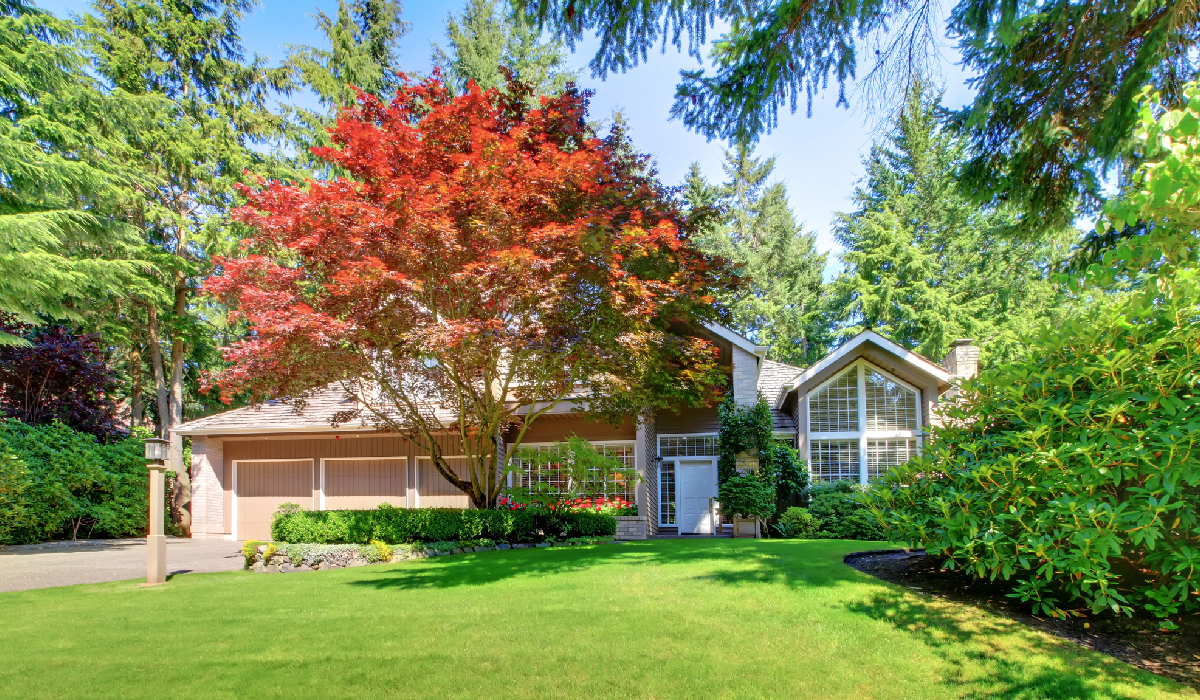
A well-placed shade tree can become one of the most valuable features of a residential landscape. It can add structure and seasonal interest while creating a more comfortable outdoor space.
But choosing a shade tree for a Coventry, RI property is about more than finding a tree that grows quickly or produces a large canopy.
The right choice depends on the conditions of the property, including available space, sunlight, soil, drainage, mature tree size, and how close the tree will be to buildings and other landscape features.
For Rhode Island homeowners, the University of Rhode Island’s Native Plant Guide provides a useful starting point because it allows plants to be evaluated according to characteristics such as sun exposure, shade tolerance, drought tolerance, wind tolerance, and mature size.
If you’re considering shade tree planting in Coventry, RI, understanding those factors can help you plan a landscape that looks good today and continues to work as the tree matures.
What Makes a Good Shade Tree for a Coventry, RI Yard?
There is no single shade tree that is best for every property.
A tree that works well in a large open yard may not be appropriate for a smaller residential lot. Likewise, a tree suited to moist soil may struggle in a dry location.
URI recommends choosing plants according to the conditions of the site. Factors such as sunlight, soil moisture, soil type, wind exposure, and available space can all affect plant performance.
For a Coventry homeowner, start by asking:
- How much space is available for the mature tree?
- How much sunlight does the planting area receive?
- Is the soil dry, moist, or poorly drained?
- How close will the tree be to the house?
- Are there overhead wires or other structures nearby?
- How much maintenance are you prepared to provide?
- Are you interested in a native Rhode Island tree?
These questions can narrow the choices before a tree is planted.
Shade Trees to Consider for Coventry, RI Landscapes
Several tree species can provide shade and landscape value in Rhode Island, but their suitability depends on the property.
Red Maple
Red maple is included in the Rhode Island Native Plant Guide and is listed with both full-sun and shade-tolerant characteristics. The guide gives it a mature height range of approximately 40 to 75 feet and a width of more than 50 feet.
That mature size is important when considering a red maple for a residential landscape.
Red maple can be a strong option where there is enough room for its mature canopy, but it should not simply be planted wherever shade is desired. Its eventual size and relationship to nearby structures should be considered first.
Eastern White Oak
Eastern white oak is another native Rhode Island tree included in URI’s Native Plant Guide. It can reach approximately 50 to 90 feet in height with a mature width of more than 50 feet.
Its potential size makes it better suited to properties with sufficient open space.
For a homeowner with a larger yard, an oak can provide long-term landscape structure and substantial shade. For a smaller property, however, its mature dimensions may make another tree a more practical choice.
Other Rhode Island-Native Trees
The Rhode Island Native Plant Guide includes many other native tree species, including sugar maple, yellow birch, black birch, gray birch, flowering dogwood, and chokecherry.
The important takeaway is that homeowners have options beyond a generic list of “top five” shade trees.
The better approach is to select a tree based on the conditions and goals of the individual property.
Why Mature Tree Size Matters
One of the easiest mistakes to make when planting a new tree is thinking only about how it looks when it is installed.
A young tree may appear small enough to fit almost anywhere.
Years later, its trunk, branches, roots, and canopy can occupy substantially more space.
Before planting, consider:
- Mature height
- Mature canopy width
- Distance from the house
- Distance from driveways and walkways
- Nearby trees
- Utility lines
- Property boundaries
- Future maintenance access
A tree should have enough room to develop without creating avoidable conflicts with structures or other landscape features.
This is particularly important when planning larger shade trees because several Rhode Island-native species can eventually reach 50 feet or more in height and width.
How Site Conditions Affect Tree Selection
The same tree can perform differently depending on where it is planted.
Sunlight
Some trees tolerate shade while others perform best in full sun.
Before selecting a tree, observe how much direct sunlight the planting location receives during the day.
Soil and Drainage
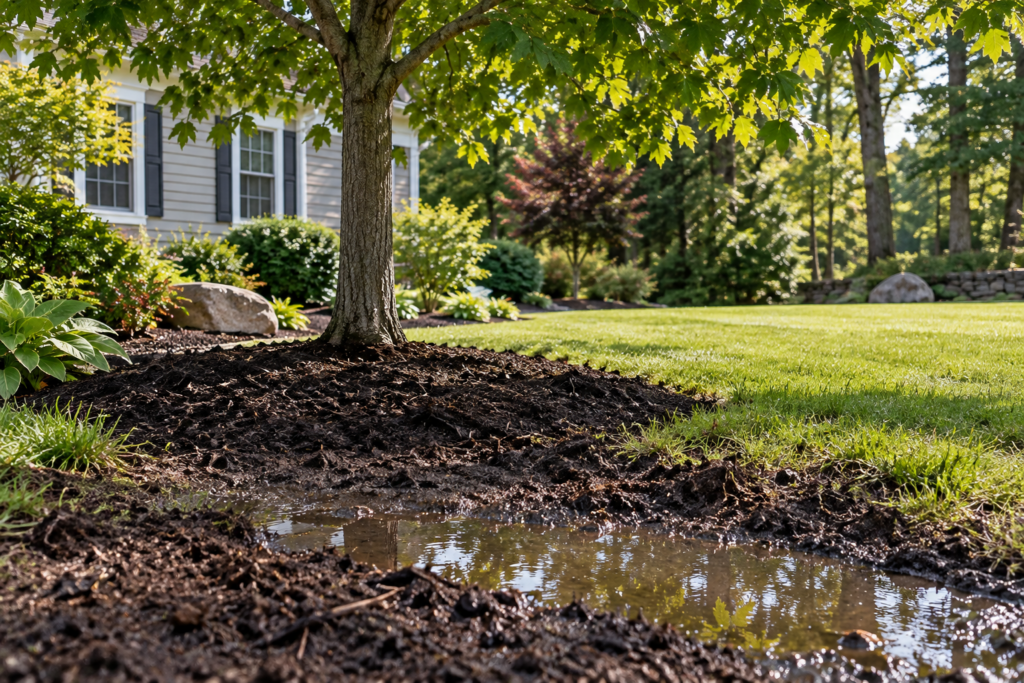
Soil conditions can affect whether a tree establishes successfully.
Is the area consistently wet after rain? Does water drain quickly? Is the soil compacted?
URI recommends considering soil conditions when choosing plants because plants perform best when their growing requirements match the site.
Wind Exposure
An exposed section of a property can have different planting requirements from a protected area.
URI’s Native Plant Guide specifically identifies wind tolerance as one of the characteristics that can be used when selecting Rhode Island-native plants.
Available Space
Space is one of the most important considerations for shade trees.
The planting location needs to accommodate the tree’s eventual size rather than only the size of the nursery tree.
When Is the Best Time to Plant a Shade Tree in Rhode Island?
Timing matters when establishing a new tree.
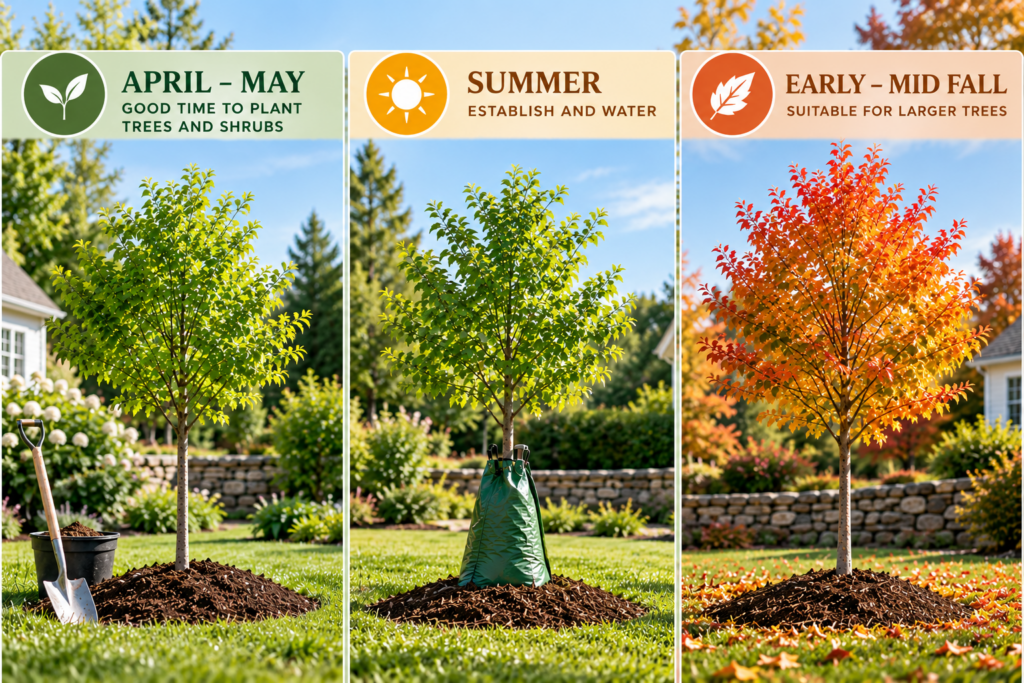
URI guidance identifies April and May as good months for planting trees and shrubs, giving plants time to establish before the hotter summer months. Newly planted trees should also be watered regularly through their first growing season.
For larger nursery trees, early-to-mid fall can also be a suitable planting period.
Rather than waiting until the hottest part of summer, homeowners should plan tree planting around the season, tree size, site conditions, weather, and availability of the desired tree.
The exact timing can vary depending on the tree and the conditions of the property.
How to Plan Shade Tree Placement
Where you plant the tree can be just as important as which tree you choose.
Think about the purpose of the planting.
Are you trying to:
- Add shade to a sitting area?
- Improve the appearance of the front yard?
- Create more structure in a large backyard?
- Add a focal point to a landscape?
- Create a more comfortable outdoor space?
Once the goal is clear, consider how the tree’s mature canopy will relate to the rest of the property.
A landscape plan can help prevent a new tree from being placed in a location that creates problems later.
Should You Choose a Native Tree?
Native plants can be an important consideration for Rhode Island landscapes.
The University of Rhode Island’s Native Plant Guide was developed specifically to help landscape professionals and homeowners become familiar with plants native to Rhode Island and to select plants according to site conditions.
URI also explains that selecting the right plant for the right location can reduce the need for fertilizers, pesticides, and water.
That doesn’t mean every property needs the same tree.
Instead, native status can be one factor considered alongside:
- Mature size
- Sun exposure
- Soil conditions
- Moisture
- Wind exposure
- Landscape goals
- Available planting space
The goal is to match the plant to the property.
What Does Professional Shade Tree Planting Involve?
Professional planting is about more than putting a tree into the ground.
A thoughtful planting project can involve:
- Evaluating the available planting area
- Considering the property’s existing landscape
- Selecting a tree appropriate for the site
- Determining appropriate placement
- Preparing the planting area
- Installing the tree correctly
- Establishing an appropriate watering routine
- Planning for long-term maintenance
Doug Greenwood Landscaping provides landscape design and landscape installation services, with garden design and installation, planting, irrigation and drainage, and other landscape elements included within its broader capabilities.
The company’s approach also emphasizes working with customers around their property’s needs, preferences, and budget.
That makes tree selection easier to treat as part of the overall landscape rather than as an isolated planting decision.
When Should You Consider Professional Landscape Installation?
Professional help can make sense when tree planting is part of a larger landscape project.
For example, you may be:
- Redesigning an outdated yard
- Adding new garden areas
- Improving an outdoor living space
- Installing multiple plants and trees
- Combining planting with hardscaping
- Adding irrigation or drainage
- Creating a more cohesive landscape design
In these situations, the tree needs to work with the rest of the property.
Doug Greenwood Landscaping’s landscape installation services include garden installation, lawn installation and maintenance, irrigation and drainage systems, hardscaping, and outdoor lighting.
A coordinated landscape plan can help ensure the tree is considered alongside the other elements of the project.
FAQs About Shade Tree Planting in Coventry, RI
What are the best shade trees for Coventry, RI?
There is no single best shade tree for every Coventry property. Tree selection should consider mature size, sunlight, soil, moisture, wind exposure, available space, and the homeowner’s landscape goals.
Are there native shade trees that grow in Rhode Island?
Yes. The University of Rhode Island’s Native Plant Guide includes numerous tree species native to Rhode Island, including red maple and eastern white oak. The guide allows users to evaluate plants based on characteristics such as sun exposure, shade tolerance, drought tolerance, wind tolerance, and mature size.
When should I plant a shade tree in Rhode Island?
Spring is a common planting period, and URI identifies April and May as good months for planting trees and shrubs. Larger nursery trees may also be planted in early-to-mid fall.
How much space does a shade tree need?
The required space depends on the species and its mature dimensions. Some Rhode Island-native shade trees can eventually reach more than 50 feet in height and width, so mature size should be considered before planting.
Should I plant a shade tree close to my house?
Tree placement should account for the tree’s mature size and its relationship to buildings, utilities, walkways, and other landscape features. A planting location that looks appropriate for a young tree may not be appropriate once the tree reaches maturity.
Can a landscape professional help me choose a shade tree?
Yes. A landscape professional can evaluate the planting area and help consider the tree’s size, site conditions, placement, and relationship to the rest of the landscape.
How often does a newly planted tree need water?
Newly planted trees need regular watering while they establish. URI’s 2026 tree guidance recommends regular watering through the first growing season.
Conclusion
A shade tree can add beauty, structure, and long-term value to a Coventry, RI landscape, but choosing the right tree starts with the property itself.
Mature size, sunlight, soil, drainage, wind exposure, available space, and the purpose of the planting should all be considered before deciding what to plant.
Rhode Island homeowners also have access to resources such as the University of Rhode Island’s Native Plant Guide, which makes it easier to compare plants according to local site conditions.
Rather than choosing a tree simply because it appears on a list of “best” shade trees, focus on finding one that fits your property and your long-term landscape goals.
Looking for Landscape Design or Installation in Coventry, RI?
Planning a new tree planting project or making larger improvements to your outdoor space?
Doug Greenwood Landscaping can help you explore landscape options and determine what makes sense for your property.
Learn more about our Landscape Design and Landscape Installation services, or Contact Us to discuss your project.
Ready to discuss your landscape project? Call (401) 441-9580.