
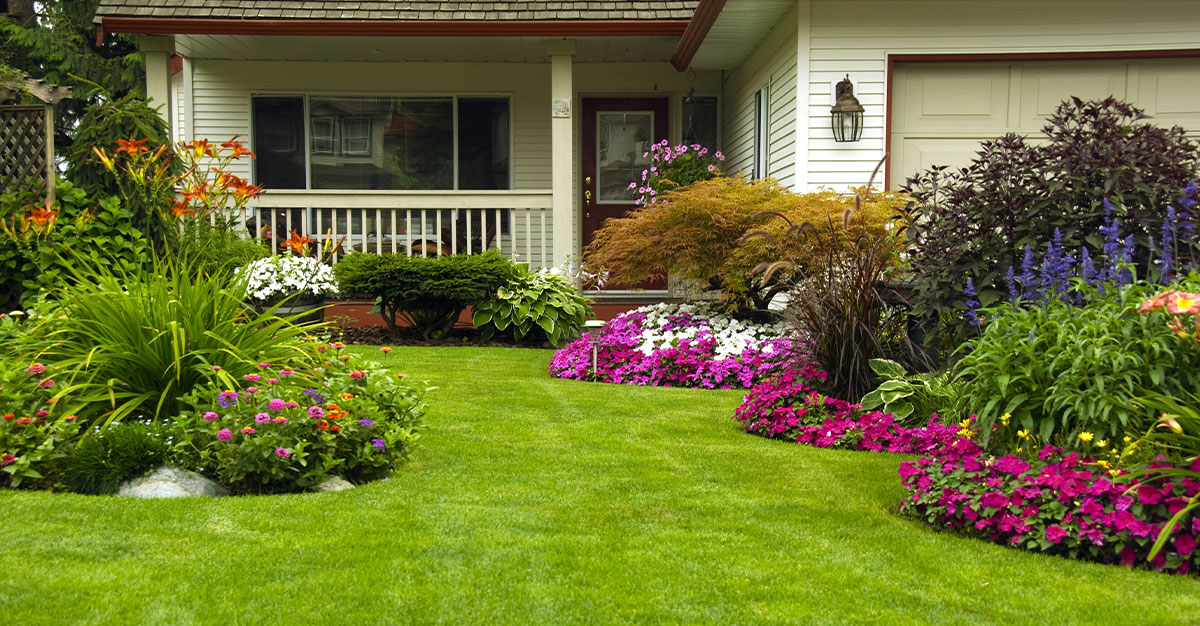
A beautiful landscape does not have to require constant attention.
For busy homeowners in Coventry, RI, the goal of low maintenance landscaping is not to eliminate yard work completely. Instead, it is about creating an outdoor space that is easier to manage because the plants, materials, irrigation, and layout are suited to the property.
The right choices can reduce repetitive tasks such as frequent watering, replanting, excessive trimming, and maintaining lawn areas that are difficult to manage.
Here are 10 practical low maintenance landscaping ideas to consider when planning or improving your yard.
Why Low Maintenance Landscaping Can Make Sense for Busy Homeowners
Low maintenance landscaping can make everyday property care more manageable by reducing unnecessary work.
Less Routine Upkeep
Choosing plants that fit the growing conditions and grouping them according to their needs can make ongoing care more predictable.
Instead of constantly replacing plants that struggle in a particular location, homeowners can plan around sunlight, soil, drainage, and available space from the beginning.
More Efficient Watering
Watering can become one of the more time-consuming parts of landscape maintenance, especially during dry periods.
Using appropriate plants and an efficient irrigation system can help deliver water where it is needed without making the entire landscape dependent on frequent manual watering.
Easier Seasonal Care
A well-planned landscape can also make seasonal work more organized.
Defined planting areas, appropriate mulch, manageable lawn sections, and properly selected trees and shrubs can make spring and fall maintenance easier to handle.
Planning a Low Maintenance Landscape in Coventry, RI
Before adding plants or replacing parts of your yard, take some time to look at how the property currently works.
Assess Your Existing Landscape
Look at:
- Areas that receive full sun or shade
- Places where water collects
- Sections that dry out quickly
- Lawn areas that require frequent attention
- Existing trees, shrubs, and garden beds
- Walkways, patios, and other hardscape features
- Areas that are difficult to access or maintain
This helps identify where a landscape can be simplified.
Set Your Landscape Goals
Think about what you want to reduce.
For example, your priority may be:
- Less mowing
- Less watering
- Fewer seasonal plant replacements
- Easier garden maintenance
- More usable outdoor space
- A cleaner, more organized appearance
A clear goal makes it easier to decide which landscaping changes are actually worthwhile.
Choose Plants for the Property
Review the conditions of each planting area before deciding what to plant. This gives you a better starting point for choosing plants that will fit the space and be manageable over time.
For homeowners researching plants that are native to Rhode Island, the University of Rhode Island’s RI Native Plant Guide can be a useful reference for exploring plants according to different site conditions.
Consider Landscape Materials
Plants are only one part of a low maintenance landscape.
Mulch, stone, defined edges, patios, walkways, and other hardscape elements can help organize the property and reduce areas that require repetitive maintenance.
10 Low Maintenance Landscaping Ideas
1. Use Plants That Fit Your Property
One of the simplest ways to reduce future maintenance is to select plants that are suited to their location.
A plant that receives the right amount of sunlight and moisture is generally easier to manage than one placed in conditions it cannot tolerate.
Consider how much space each plant needs as it develops. Choosing plants that fit the planting area can help avoid unnecessary maintenance later.
The goal is not simply to choose “low maintenance” plants. It is to choose plants that fit the specific conditions and available space in your yard.
2. Use Perennials to Reduce Replanting
Perennials can return year after year, making them useful for homeowners who want established planting areas without replacing annual flowers every season.
They can also provide recurring color and structure when different varieties are selected for different bloom periods.
When planning a perennial bed, consider:
- Sun exposure
- Soil and drainage
- Mature plant size
- Bloom period
- Water requirements
- Long-term spacing
3. Add Drought-Tolerant Plants Where Appropriate
Drought-tolerant plants can be useful in areas where regular watering is difficult or where homeowners want to reduce irrigation needs.
However, drought tolerance does not mean a plant can grow successfully anywhere without water.
Newly planted landscapes still require appropriate establishment care, and plant selection should account for the actual conditions of the property.
The best approach is to use drought-tolerant plants where they are appropriate rather than treating them as a universal solution.
4. Use Ground Covers Instead of Some Lawn Areas
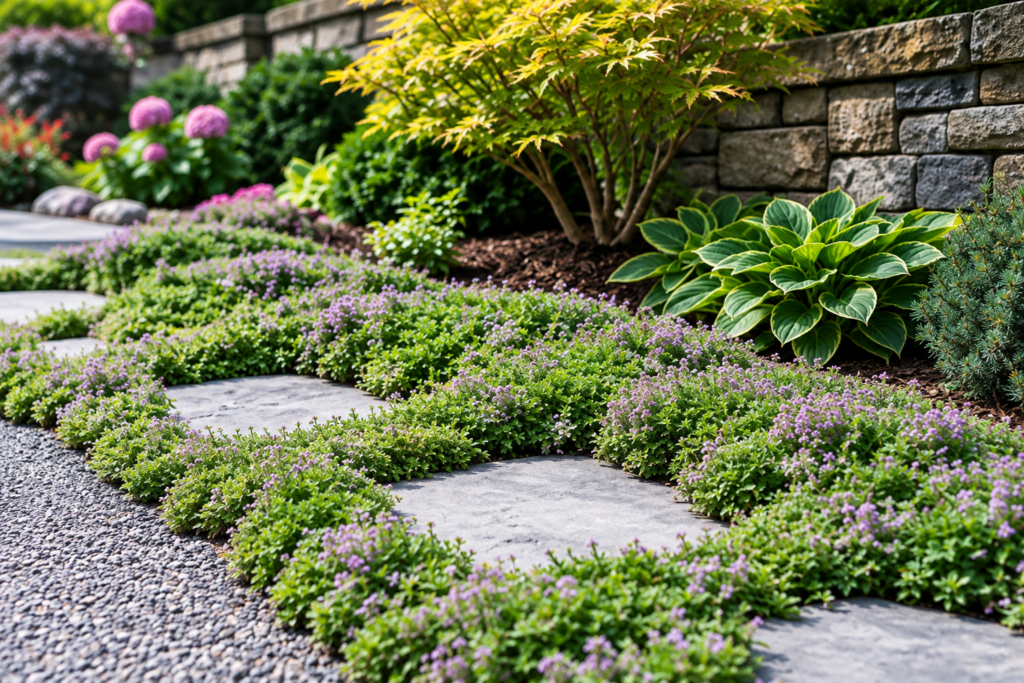
Not every part of a property needs to be covered with turfgrass.
Ground covers can be considered for areas where mowing is difficult, such as narrow planting strips, slopes, or spaces beneath suitable trees.
Reducing unnecessary lawn can also create more defined planting areas and change how the property is maintained.
The right ground cover depends on sunlight, soil, drainage, foot traffic, and the intended use of the space.
5. Use Decorative Gravel and Rock Features
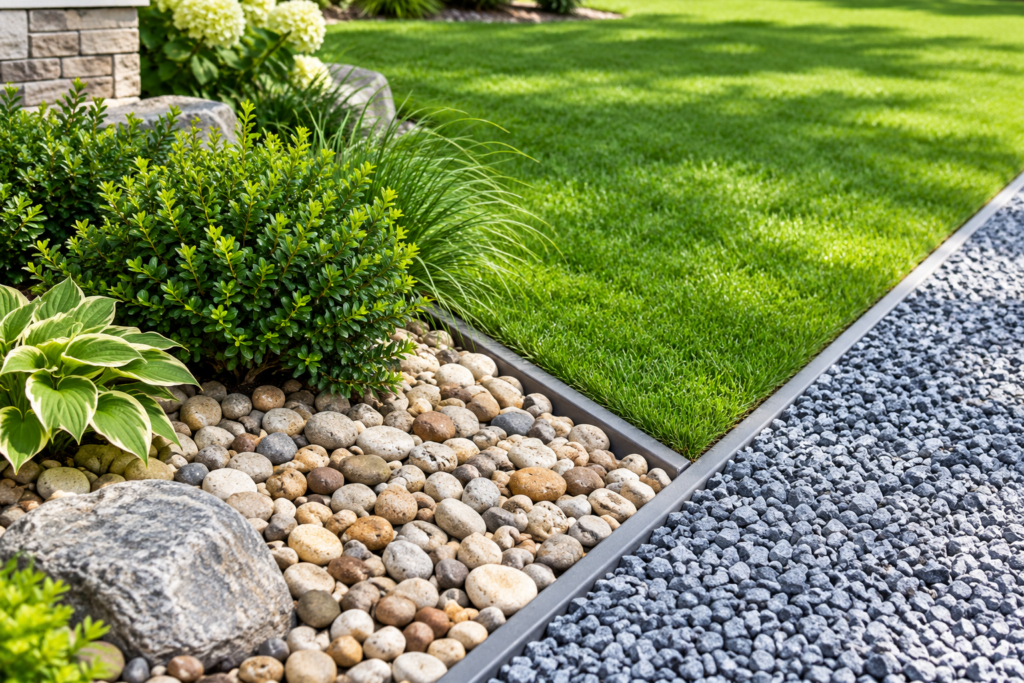
Decorative gravel and stone can add structure to selected areas of a landscape while reducing the amount of plant material that needs regular care.
They can work well around:
- Garden beds
- Walkways
- Drainage areas
- Landscape borders
- Feature plants
- Outdoor living areas
Stone should be incorporated as part of an overall landscape design rather than scattered randomly throughout the property.
Proper edging and preparation can also help keep materials contained and maintain a clean appearance.
6. Use Efficient Irrigation
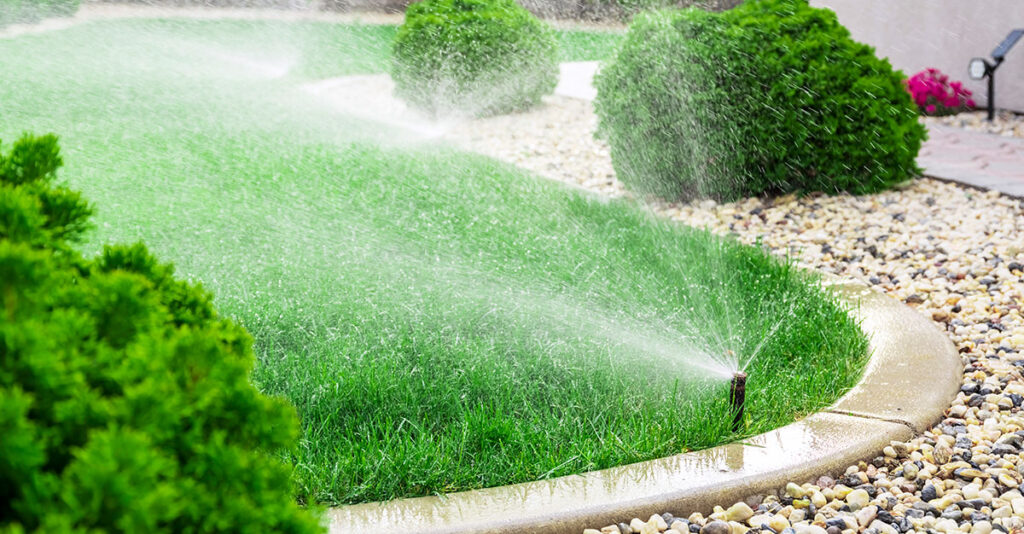
An irrigation system can make watering more convenient, but the system still needs to be designed and maintained properly.
Efficient irrigation can help deliver water according to the needs of different landscape areas rather than treating the entire property the same way.
The U.S. Environmental Protection Agency’s WaterSense Watering Tips provides guidance on efficient watering practices, including adjusting watering to weather conditions and avoiding unnecessary runoff.
Doug Greenwood Landscaping provides irrigation system installation and maintenance as part of its landscape services.
7. Choose Trees and Shrubs Carefully
Trees and shrubs can provide structure, shade, privacy, and year-round interest, but their mature size should always be considered before planting.
A plant that becomes too large for its location can eventually create additional maintenance problems.
Before planting, consider:
- Mature height
- Mature width
- Available growing space
- Sun exposure
- Soil conditions
- Proximity to structures
- Maintenance requirements
Proper placement can reduce the need for frequent pruning later.
8. Use Mulch Around Appropriate Planting Areas
Mulch can help define planting beds and create a finished appearance.
It can also help retain soil moisture and reduce the amount of exposed soil where weeds may establish.
Mulch should be applied appropriately around plants rather than piled directly against trunks or stems.
Refreshing mulch as needed can be incorporated into seasonal landscape maintenance.
9. Create Defined Landscape Edges
Defined edges can make a landscape easier to maintain and give the property a more organized appearance.
Edges can separate:
- Lawn from planting beds
- Garden areas from walkways
- Mulch from turf
- Gravel from surrounding landscape areas
A clear boundary helps prevent grass from gradually spreading into planting beds and makes mowing and trimming more predictable.
10. Group Plants With Similar Maintenance Needs
Instead of placing plants with completely different watering, pruning, or sunlight requirements together, consider grouping plants with similar needs.
For example, plants that prefer similar moisture conditions can be placed within the same general planting zone.
This approach can make watering and maintenance more straightforward because each area can be cared for according to its requirements.
It also makes future landscape maintenance easier to organize.
Maintaining a Low Maintenance Landscape
Low maintenance does not mean no maintenance.
Even a well-planned landscape will still require some attention throughout the year.
Regular maintenance may include:
- Mowing and trimming
- Seasonal pruning
- Mulch maintenance
- Weed management
- Irrigation inspections
- Leaf and debris removal
- Lawn aeration when appropriate
- Seasonal cleanup
The difference is that a well-planned landscape can make these tasks more manageable.
For homeowners who want help with ongoing lawn maintenance, Doug Greenwood Landscaping offers Lawn Care & Maintenance services, including mowing, trimming, fertilization and weed control, aeration and overseeding, and irrigation system maintenance.
When Professional Landscape Planning May Help
Professional planning can be useful when a property has several different maintenance challenges at the same time.
For example, a homeowner may have:
- Too much lawn to maintain
- Planting areas that repeatedly fail
- Poorly organized garden beds
- Difficult slopes or drainage areas
- An outdated landscape layout
- Irrigation that does not cover the property effectively
- A desire to create a more functional outdoor space
A landscape professional can look at the property as a whole rather than treating each problem separately.
Doug Greenwood Landscaping’s Landscape Design services include custom landscape design, garden design, hardscaping, water features, outdoor lighting, and landscape maintenance.
When the design is ready to be built, Landscape Installation services can include garden installation, lawn installation, irrigation and drainage systems, hardscaping, and outdoor lighting.
FAQs About Low Maintenance Landscaping
What is the easiest way to make a landscape lower maintenance?
Start by identifying the parts of the property that require the most repetitive work. Depending on the yard, this could mean reducing unnecessary lawn, selecting better-suited plants, improving irrigation, adding mulch, or reorganizing planting areas.
Are native plants always low maintenance?
Not necessarily. Native plants are adapted to the region, but their maintenance requirements can still vary depending on the species and where they are planted.
Sunlight, soil, moisture, mature size, and spacing should still be considered.
Can I have a colorful low maintenance landscape?
Yes. A low maintenance landscape does not have to look plain.
Perennials, shrubs, trees, ground covers, and other landscape plants can provide different colors, textures, and seasonal interest when they are selected and arranged appropriately.
Does low maintenance landscaping mean no maintenance?
No.
Plants grow, leaves fall, weeds can appear, and irrigation systems require attention. Low maintenance landscaping is about reducing unnecessary or repetitive work, not eliminating maintenance completely.
How can I make my Coventry, RI yard easier to maintain?
Start by looking at which parts of your landscape take the most time.
From there, consider whether the issue can be addressed through better plant selection, less lawn, more defined planting areas, efficient irrigation, mulch, hardscape features, or a more organized landscape plan.
Conclusion
The best low maintenance landscaping ideas are not necessarily the ones that eliminate the most plants or lawn.
They are the choices that make sense for the property.
Selecting appropriate plants, organizing planting areas, using landscape materials strategically, improving irrigation, and creating clear boundaries can all help make a landscape easier to manage while keeping it attractive and functional.
For Coventry homeowners, the process starts with understanding what your property needs and deciding which changes will make the biggest difference to your day-to-day maintenance.
Looking for Low Maintenance Landscaping Help in Coventry, RI?
If your yard requires more maintenance than you’d like, a personalized landscape plan can help identify practical ways to make it easier to manage.
Doug Greenwood Landscaping Co. provides personalized landscape design, installation, lawn care, and maintenance services in Coventry, RI.
Ready to discuss your landscape?
Call Doug Greenwood Landscaping Co. at (401) 329-9517 or schedule a consultation to discuss your landscaping needs.