
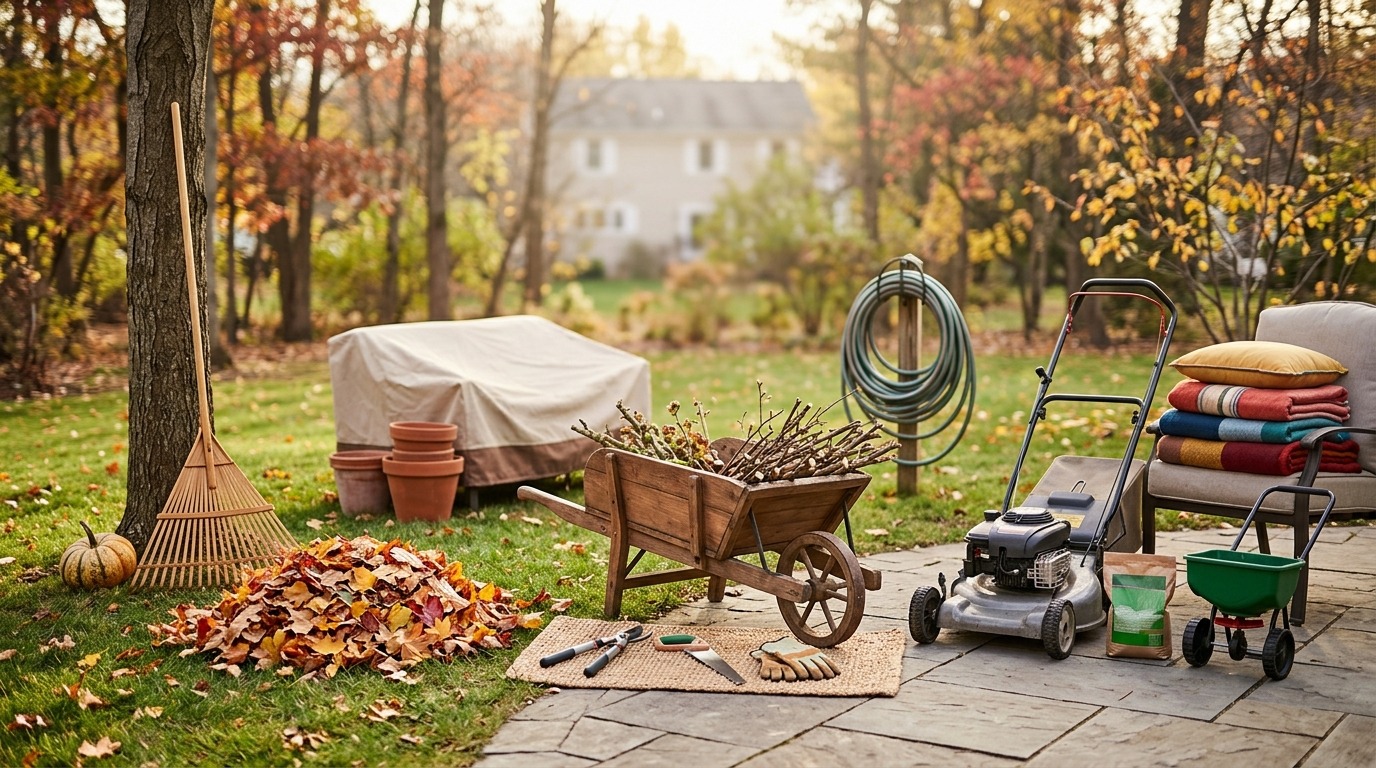
Fall has a way of making a yard look peaceful.
Leaves settle across the lawn. Trees begin to thin out. The pace of growth slows, and everything feels like it’s winding down. It’s easy to think this is the time to step back and let the yard rest.
But what looks like an ending is actually a transition.
What you do during fall determines how your yard performs when spring returns. Small details that go unnoticed now can turn into bigger problems later—weak grass, compacted soil, and messy beds that need more work than expected.
That’s why a proper yard fall cleanup isn’t just about appearance.
It’s about preparation.
The Real Problem: Waiting Too Long to Act
Many homeowners delay fall cleanup.
They wait until most of the leaves have fallen or until the yard looks fully covered. By that point, debris has already started to affect the lawn and landscape underneath.
Leaves trap moisture. Grass loses access to sunlight. Soil begins to compact. What seemed like a minor delay quietly changes the condition of the yard.
The external problem is visible clutter.
The internal problem is concern: “Is this causing damage?”
The philosophical problem is simple: your yard should enter winter in a strong condition, not a neglected one.
A consistent yard fall cleanup approach prevents these issues before they take hold.
You’re the Hero — Your Yard Needs a Strong Finish
Homeowners don’t want to undo a season’s worth of effort.
They want their lawn and landscape to carry that progress forward. They want a yard that comes back stronger in spring instead of starting over.
What they need is a clear plan.
That’s where a professional landscaper becomes the guide.
At Doug Greenwood Landscaping Co., yard fall cleanup is handled with the next season in mind. The goal isn’t just to clean the yard—it’s to prepare it for everything that comes after.
Why Leaves Are More Than Just a Mess
Leaves are the most obvious part of fall cleanup.
But their impact goes beyond appearance.
When leaves cover the lawn, they create a barrier. Sunlight is blocked. Airflow is reduced. Moisture gets trapped underneath. Over time, this weakens the grass and creates conditions for disease.
Removing leaves regularly keeps the lawn exposed and healthy.
A proper yard fall cleanup treats leaves as a maintenance issue—not just something to deal with at the end.
How Lawn Health Depends on Fall Care
Grass doesn’t stop working in the fall.
It shifts its focus.
Instead of growing upward, it begins strengthening its roots. This process is essential for surviving winter and returning strong in spring. But it can only happen if conditions are right.
A yard covered in debris or compacted soil limits this process.
Fall cleanup supports root health by creating an environment where the lawn can prepare properly.
Cleaning Up Beds for Long-Term Stability
Landscape beds often collect more than just leaves.
Weeds settle in. Old plant material breaks down. Edges lose definition. These changes can make beds look messy and affect how they function.
Cleaning beds during fall restores structure.
It also prevents buildup that can interfere with plant health in the next season. A clean bed allows new growth to emerge without competition or obstruction.
Yard fall cleanup ensures beds are ready—not just presentable.
Why Edging Matters Before Winter
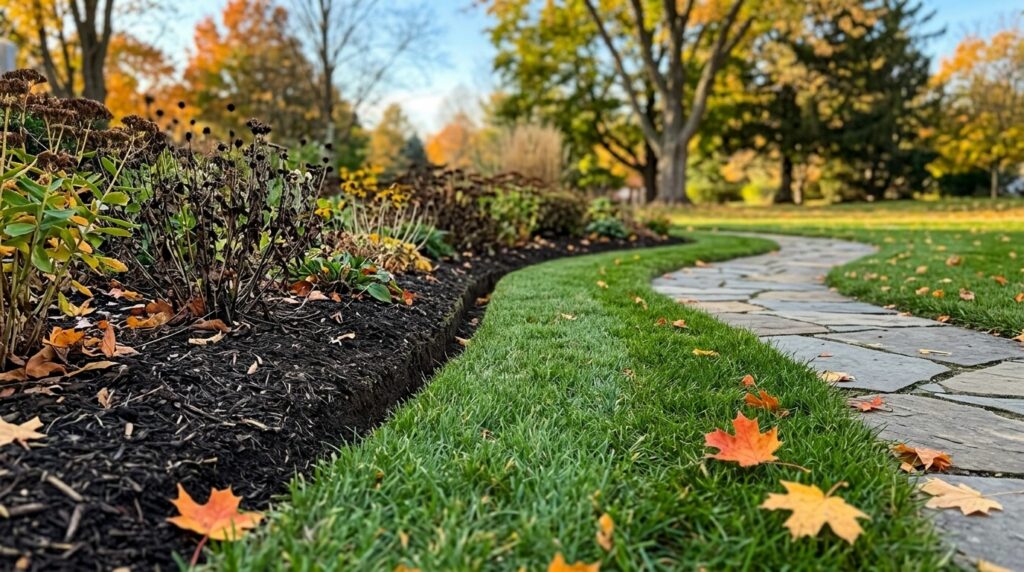
Edges define the landscape.
They separate lawn from beds, guide movement, and create visual clarity. Over time, these edges soften and lose their shape.
Reestablishing edges during fall cleanup helps maintain that structure.
It also makes future maintenance easier by clearly defining where each area begins and ends. This small step contributes to a more organized and manageable yard.
Managing Debris Beyond Leaves
Leaves are only part of the cleanup process.
Branches, sticks, and other debris often accumulate throughout the season. After storms, these materials can become more noticeable and disruptive.
Removing this debris improves safety and restores usability.
It also prevents damage to lawns and plants caused by prolonged contact or pressure. A thorough yard fall cleanup addresses all forms of buildup—not just the most visible ones.
Preparing Soil for Winter Conditions
Soil changes during the fall.
Moisture levels shift. Temperatures drop. Compaction can increase if the ground is covered or disturbed improperly.
Fall cleanup helps maintain soil structure by removing excess debris and reducing pressure on the surface.
Healthy soil going into winter supports better recovery in spring.
Why Timing Is Everything in Fall Cleanup
Fall cleanup isn’t a single event.
It’s a process.
Leaves fall gradually. Weather changes quickly. Waiting too long can allow problems to develop, while acting too early may require repeating the work.
Professional landscapers understand how to time cleanup for maximum effectiveness.
They balance efficiency with results, ensuring the yard is properly prepared without unnecessary effort.
Reducing Spring Work Starts in Fall
Spring often feels like a reset.
But the amount of work needed depends on how the yard was handled in fall. A well-maintained yard transitions smoothly into the new season. A neglected one requires more time and effort to recover.
Yard fall cleanup reduces this burden.
By addressing issues early, homeowners avoid larger problems later. This makes spring maintenance faster and more effective.
Why Consistency Matters More Than Perfection
Fall cleanup doesn’t need to be perfect.
It needs to be consistent.
Regular attention prevents buildup and keeps the yard in manageable condition. Waiting for a single “perfect” cleanup moment often leads to more work and less effective results.
Consistency creates stability.
A steady approach to yard fall cleanup keeps the landscape balanced and prepared.
Avoiding Common Fall Cleanup Mistakes
Some fall habits create more problems than they solve.
Leaving leaves too long, ignoring beds, or rushing cleanup without considering timing can all affect the yard negatively.
Professional landscapers avoid these mistakes by focusing on what the yard actually needs.
They understand how each action influences long-term results.
The Simple Plan Behind Yard Fall Cleanup
A proper yard fall cleanup follows a clear structure.
First, the property is evaluated to identify areas of buildup and concern.
Next, leaves and debris are removed to restore airflow and visibility.
Finally, beds and lawn areas are refined to prepare for winter conditions.
This process ensures nothing is overlooked.
Why Yard Fall Cleanup Matters in Rhode Island
Rhode Island’s fall season brings heavy leaf drop and changing weather.
Moisture levels can shift quickly, and temperatures drop as winter approaches. These conditions make timely cleanup essential.
Local landscapers understand how to handle these changes effectively, ensuring the yard is ready for the season ahead.
A Yard Ready for Spring Before Winter Begins
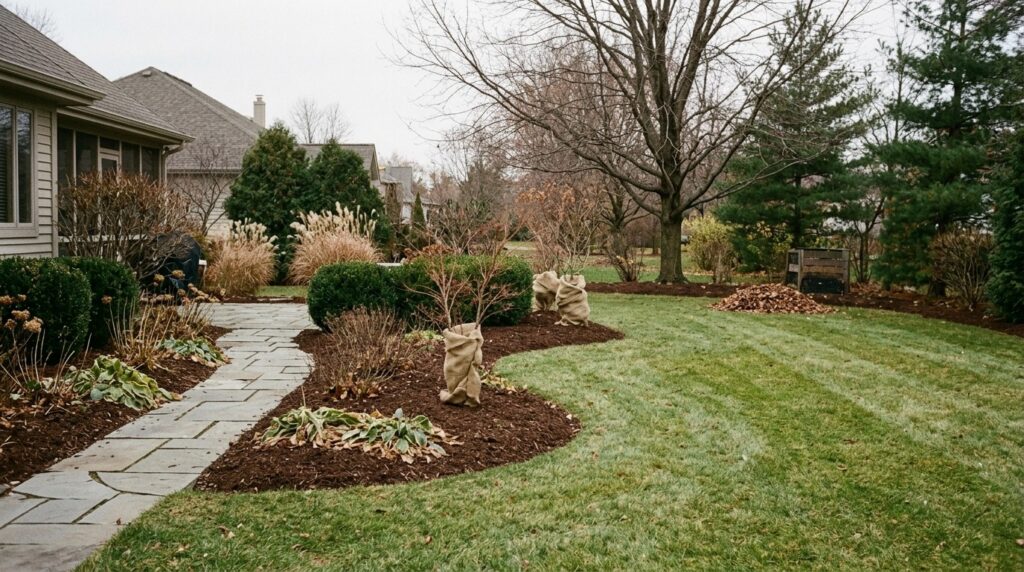
Fall may feel like the end of the season.
But it’s actually the beginning of the next one.
With the right yard fall cleanup, your landscape enters winter in a strong, stable condition. It’s protected from unnecessary stress and prepared to grow back healthier when spring arrives.
If your yard has been left to settle on its own, the solution isn’t waiting for spring to fix it.
It’s finishing the season the right way.