
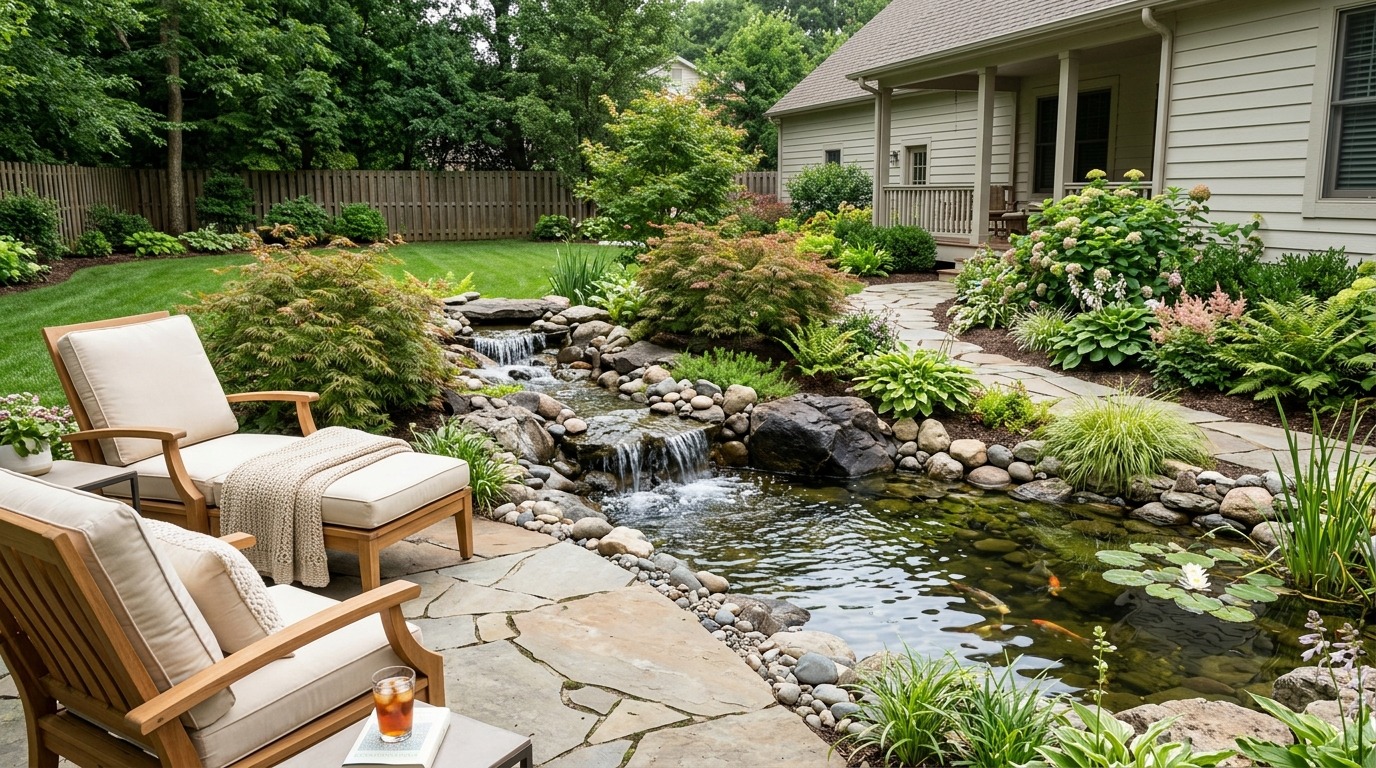
There’s something about moving water that changes how a space feels.
You can have a well-kept lawn, healthy plants, and a clean patio, yet the yard still feels quiet in a way that’s almost empty. Then a small stream, fountain, or pond is added—and suddenly the space feels alive.
Most homeowners don’t realize what’s missing until they experience it.
This is why professional landscapers so often recommend adding water features. Not as decoration, but as a way to transform how a yard looks, sounds, and is used.
The Real Problem: Yards That Look Finished but Feel Flat
Many residential landscapes are visually complete but emotionally empty.
The grass is trimmed. The beds are mulched. The walkways are clean. On paper, everything is done right. Yet the yard still doesn’t invite people to linger.
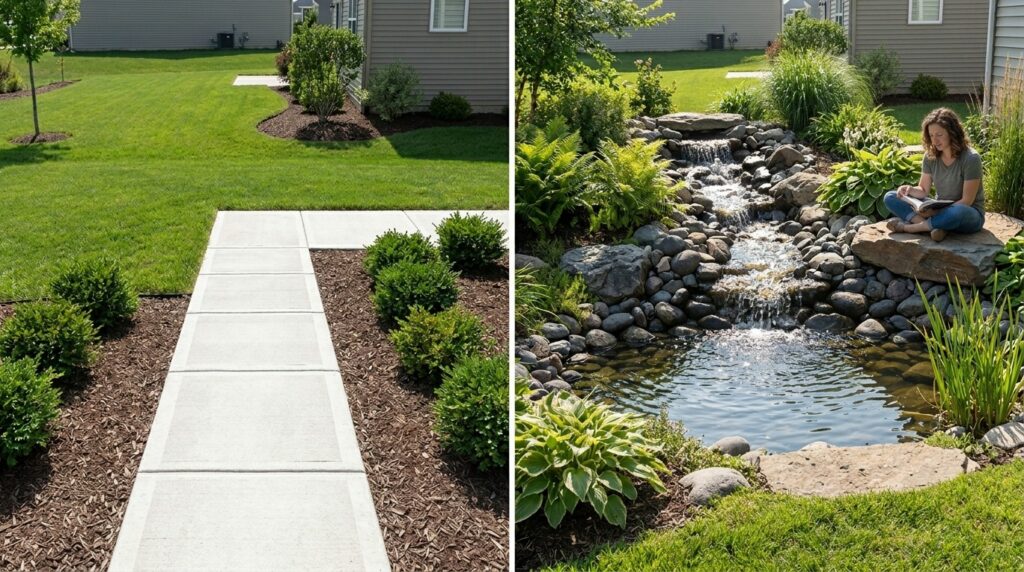
The external problem is subtle: the space feels underwhelming.
The internal problem is frustration: “I should love this yard more than I do.”
The philosophical problem is deeper: your outdoor space should feel like an escape, not just an obligation to maintain.
Water features solve this problem by adding movement, sound, and rhythm—elements most landscapes are missing.
You’re the Hero — Your Yard Just Needs a Focal Point
As a homeowner, you don’t want complexity.
You want a yard that feels peaceful. A place where stress fades and time slows down a little. Somewhere you can enjoy a morning coffee or unwind after a long day.
What you need isn’t more plants or furniture. You need a focal point that anchors the space and gives it purpose.
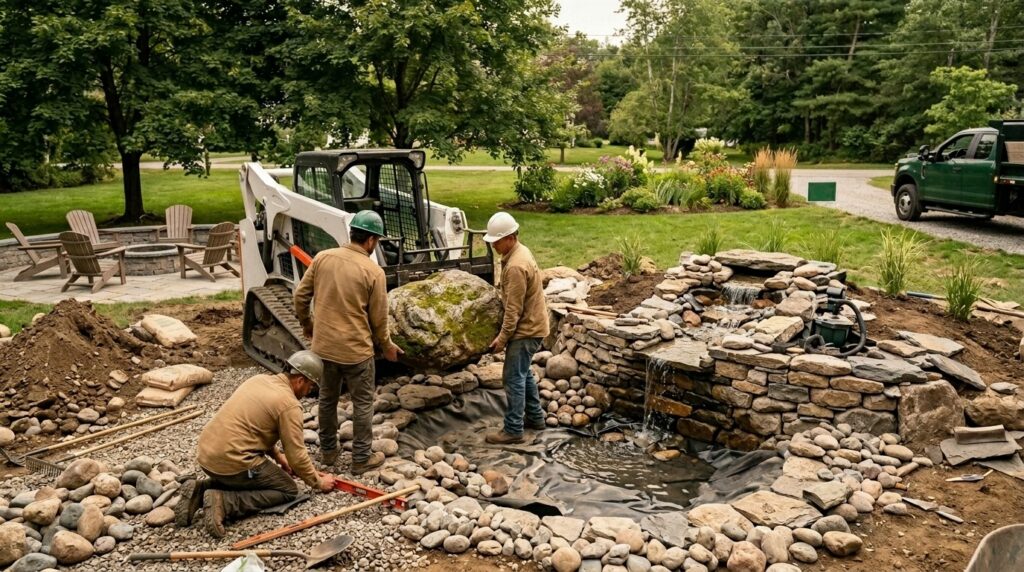
That’s where a professional landscaper becomes the guide.
At Doug Greenwood Landscaping Co., water features are designed to complement the yard, not overpower it. The goal is to create balance—something that feels natural, intentional, and easy to enjoy.
Why Water Changes How a Yard Feels
Still landscapes are static. Water introduces motion.
That movement draws the eye and holds attention. It softens sharp lines. It connects different parts of the yard without physical barriers.
Sound plays an equally important role. The gentle flow of water masks street noise, nearby traffic, and everyday distractions. Even small water features can create a sense of privacy without walls or fences.
This combination of visual and auditory change is why water features have such a powerful impact on outdoor spaces.
Water Features Create Instant Atmosphere
One of the biggest reasons landscapers recommend water features is their ability to change atmosphere immediately.
Unlike plants, which take time to grow, water features create impact the moment they’re installed. The yard feels calmer, more intentional, and more inviting right away.
This instant transformation is especially valuable for homeowners who enjoy their yard socially. Guests naturally gravitate toward water features. Conversations slow down. The space feels designed for connection.
Atmosphere is difficult to create with décor alone. Water does it naturally.
How Water Features Improve Relaxation
There’s a reason water is associated with rest and renewal.
The sound of flowing water triggers a relaxation response. It lowers perceived stress and helps the mind shift out of constant alert mode. This effect isn’t accidental—it’s biological.
Landscapers understand this, which is why water features are often placed near seating areas, patios, or quiet corners of the yard. The goal isn’t to impress. It’s to restore.
For many homeowners, a water feature becomes the most used part of the yard simply because it feels good to be near it.
Water Features Add Structure Without Hard Edges
Some landscape elements divide space with walls, hedges, or fencing. Water features define space more gently.
A pond, stream, or fountain creates a natural boundary without blocking views. It gives the yard flow instead of segmentation. This makes the landscape feel larger and more cohesive.
Professional landscapers use water features to guide movement through a yard. Paths feel more intuitive. Spaces feel connected instead of isolated.
This subtle structure is one reason water features work so well in both small and large properties.
Why Homeowners Worry About Water Features
Many homeowners hesitate when water features are mentioned.
They worry about maintenance. They worry about complexity. They worry that the feature will feel out of place or require constant attention.
These concerns are understandable—but they’re usually based on outdated ideas.
Modern water features are designed for reliability and efficiency. When planned and installed by a professional, they integrate seamlessly into the landscape and require far less upkeep than most people expect.
This is why landscapers recommend them with confidence.
The Difference Professional Design Makes
Water features are not one-size-fits-all.
Placement, scale, and design determine whether a feature enhances the yard or overwhelms it. A professional landscaper considers sightlines, sun exposure, surrounding plants, and how the space is used.
Without this planning, water features can feel forced or disconnected.
With it, they feel inevitable—as though the yard was always meant to include them.
This difference in design approach is what separates long-term enjoyment from short-term novelty.
How Water Features Increase Property Appeal
Beyond personal enjoyment, water features also affect how a property is perceived.
They signal care, design, and investment. They make landscapes memorable. Even simple water features add a sense of refinement that standard plantings alone don’t provide.
For homeowners who think about future resale, this matters. Outdoor spaces that feel peaceful and intentional stand out, and water features play a key role in that impression.
They don’t just decorate a yard—they elevate it.
Water Features Support a Healthier Landscape
Water features do more than look good.
They help regulate temperature in the immediate area, keeping surrounding plants cooler during hot months. They attract beneficial wildlife, such as birds and pollinators, which contribute to a healthier ecosystem.
In well-designed landscapes, water features become part of the environment rather than separate from it.
Landscapers recommend them because they support balance, not just beauty.
What Happens When Water Features Are Poorly Planned
When water features are installed without professional guidance, problems arise.
They may be too large or too small for the space. They may compete visually with other elements. In some cases, they’re placed where they’re rarely seen or enjoyed.
The failure scenario isn’t dramatic. It’s quiet.
The feature exists, but it doesn’t get used. It becomes background noise instead of a centerpiece.
Professional planning prevents this by ensuring the water feature serves a clear purpose in the landscape.
The Simple Plan to Adding a Water Feature
Landscapers approach water features with a clear process.
First, the yard is evaluated to understand flow, visibility, and usage.
Next, a design is created that complements existing elements.
Finally, the feature is installed to integrate naturally into the landscape.
This plan removes uncertainty and ensures the final result feels intentional and lasting.
Why Water Features Work So Well in Rhode Island Yards
Rhode Island landscapes benefit especially from water features.
Seasonal changes, lush greenery, and varied terrain create ideal settings for moving water. In spring and summer, water features bring freshness. In fall, they add atmosphere. Even in cooler months, they remain visually engaging.
For homeowners in Coventry and surrounding areas, this means year-round value—not just seasonal appeal.
A Yard That Feels Complete
A yard doesn’t feel finished because everything is installed.
It feels finished because everything works together.
Water features bring movement to still spaces, sound to quiet areas, and life to landscapes that feel flat. They create moments of calm and connection that other elements simply can’t replicate.
This is why professional landscapers recommend adding water features—not as an upgrade, but as a transformation.
If your yard looks good but doesn’t feel right, the solution may not be more plants or more maintenance.
It may be water.