
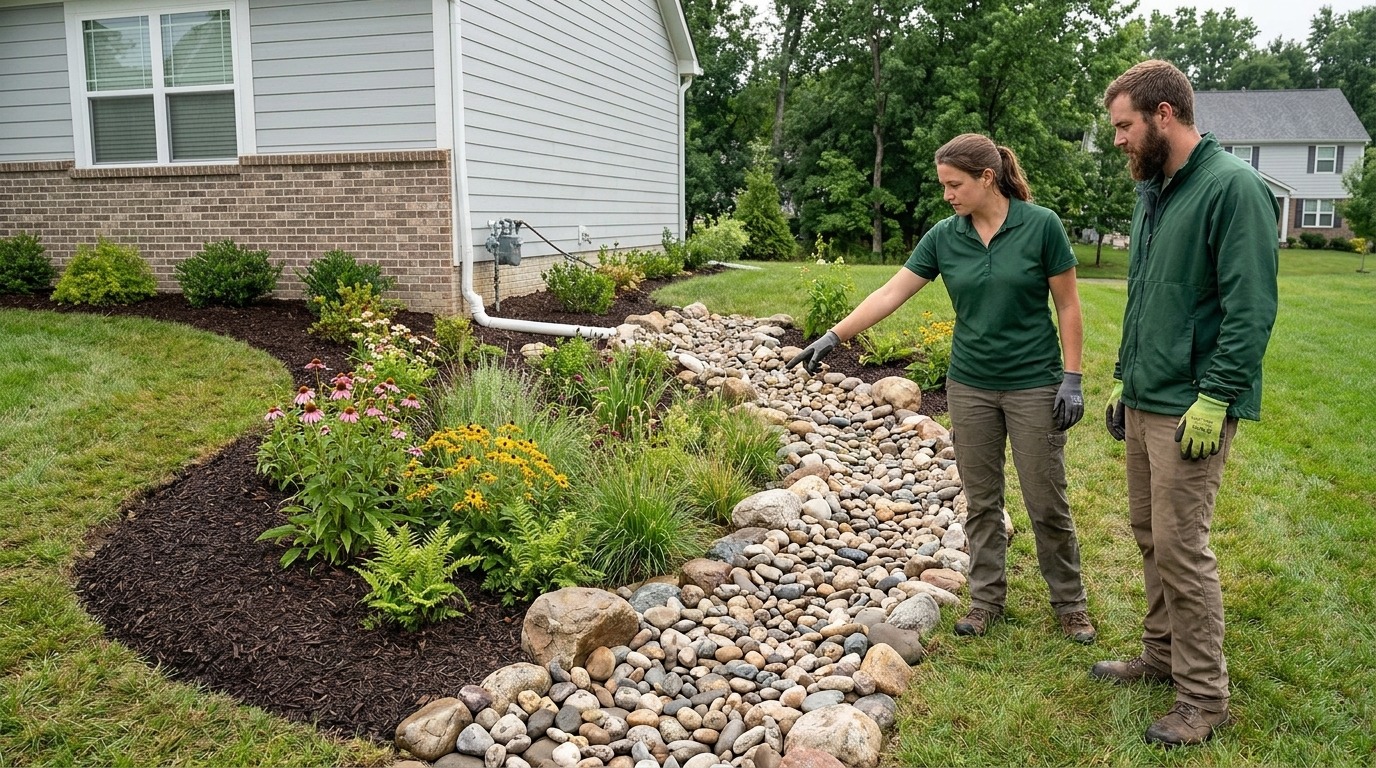
Most homeowners only notice stormwater when something goes wrong.
A flooded patch of lawn after heavy rain. Water pooling near the foundation. Soil washing onto the driveway. Mulch disappearing overnight. What starts as an inconvenience slowly turns into concern.
Stormwater isn’t just rain. It’s rain that has nowhere to go.
And when it isn’t managed properly, it doesn’t just affect the yard—it affects the home, the soil, and the long-term health of the entire landscape.
This is where the role of a professional landscaper becomes essential. Stormwater management isn’t about reacting to water problems. It’s about preventing them before damage starts.
The Real Problem Stormwater Creates
Water is powerful, even when it moves slowly.
When rain falls faster than the ground can absorb it, stormwater begins to travel. It follows slopes, hard surfaces, and compacted soil. Along the way, it picks up speed and force, carrying soil, nutrients, and debris with it.
The external problem homeowners see is visible damage—erosion, pooling, soggy lawns.
The internal problem is anxiety—worry about long-term issues and costly repairs.
The philosophical problem is clear: your property shouldn’t be damaged simply because it rains.
Stormwater becomes destructive when landscapes aren’t designed to manage it.
You’re the Hero — Your Property Needs a Plan
Homeowners don’t choose how water moves across their land.
They inherit it.
The shape of the yard, the soil type, nearby structures, and hard surfaces all influence stormwater behavior. Many of these factors are outside a homeowner’s control.
What is within control is how the landscape responds.
That’s where a professional landscaper becomes the guide.
At Doug Greenwood Landscaping Co., stormwater management is approached as a system. The goal isn’t to hide water problems—it’s to redirect, slow, and absorb stormwater in ways that protect the property and strengthen the landscape.
Why Stormwater Is a Landscape Issue, Not Just a Drainage Issue
Many homeowners assume stormwater problems are solved with drains alone.
In reality, stormwater is shaped by the entire landscape.
Grading determines where water flows. Soil structure determines how much water is absorbed. Plant roots help stabilize soil and slow runoff. Hard surfaces accelerate movement.
A landscaper looks at stormwater holistically. Instead of focusing on one problem spot, they evaluate how water enters, moves through, and exits the property.
This big-picture approach is what prevents recurring issues.
How Poor Stormwater Management Damages Soil
Soil is often the first casualty of unmanaged stormwater.
When water moves too quickly, it strips away topsoil. This topsoil contains nutrients, organic matter, and microorganisms essential for plant health. Once it’s gone, plants struggle to establish roots, and lawns thin out.
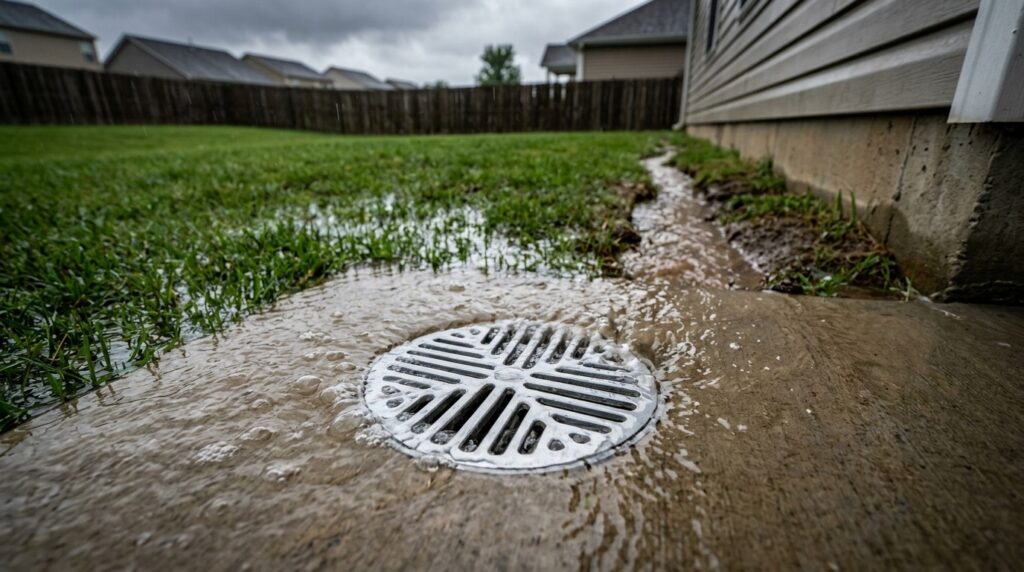
Erosion doesn’t just remove soil—it weakens the entire landscape. Over time, slopes become unstable, beds lose structure, and plants require more maintenance to survive.
Stormwater management protects soil by controlling water velocity and encouraging infiltration instead of runoff.
The Connection Between Stormwater and Plant Health
Plants rely on consistent moisture, not extremes.
Stormwater creates extremes. During heavy rain, roots may become waterlogged. Shortly after, soil dries out because water ran off instead of soaking in. This cycle stresses plants and weakens their ability to recover.
Landscapers manage stormwater to create balance. By slowing water and distributing it evenly, they help soil retain moisture longer without becoming saturated.
This balance supports healthier roots and stronger plants throughout the growing season.
Why Stormwater Threatens Home Foundations
Stormwater problems rarely stay confined to the yard.
When runoff isn’t redirected properly, it often moves toward the home. Over time, repeated moisture near foundations can lead to cracks, basement leaks, mold growth, and structural concerns.
Even small amounts of water, when repeated over years, can cause significant damage.
Landscapers play a critical role in protecting homes by designing landscapes that move stormwater away from structures and toward safe absorption areas.
How Landscapers Think About Stormwater Differently
Stormwater management isn’t about fighting water—it’s about working with it.
Professional landscapers understand that water will move. The goal is to guide that movement safely. They consider slope, soil permeability, vegetation, and surface materials when designing solutions.
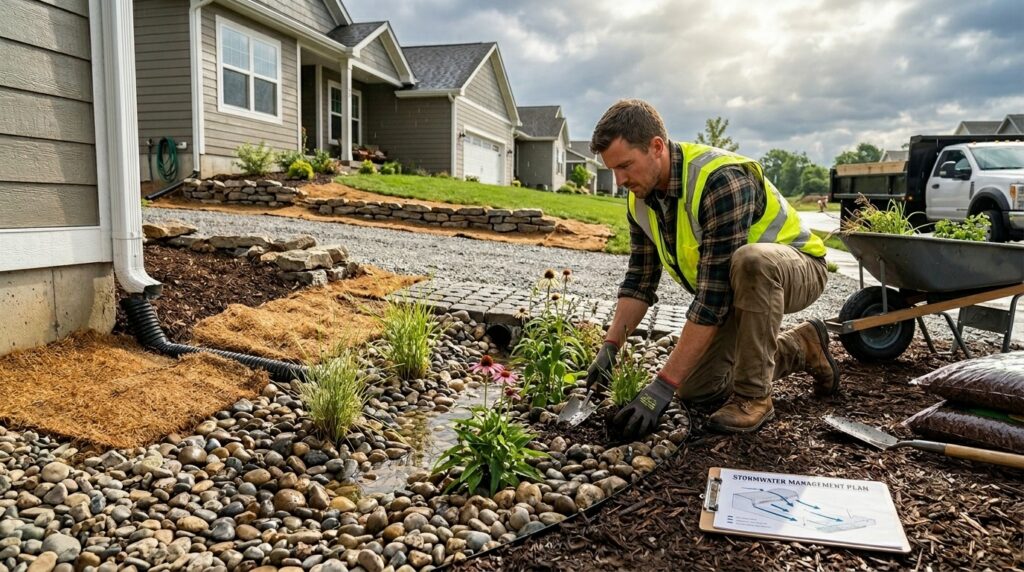
Instead of relying on temporary fixes, landscapers create systems that function naturally within the environment. These systems adapt to heavy rain, seasonal changes, and long-term landscape growth.
This mindset is what makes professional stormwater solutions effective and durable.
Why DIY Stormwater Fixes Often Fail
Stormwater problems are deceptive.
They may appear only during heavy rain, making them difficult to diagnose. Homeowners often attempt quick fixes—adding soil, digging shallow trenches, or redirecting water without understanding how it will behave during the next storm.
These solutions frequently fail because they address symptoms instead of causes.
Without proper grading, soil structure, and water flow analysis, stormwater simply finds a new path—often creating new problems in the process.
Landscapers reduce this risk by designing solutions based on how water behaves under real conditions, not just light rainfall.
Stormwater Management Is Preventative, Not Reactive
The most effective stormwater solutions are installed before major damage occurs.
Once erosion has removed soil or water has compromised a foundation, repairs become more invasive and costly. Preventative stormwater management protects the landscape early, preserving soil, plants, and structures.
This proactive approach saves homeowners time, money, and stress over the long term.
Why Stormwater Management Improves Overall Landscape Performance
When stormwater is managed correctly, landscapes perform better across the board.
Lawns grow more evenly. Plants establish deeper roots. Soil retains nutrients. Maintenance becomes easier and more predictable.
Stormwater management doesn’t just solve water problems—it creates healthier, more resilient landscapes.
This is why landscapers consider it foundational, not optional.
The Simple Plan Behind Professional Stormwater Management
A professional approach to stormwater follows a clear process.
First, the property is evaluated to understand how water moves during rainfall.
Next, solutions are designed to slow, redirect, and absorb stormwater safely.
Finally, the landscape is stabilized to support long-term performance.
This plan ensures stormwater works with the landscape instead of against it.
Why Local Experience Matters in Rhode Island
Rhode Island’s weather creates unique stormwater challenges.
Heavy rain, snowmelt, and freeze-thaw cycles place constant pressure on landscapes. Soil shifts. Water volume changes quickly. What works in other regions may fail here.
Local landscapers understand these patterns and design stormwater solutions that hold up year after year.
This regional knowledge makes a measurable difference in durability and effectiveness.
A Landscape That Handles Rain With Confidence
Stormwater doesn’t have to be a threat.
With the right planning, it becomes manageable. It moves where it should, soaks in where it can, and leaves the landscape stronger instead of damaged.
This is the landscaper’s role in stormwater management—not just solving visible problems, but protecting the property as a whole.
If water issues keep returning after every heavy rain, the solution isn’t temporary fixes.
It’s a system.
And with professional guidance, that system can work quietly in the background, no matter how hard it rains.