
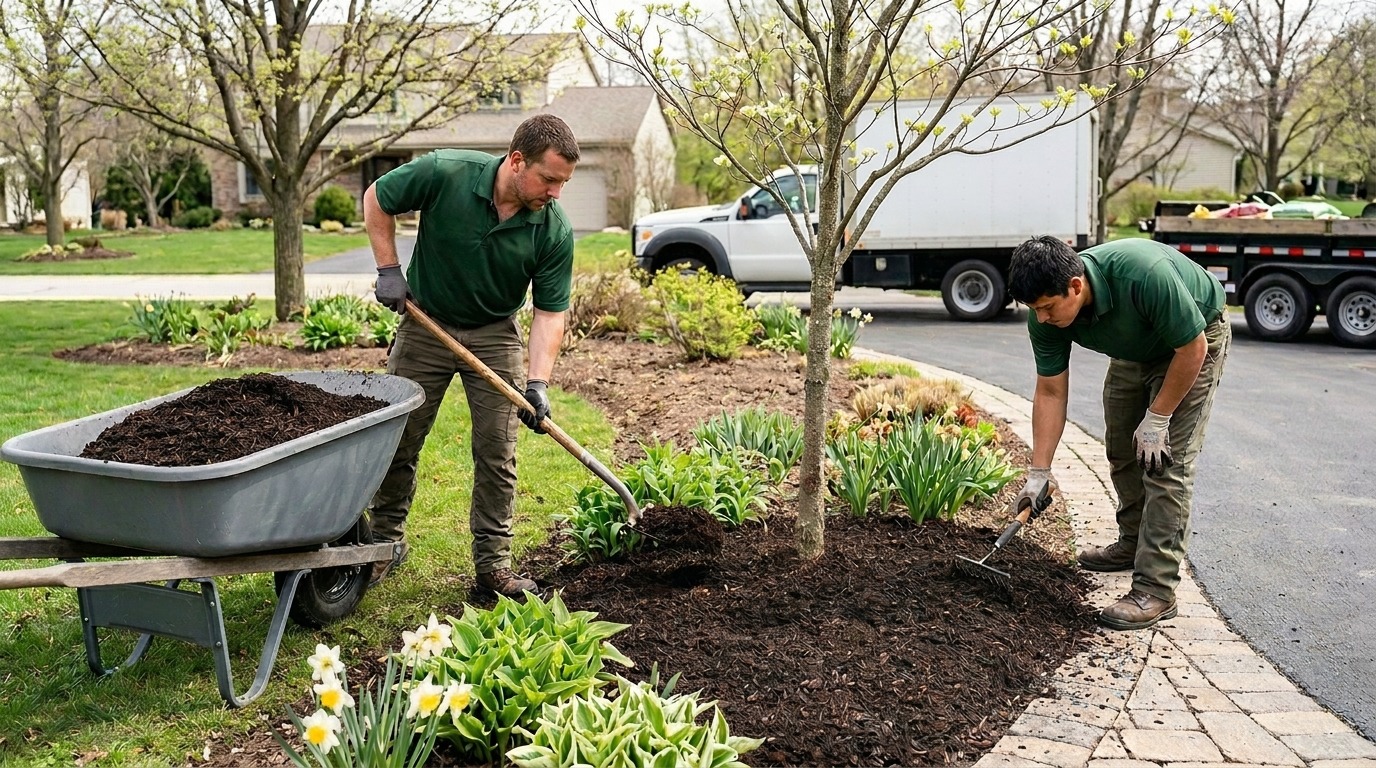
Mulch is one of the most misunderstood parts of landscaping.
To many homeowners, it’s just the finishing touch—the dark layer that makes flower beds look neat and complete. Something that gets refreshed once a year for appearance, then forgotten.
But mulch isn’t decoration.
It’s protection.
Seasonal mulching plays a critical role in how landscapes survive temperature changes, retain moisture, and stay healthy throughout the year. When done correctly, it quietly supports everything growing above it. When skipped or done incorrectly, problems slowly begin to show.
This is why professional landscapers treat mulching as a seasonal strategy, not a cosmetic chore.
The Real Problem: Soil Is Constantly Under Stress
Soil doesn’t stay the same from season to season.
In spring, it warms and activates. In summer, it dries and overheats. In fall, it cools and shifts. In winter, it freezes and contracts. Every one of these changes affects roots, moisture levels, and nutrient availability.
Without protection, soil becomes exposed to extremes. Moisture evaporates too quickly. Temperature swings stress roots. Weeds take advantage of open space. Nutrients wash away during heavy rain.
The external problem homeowners see is struggling plants or dry beds.
The internal problem is confusion: “I water and maintain—why does this keep happening?”
The philosophical problem is simple: healthy plants shouldn’t be this hard to maintain.
Seasonal mulching solves this problem at the root level.
You’re the Hero — Your Landscape Needs Consistent Support
Homeowners want landscapes that look good and stay healthy without constant intervention.
What they don’t always realize is that consistency below the surface creates stability above it. Mulch provides that consistency by acting as a buffer between soil and environment.
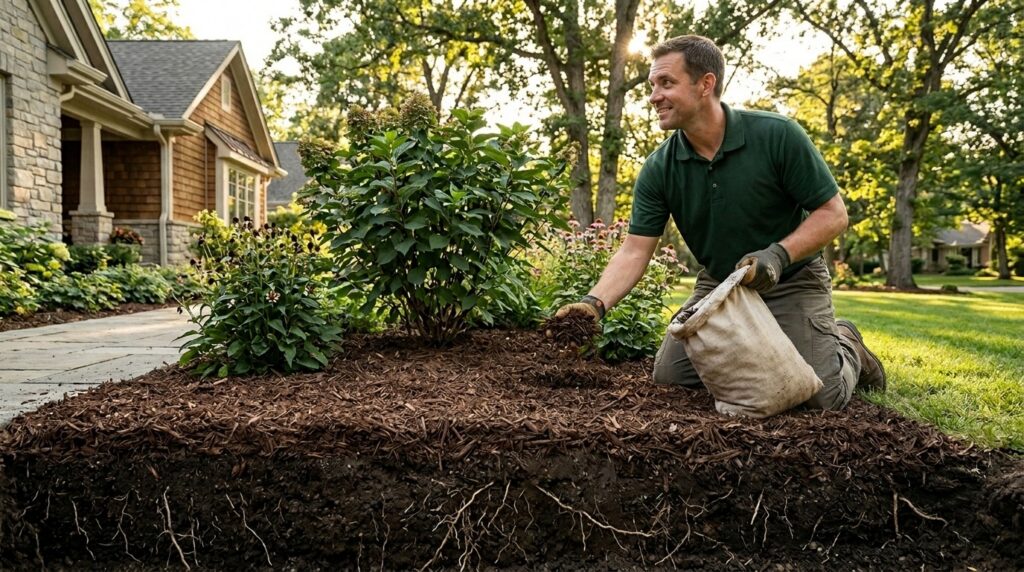
That’s where a professional landscaper becomes the guide.
At Doug Greenwood Landscaping Co., seasonal mulching is approached with intention. The goal isn’t to pile material into beds. It’s to support soil health, protect roots, and keep landscapes performing well through changing conditions.
Why Mulching Is a Seasonal Process, Not a One-Time Task
Many homeowners mulch once and assume the job is done.
But mulch breaks down over time. It settles into the soil, decomposes, and becomes part of the growing environment. This is a good thing—but it also means mulch must be replenished and adjusted seasonally.
Spring mulching focuses on moisture retention and weed suppression. Summer mulching protects against heat stress. Fall mulching insulates roots and prepares plants for winter conditions.
Each season places different demands on the landscape, and mulching adapts to meet those demands.
How Mulching Protects Soil Health
Soil health determines how well plants grow, recover, and resist stress.
Mulch protects soil by reducing temperature swings. During hot months, it keeps soil cooler. During cold months, it insulates against freezing. This stability allows roots to function more effectively.
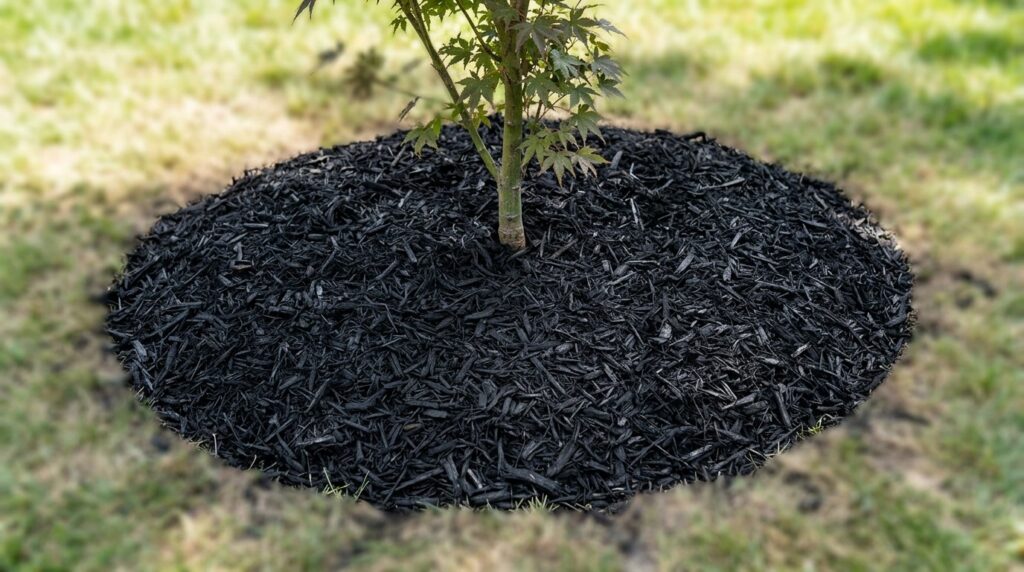
Mulch also improves moisture management. It slows evaporation, allowing water to penetrate deeper instead of disappearing into the air. This reduces watering needs and prevents drought stress.
Over time, as mulch decomposes, it adds organic matter back into the soil. This improves structure, nutrient availability, and microbial activity.
Healthy soil creates resilient landscapes.
Why Mulching Helps Control Weeds Naturally
Weeds thrive in exposed soil.
When soil is bare, sunlight reaches weed seeds, triggering germination. Mulch blocks that light, making it harder for weeds to establish themselves.
This natural weed suppression reduces competition for water and nutrients. It also minimizes the need for chemical treatments or constant manual removal.
Seasonal mulching keeps this barrier intact as older mulch breaks down and shifts, ensuring continued protection throughout the year.
Mulching and Moisture Retention Go Hand in Hand
One of the biggest benefits of mulching is its impact on moisture retention.
Without mulch, soil dries quickly—especially during summer heat. This leads to frequent watering and uneven moisture levels. Plants experience stress cycles that weaken them over time.
Mulch acts like a shield. It keeps moisture where roots can access it and reduces runoff during heavy rain. This balance helps plants stay hydrated without becoming waterlogged.
Landscapers rely on mulching because it makes water management more predictable and efficient.
Why Mulch Depth and Placement Matter
Not all mulching is helpful.
Too little mulch provides minimal benefit. Too much can suffocate roots and trap excessive moisture. Incorrect placement against plant stems or tree trunks can cause rot and disease.
Professional landscapers understand how much mulch is needed and where it should be placed. They apply it evenly, at proper depth, and with space around stems to protect plant health.
This precision is what separates effective mulching from cosmetic layering.
Mulching Reduces Seasonal Plant Stress
Plants experience stress when conditions change quickly.
Temperature spikes, dry periods, and heavy rain all disrupt root systems. Mulch softens these changes by creating a more consistent environment.
In summer, it reduces heat stress. In fall, it protects roots as temperatures drop. In winter, it insulates against freeze-thaw cycles that damage root structures.
Seasonal mulching allows plants to focus energy on growth and recovery instead of survival.
Why Landscapers Choose the Right Mulch for the Right Season
Mulch isn’t one-size-fits-all.
Different materials break down at different rates. Some retain moisture better. Others provide better insulation or visual appeal. Landscapers choose mulch based on plant type, soil condition, and seasonal needs.
This selection process ensures mulch works with the landscape, not against it.
Using the wrong mulch—or using it at the wrong time—can limit benefits and create new problems.
The Hidden Cost of Skipping Seasonal Mulching
Skipping mulching doesn’t cause immediate failure.
It causes gradual decline.
Soil dries faster. Weeds increase. Plants struggle during extreme temperatures. Over time, landscapes require more water, more maintenance, and more corrective work.
What seems like a small shortcut becomes an ongoing cost.
Seasonal mulching prevents this slow deterioration by maintaining stability year-round.
How Mulching Improves Long-Term Landscape Performance
Mulching doesn’t just protect plants—it improves how landscapes perform over time.
As organic mulch decomposes, it enriches the soil. Root systems grow stronger. Plants become more resilient. Lawns and beds recover faster from stress.
This long-term improvement is why landscapers consider mulching foundational, not optional.
Healthy landscapes start with healthy soil.
The Simple Plan Behind Professional Mulching
Seasonal mulching follows a clear approach.
First, existing mulch and soil conditions are evaluated.
Next, the appropriate mulch type and depth are selected for the season.
Finally, mulch is applied in a way that supports plant health and soil stability.
This plan ensures mulch serves a purpose beyond appearance.
Why Seasonal Mulching Matters in Rhode Island
Rhode Island’s climate makes seasonal mulching especially important.
Cold winters, warm summers, and unpredictable rainfall place constant pressure on soil and plants. Freeze-thaw cycles and summer heat both threaten root health.
Seasonal mulching helps landscapes adapt to these conditions instead of reacting to damage after it occurs.
Local experience matters when timing and technique make the difference.
A Landscape That Stays Healthy All Year
Mulch works quietly.
It doesn’t draw attention to itself, but everything depends on it. It protects soil, supports roots, and reduces stress across every season.
This is why professional landscapers emphasize mulching as a seasonal practice, not a once-a-year task.
If your landscape struggles despite regular maintenance, the issue may not be effort—it may be protection.
And seasonal mulching provides exactly that.