
Seasonal Landscape Design Ideas
A landscape shouldn’t feel like it disappears for half the year.
Yet many yards are designed for a single moment—usually spring or early summer—when everything is green, blooming, and at its peak. After that, the energy fades. Colors dull. Spaces feel empty. What once looked complete starts to feel unfinished.
That’s not a maintenance problem.
It’s a design problem.
This is where seasonal landscape design ideas come into play. Instead of focusing on one season, they create a yard that evolves—one that looks intentional and balanced no matter the time of year.
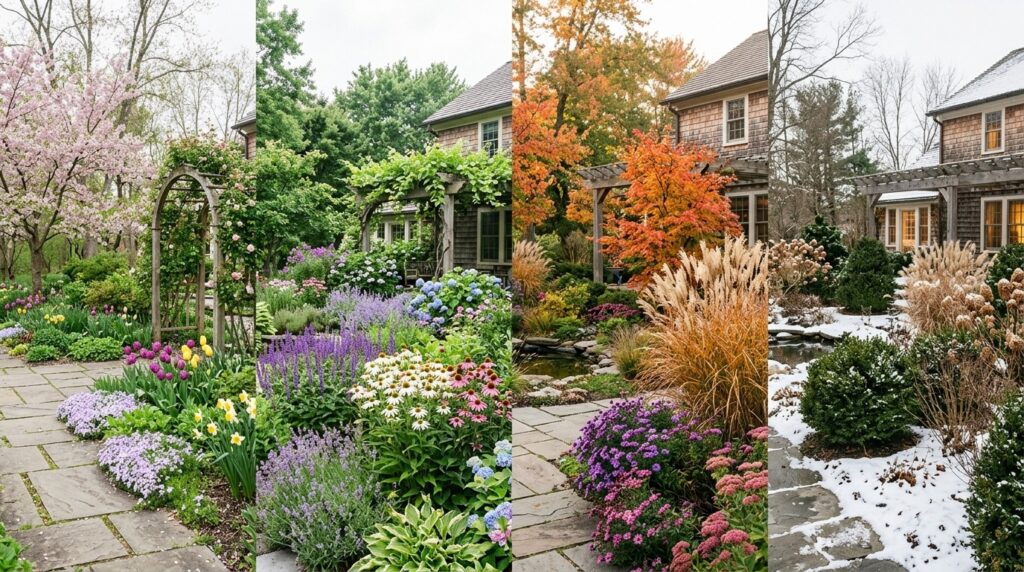
The Real Problem: Designing for One Season Only
Most landscaping decisions are made based on how things look right now.
Plants are chosen for immediate color. Layouts are built around peak growth. The result is a space that looks great temporarily but loses impact as conditions change.
The external problem is a yard that feels inconsistent.
The internal problem is disappointment: “It looked better a few months ago.”
The philosophical problem is simple: your landscape should work year-round, not just at its peak.
Seasonal landscape design ideas solve this by thinking beyond a single moment.
You’re the Hero — Your Yard Should Evolve With the Year
Homeowners don’t want to redesign their yard every season.
They want a space that adapts naturally. A landscape that feels alive in spring, comfortable in summer, structured in fall, and intentional even in winter.
What they need is a plan that accounts for change.
That’s where a professional landscaper becomes the guide.
At Doug Greenwood Landscaping Co., seasonal landscape design ideas are built around the full cycle of the year. The goal isn’t to create a single moment—it’s to create a continuous experience.
Understanding the Rhythm of the Landscape
Landscapes move in cycles.
Growth, bloom, decline, and rest are all part of the process. Each season brings different conditions, and each affects how the yard looks and functions.
Designing with this rhythm in mind changes everything.
Instead of trying to hold onto one look, the landscape is allowed to shift naturally. Each phase becomes part of the design rather than something to manage.
Spring: Designing for Renewal
Spring is where everything begins again.
New growth appears. Color returns. The landscape feels active and fresh. Seasonal landscape design ideas take advantage of this by creating a sense of renewal.
But spring design isn’t just about adding color.
It’s about creating structure that supports early growth. Plant placement, spacing, and layout all influence how the landscape develops during this time.
A strong spring design sets the tone for everything that follows.
Why Spring Design Needs Balance
It’s easy to overdesign for spring.
Too many early-blooming elements can create a short-lived peak that fades quickly. When those elements decline, the landscape can feel empty.
Seasonal landscape design ideas balance early growth with elements that carry forward.
This ensures the yard remains consistent beyond the initial burst of color.
Summer: Creating Comfort and Usability
Summer is when landscapes are used the most.
Long days and warm weather make outdoor spaces more active. This is the season when function becomes just as important as appearance.
Design focuses on usability.
Shade, seating areas, and open spaces become essential. Plants provide structure and softness, but the layout determines how the space feels.
Seasonal landscape design ideas ensure summer isn’t just visually appealing—it’s comfortable.
Why Summer Design Should Reduce Effort
Summer can also bring stress.
Heat, dry conditions, and heavy use all affect how the landscape performs. Designs that require constant maintenance can become overwhelming during this time.
A well-planned summer landscape minimizes effort.
It supports natural growth, reduces water demands, and creates a space that remains stable even in challenging conditions.
Fall: Emphasizing Structure and Transition
Fall changes how the landscape feels.
Colors shift. Growth slows. The focus moves from activity to transition. This is where structure becomes more visible.
Seasonal landscape design ideas highlight this change.
Instead of relying on bright color, they use form, texture, and layout to maintain visual interest. The landscape feels intentional even as it prepares for winter.
Why Fall Design Prepares for the Future
Fall isn’t just about appearance.
It’s about preparation.
The way the landscape is designed during this season affects how it enters winter. Clean lines, defined spaces, and balanced elements help maintain stability as conditions change.
Seasonal landscape design ideas treat fall as a bridge, not an ending.
Winter: Designing for Simplicity and Presence
Winter is often overlooked in landscape design.
With less growth and fewer colors, many yards feel empty. But winter design focuses on presence instead of activity.
Structure becomes the focus.
Shapes, lines, and layout define the space. Hardscapes, trees, and foundational elements create a sense of stability. Even without growth, the landscape remains complete.
Seasonal landscape design ideas ensure winter feels intentional—not neglected.
Why Winter Design Is About Contrast
Winter highlights contrast.
Light and shadow, open space and structure, simplicity and form all become more noticeable. A well-designed landscape uses these elements to create interest.
Instead of relying on color, it relies on composition.
This creates a space that feels calm and balanced during the quietest part of the year.
The Importance of Layering Across Seasons
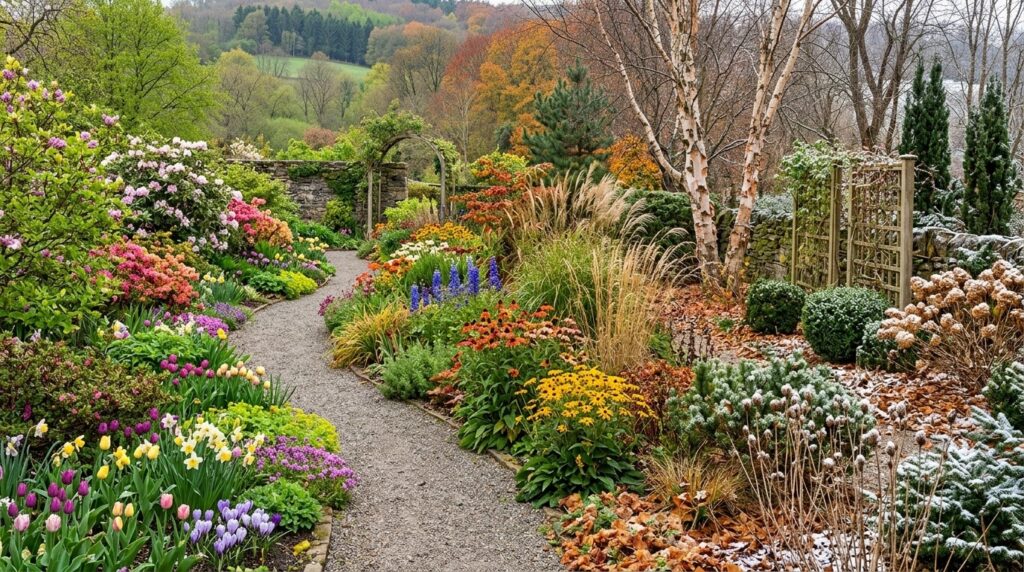
Layering is one of the most effective seasonal design strategies.
It involves combining elements that perform at different times of the year. Some provide color in spring. Others add structure in winter. Together, they create continuity.
This approach ensures the landscape never feels empty.
Each layer contributes to the overall design, no matter the season.
Why Flow Remains Constant Year-Round
While appearance changes, flow should remain consistent.
Paths, transitions, and layout don’t shift with the seasons. They provide stability and guide movement throughout the year.
Seasonal landscape design ideas maintain this consistency.
No matter how the landscape evolves, the way it’s used stays intuitive.
Avoiding Common Seasonal Design Mistakes
Some landscapes struggle because they focus too heavily on one season.
Overemphasizing spring color, neglecting winter structure, or ignoring summer usability can create imbalance.
Professional landscapers avoid these issues by considering the entire cycle.
Every decision supports year-round performance.
The Long-Term Value of Seasonal Design
Seasonal landscape design creates lasting value.
The yard remains visually appealing throughout the year. Maintenance becomes more predictable. The space feels complete regardless of the season.
This consistency makes the landscape easier to enjoy and easier to manage.
The Simple Plan Behind Seasonal Landscape Design
Seasonal landscape design follows a clear approach.
First, the property is evaluated to understand its natural conditions.
Next, elements are selected to perform across different seasons.
Finally, the design is arranged to create balance and continuity.
This plan ensures the landscape evolves without losing its structure.
Why Seasonal Design Matters in Rhode Island
Rhode Island experiences distinct seasonal changes.
Each season brings different conditions that affect how landscapes perform. Designing for these changes ensures the yard remains stable and attractive year-round.
Local landscapers understand how to apply seasonal landscape design ideas that work in this environment.
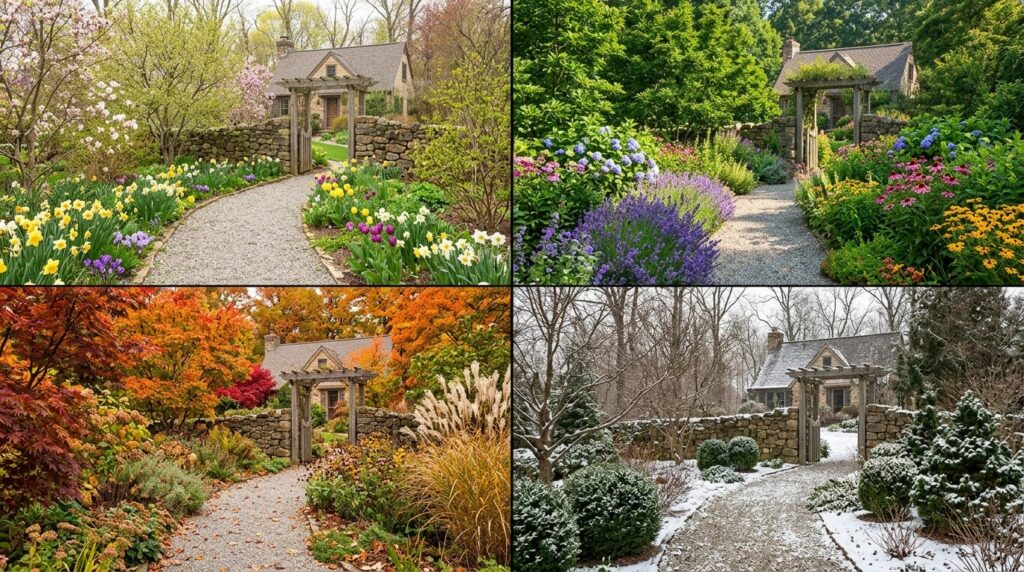
A Landscape That Changes Without Losing Its Identity
A great landscape doesn’t stay the same.
It changes.
But it doesn’t lose its identity.
With the right seasonal landscape design ideas, your yard becomes something that evolves naturally while still feeling complete. It reflects the time of year without ever feeling unfinished.
If your yard feels like it fades as the seasons change, the solution isn’t more maintenance.
It’s a better design—from the beginning.