
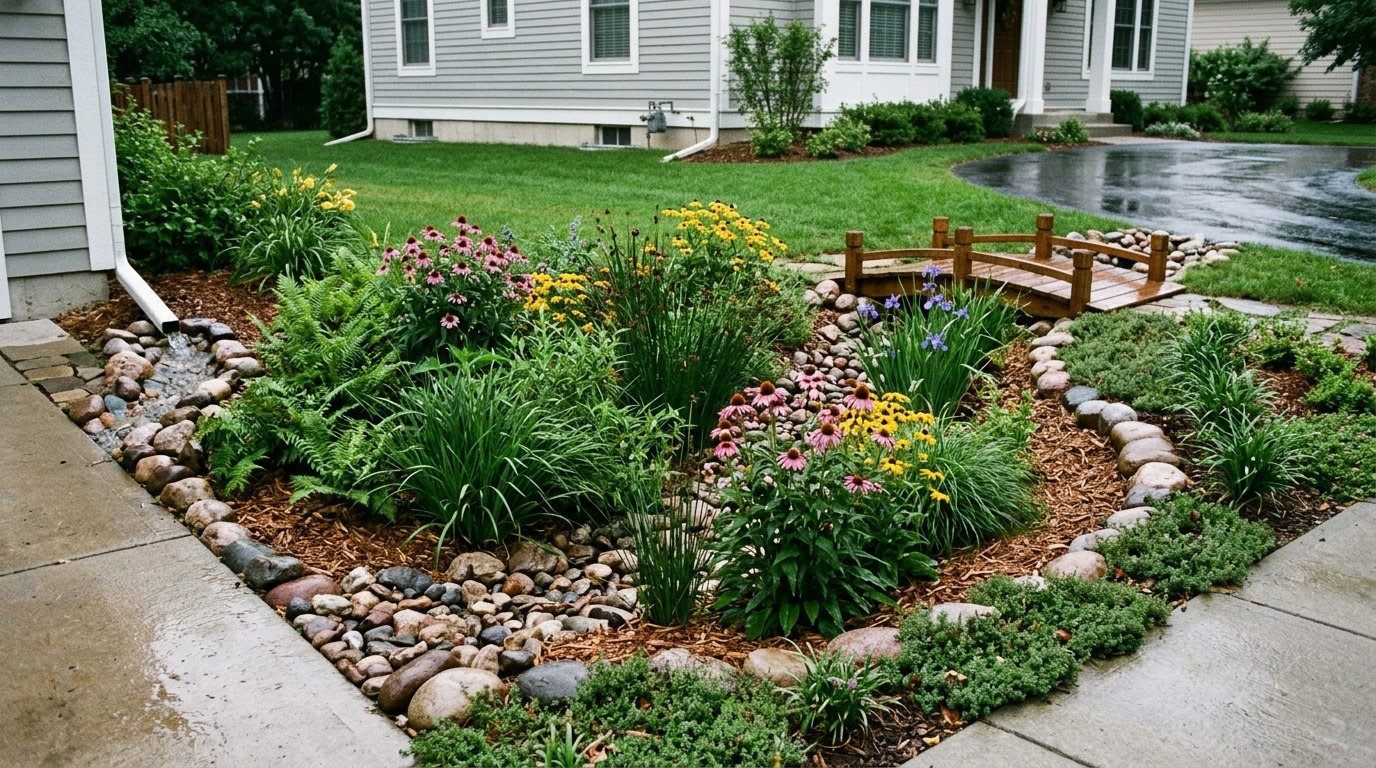
Water has a habit of showing up where it’s not wanted.
After a heavy rain, you may notice puddles forming in the same spots. Downspouts overflow into garden beds. Low areas stay wet longer than they should. Over time, these small issues turn into erosion, plant stress, and ongoing maintenance problems.
Most homeowners try to fight water.
Landscapers take a different approach.
Instead of pushing water away entirely, they design spaces that welcome it, manage it, and use it to benefit the landscape. This is where rain garden landscaping comes in.
A rain garden doesn’t just solve drainage problems—it turns them into something functional and beautiful.
The Real Problem: Water Has No Plan
Rainwater doesn’t follow property lines or landscaping intentions.
It follows gravity.
Without guidance, it collects in low spots, runs across surfaces, and slowly reshapes the yard. What begins as a minor inconvenience becomes a pattern that repeats after every storm.
The external problem is visible: pooling water, soggy areas, and runoff.
The internal problem is frustration: “Why does this keep happening?”
The philosophical problem is simple: your yard should work with nature, not constantly fight against it.
Rain garden landscaping solves this by giving water a place to go.
You’re the Hero — Your Yard Needs a Smarter System
Homeowners don’t want complicated drainage systems scattered across their yard.
They want solutions that feel natural. They want a landscape that looks intentional while quietly solving problems in the background.
That’s where a professional landscaper becomes the guide.
At Doug Greenwood Landscaping Co., rain garden landscaping is designed to blend function and beauty. The goal isn’t to create a visible fix—it’s to create a feature that feels like it’s always been part of the yard.
What a Rain Garden Really Does
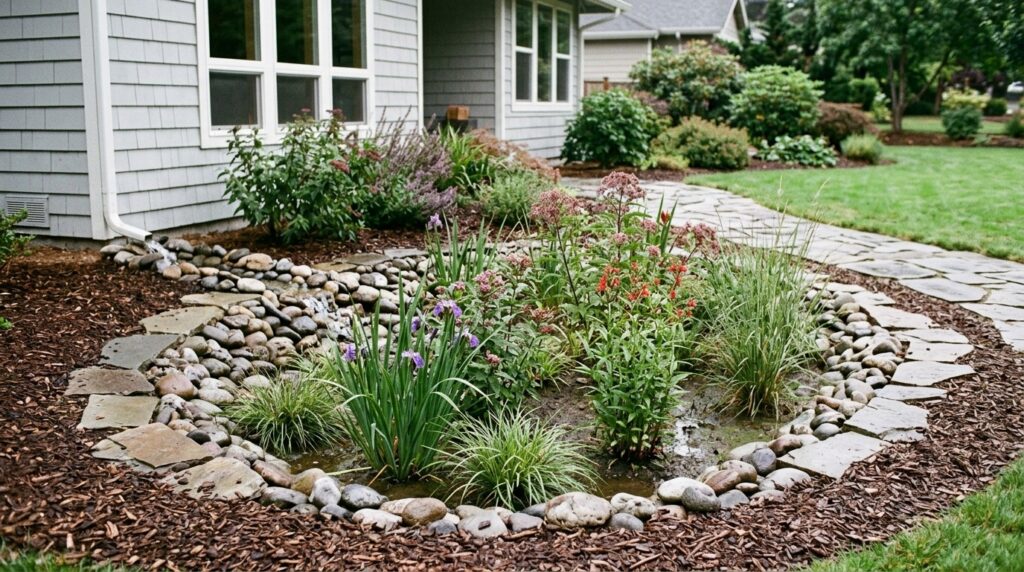
A rain garden is more than a planted area.
It’s a carefully designed space that captures and absorbs runoff. Instead of allowing water to rush across the yard, it slows down, spreads out, and gradually soaks into the soil.
This process reduces erosion, improves drainage, and supports healthier soil conditions.
What makes rain gardens unique is that they don’t rely on pipes or hard structures. They use natural elements—soil, plants, and grading—to manage water effectively.
Why Rain Gardens Feel Different From Traditional Drainage
Traditional drainage systems often hide underground.
Rain gardens are visible—but not in a disruptive way.
They look like part of the landscape. They add color, texture, and depth. At the same time, they perform a critical function that most people don’t notice unless they understand what they’re looking at.
This dual purpose is why landscapers recommend rain garden landscaping so often. It solves problems without sacrificing aesthetics.
How Placement Makes Rain Gardens Effective
Rain gardens only work when they’re placed correctly.
Landscapers study how water moves across a property. They identify natural collection points, downspout discharge areas, and low spots where water tends to gather.
The rain garden is then positioned to intercept that water before it becomes a problem.
This placement ensures the garden receives enough runoff to function while preventing overflow or saturation.
Designing for water flow—not just appearance—is what makes rain gardens successful.
Why Soil Matters More Than Plants
Plants get most of the attention in a rain garden.
But soil does most of the work.
Rain gardens rely on well-prepared soil that allows water to absorb efficiently. If the soil is too compacted, water will sit instead of draining. If it drains too quickly, the garden won’t hold moisture long enough to be effective.
Landscapers balance soil composition to support both drainage and plant health.
This foundation determines whether the rain garden performs as intended.
Choosing Plants That Work With Water
Plants in a rain garden need to handle changing conditions.
At times, they may sit in wet soil after a storm. At other times, they may go through dry periods. This fluctuation requires plants that are adaptable and resilient.
Landscapers select plants that thrive in these conditions, ensuring the garden remains healthy and attractive throughout the seasons.
The result is a landscape feature that looks intentional while quietly managing water.
How Rain Gardens Prevent Erosion
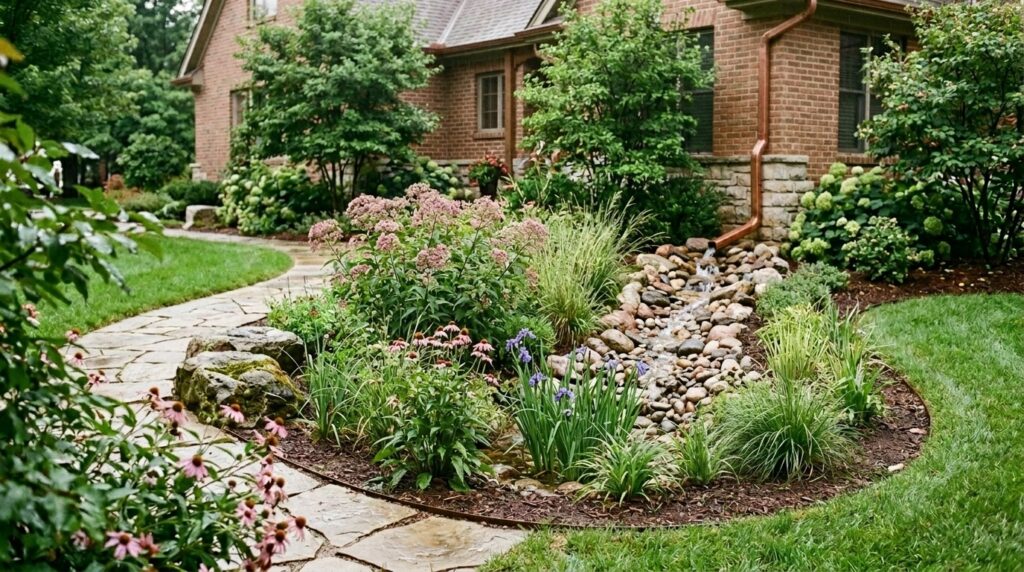
Erosion happens when water moves too quickly.
Rain gardens slow that movement.
By capturing runoff and allowing it to spread out, they reduce the force that causes soil to wash away. This protects surrounding areas and helps maintain the structure of the landscape.
Over time, this prevention saves homeowners from costly repairs and ongoing maintenance.
Why Rain Gardens Improve Overall Landscape Health
Rain gardens don’t just fix one problem.
They improve the entire system.
By managing water effectively, they support healthier soil, stronger plant growth, and more stable conditions throughout the yard. Water is absorbed where it’s needed instead of causing damage elsewhere.
This balance makes landscapes easier to maintain and more resilient over time.
The Difference Professional Design Makes
Rain gardens may look simple, but they require careful planning.
Without proper design, they can become overly saturated, fail to drain, or look out of place. These issues often come from incorrect placement or soil preparation.
Professional landscapers design rain gardens with both function and appearance in mind. They ensure the garden integrates naturally into the yard while performing reliably.
This design approach is what turns a concept into a lasting solution.
The Long-Term Value of Rain Garden Landscaping
Rain gardens offer benefits that extend beyond immediate drainage improvement.
They reduce maintenance needs, protect soil, and enhance curb appeal. They also contribute to environmental health by reducing runoff and supporting natural water cycles.
For homeowners, this means fewer problems, better performance, and a more enjoyable outdoor space.
Rain garden landscaping isn’t just practical—it’s valuable.
The Simple Plan Behind Rain Garden Design
Professional rain garden landscaping follows a clear process.
First, the property is evaluated to understand water flow and problem areas.
Next, the garden is designed to capture and manage runoff effectively.
Finally, soil and plants are installed to support long-term function and beauty.
This plan ensures the rain garden works as intended from the start.
Why Rain Gardens Work Well in Rhode Island
Rhode Island’s climate creates frequent drainage challenges.
Heavy rain, seasonal changes, and varied terrain all affect how water behaves. Rain gardens help manage these conditions by adapting to both wet and dry periods.
Local landscapers understand how to design rain gardens that perform well in these environments, ensuring durability and effectiveness.
A Landscape That Works With Nature
Water doesn’t have to be a problem.
With the right approach, it becomes part of the solution.
Rain garden landscaping allows homeowners to manage runoff naturally while enhancing the beauty of their yard. It transforms problem areas into features that support the entire landscape.
If your yard struggles with water after every storm, the answer isn’t more temporary fixes.
It’s a design that works with the way water moves.