
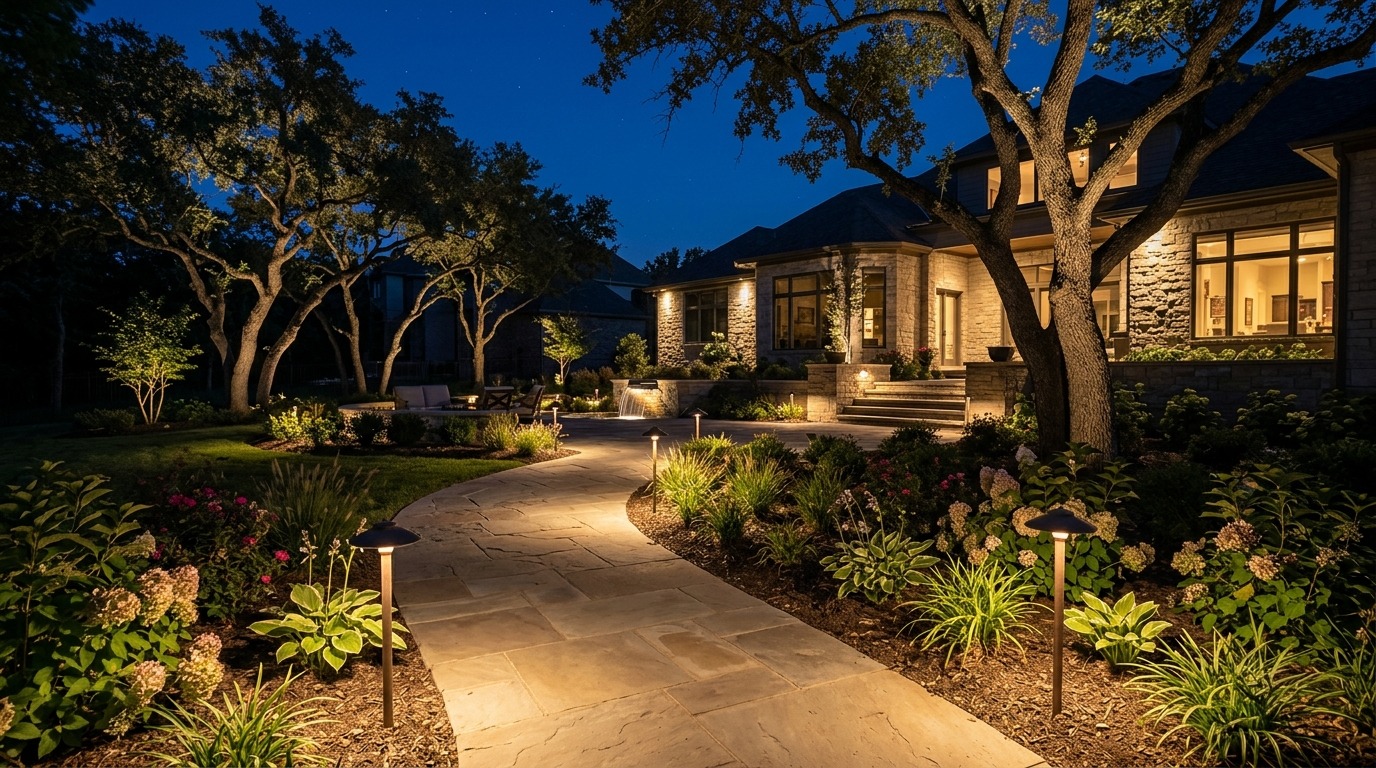
Most landscapes disappear at night.
The lawn you worked hard to maintain fades into darkness. Flower beds lose their shape. Trees become silhouettes. Walkways vanish unless porch lights spill just enough glow to find your footing.
During the day, everything looks intentional. At night, it feels unfinished.
This is one of the most overlooked aspects of residential landscaping—and one of the most powerful opportunities for improvement. Outdoor lighting doesn’t just make a yard visible after sunset. It transforms how the entire landscape is experienced.
That’s why professional landscapers treat lighting as a design element, not an accessory.
The Real Problem: Landscapes Designed Only for Daytime
Most yards are designed with daylight in mind.
Plants are chosen for color. Beds are shaped for visual flow. Hardscapes are placed for function and movement. But when the sun goes down, all of that effort disappears unless lighting is part of the plan.
The external problem is obvious: the yard looks dark and flat at night.
The internal problem is subtle: disappointment that the space can’t be enjoyed after sunset.
The philosophical problem is simple: if you invest in your landscape, it should work more than half the day.
Outdoor lighting solves this by extending the life of your landscape beyond daylight hours.
You’re the Hero — Your Landscape Needs Illumination
Homeowners want their yard to feel welcoming, safe, and complete.
They don’t want harsh floodlights or overly bright fixtures that feel industrial. They want lighting that highlights what matters and fades into the background when it’s doing its job right.
That’s where a professional landscaper becomes the guide.
At Doug Greenwood Landscaping Co., outdoor lighting is designed to complement the landscape, not overpower it. The goal is subtle enhancement—light that feels natural, intentional, and balanced.
Why Outdoor Lighting Changes How a Yard Feels
Light affects perception.
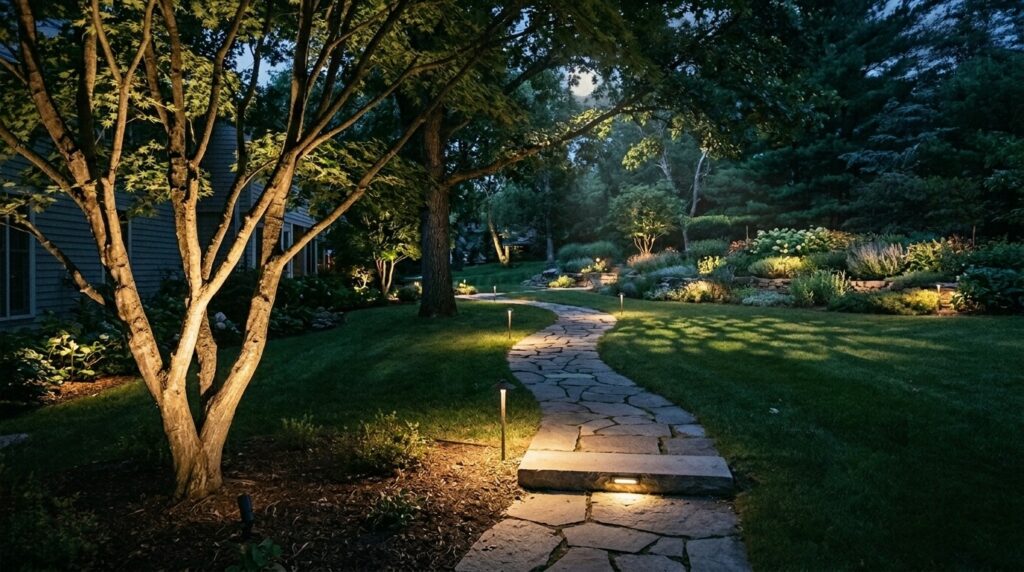
Soft lighting adds depth and dimension to a landscape. Shadows create contrast. Focal points draw the eye naturally from one feature to another. Instead of a flat, dark space, the yard gains layers.
This visual depth makes the landscape feel larger and more refined. Even modest yards feel more expansive when lighting is designed properly.
Outdoor lighting doesn’t add clutter. It reveals what’s already there.
Extending the Usable Hours of Your Yard
One of the biggest benefits of outdoor lighting is time.
Without lighting, outdoor spaces are limited to daylight. Patios, walkways, and gardens go unused in the evening—even during the best weather of the year.
Lighting changes that.
With the right design, homeowners can enjoy their yard well into the evening. Outdoor dining becomes comfortable. Relaxation doesn’t end at sunset. The yard becomes part of daily life instead of something enjoyed only occasionally.
This extended usability is why outdoor lighting is often described as one of the most impactful landscape upgrades.
How Lighting Enhances Landscape Design Elements
Outdoor lighting doesn’t exist on its own.
It works with the landscape’s structure.
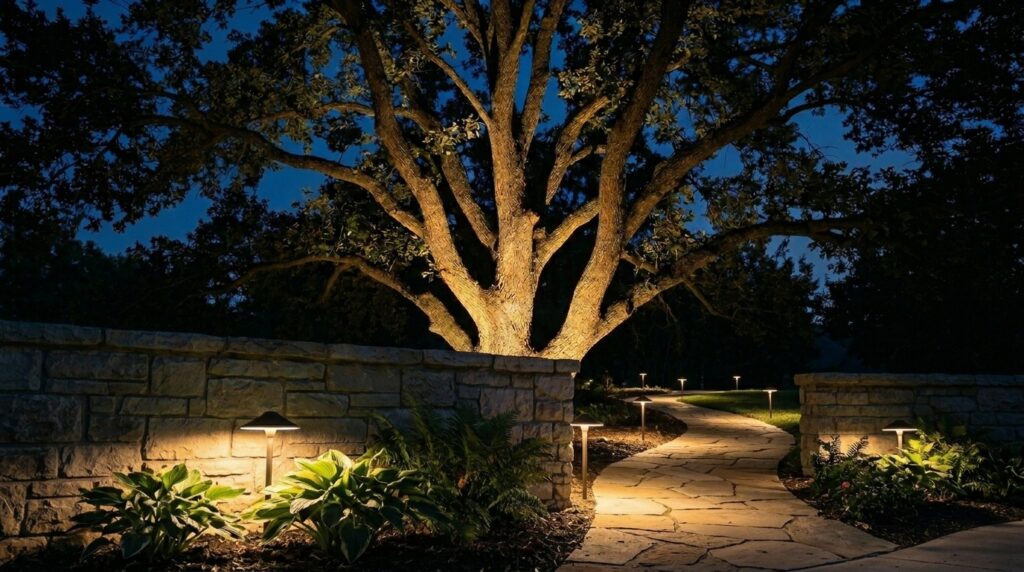
Trees gain presence when uplighting reveals their shape. Stonework shows texture instead of disappearing into shadow. Flower beds retain form even after dark. Pathways become visually connected instead of fragmented.
Professional landscapers use lighting to emphasize design intent. The yard looks cohesive at night because lighting follows the same principles as daytime design—balance, flow, and focus.
Safety Is an Essential Part of Good Design
A beautiful yard that feels unsafe isn’t enjoyable.
Outdoor lighting improves safety by illuminating walkways, steps, and transitions. It reduces trip hazards and makes movement through the yard more comfortable after dark.
But safety lighting doesn’t have to be harsh or obvious.
Well-designed outdoor lighting provides guidance without glare. It creates clear paths while maintaining atmosphere. This balance is what separates professional lighting design from simple utility lighting.
Why Subtle Lighting Works Better Than Bright Lighting
More light doesn’t always mean better results.
Excessive brightness flattens the landscape and creates glare. It washes out detail and disrupts the natural feel of the space. It can even draw attention away from the home instead of toward it.
Professional landscapers understand that outdoor lighting should be layered and restrained. The goal is to guide the eye, not overwhelm it.
When lighting is done right, you notice the landscape—not the fixtures.
Outdoor Lighting Creates a Sense of Arrival
Lighting plays a powerful role in first impressions.
As guests approach a home at night, lighting guides them naturally. The entrance feels welcoming. The path feels clear. The landscape frames the home instead of fading away.
This sense of arrival makes a property feel intentional and cared for. It’s one of the reasons outdoor lighting has such a strong impact on curb appeal.
Even homeowners who don’t entertain often benefit from this effect. Coming home to a softly lit landscape changes how the space feels emotionally.
Why Outdoor Lighting Is About Design, Not Just Fixtures
Outdoor lighting isn’t about choosing fixtures from a catalog.
It’s about placement, spacing, and purpose.
A professional landscaper considers where light should originate, where it should fall, and what it should reveal. They think about angles, shadows, and how lighting changes throughout the seasons as plants grow.
This design-first approach ensures lighting remains effective over time instead of needing constant adjustment.
The Long-Term Value of Outdoor Lighting
Outdoor lighting adds value beyond aesthetics.
It increases usability, improves safety, and enhances property appeal. It also highlights the investment already made in landscaping, allowing homeowners to enjoy it more fully.
While lighting is often installed for immediate enjoyment, its long-term benefits make it one of the most cost-effective landscape upgrades.
A well-lit yard feels complete, intentional, and finished.
Why DIY Lighting Often Falls Short
DIY outdoor lighting can work in limited situations, but it often misses the bigger picture.
Fixtures may be placed without considering glare or shadow. Wiring may limit flexibility. Lighting may focus on brightness instead of design.
The result is a yard that feels uneven or overly lit in some areas and dark in others.
Professional landscapers avoid this by planning lighting as part of the landscape, not as an afterthought.
The Simple Plan Behind Professional Outdoor Lighting
Effective outdoor lighting follows a clear process.
First, the landscape is evaluated for key features, pathways, and focal points.
Next, lighting is designed to enhance those elements without overpowering them.
Finally, fixtures are installed and adjusted to create balance and longevity.
This plan ensures lighting supports the landscape instead of competing with it.
Why Outdoor Lighting Matters in Rhode Island
Rhode Island’s seasonal changes make outdoor lighting especially valuable.
Long summer evenings, early winter sunsets, and frequent weather shifts all affect how landscapes are used. Lighting allows homeowners to adapt, enjoying their yard regardless of shorter days.
Local experience also matters when choosing materials and placement that hold up under changing conditions.
A lighting plan that works here is designed for durability as well as beauty.
A Landscape That Shines After Dark
A well-designed landscape shouldn’t disappear when the sun goes down.
Outdoor lighting reveals its character, extends its use, and enhances its beauty in subtle but powerful ways. It turns darkness into opportunity instead of limitation.
This is why professional landscapers recommend outdoor lighting as a core part of landscape design—not an add-on.
If your yard feels complete during the day but unfinished at night, the solution may not be more plants or more maintenance.
It may simply need light.