
Mulching Benefits: The Secret to a Beautiful Low-Maintenance Rhode Island Landscape
Mulch is the unsung hero of landscaping. It suppresses weeds, retains moisture, moderates soil temperature, and feeds the soil as it breaks down. A properly mulched landscape looks neat, tidy, and professional. At Doug Greenwood Landscaping Co., we mulch hundreds of properties across Coventry every year.
Types of Mulch for Rhode Island Landscapes
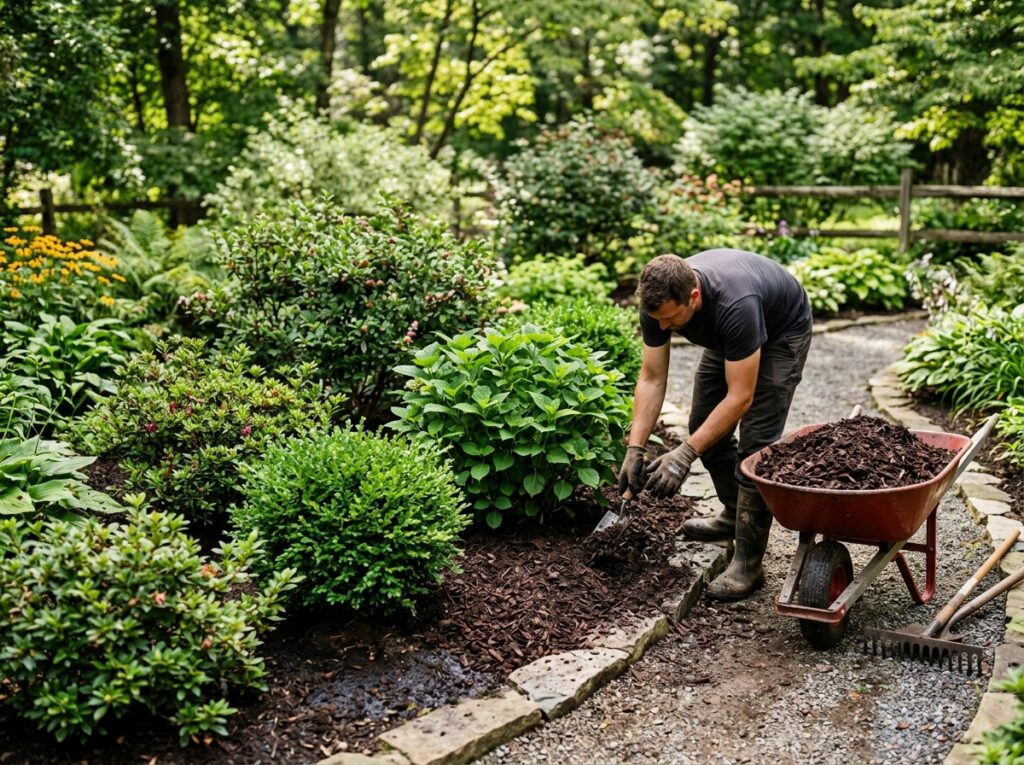
Shredded hardwood bark is the most popular choice. It looks natural, breaks down slowly, and is readily available. Cedar mulch repels insects and has a pleasant fragrance. Pine bark is lightweight, long-lasting, and ideal for acid-loving plants. Stone mulch lasts forever and never needs replacing, but it heats up in summer sun and does not add organic matter to the soil. Dyed mulch in red, black, or brown may look striking but the color fades quickly and the dyes can contain chemicals you do not want in your soil. We recommend natural undyed mulch for the health of the landscape.
How Much and How Deep
Apply two to three inches for most planting beds. Less than two inches will not effectively suppress weeds or retain moisture. More than four inches can suffocate roots by blocking oxygen, prevent water from reaching the soil, and create conditions for rot and fungal disease. Always keep mulch pulled back two to three inches from tree trunks and plant stems. Mulch piled against bark, sometimes called volcano mulching, traps moisture against the trunk and causes rot, insect damage, and disease.
Seasonal Timing
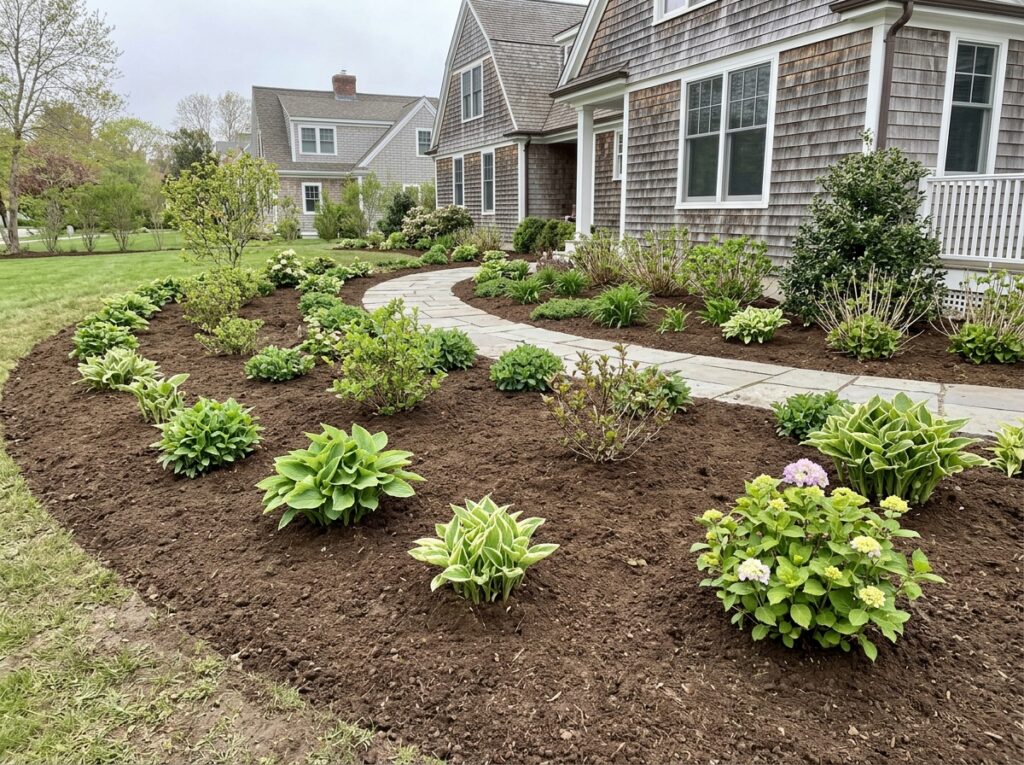
Spring mulching is the most common application — it gives beds a fresh clean look before the growing season and suppresses early weeds. Fall mulching protects roots from freeze-thaw cycles through the Rhode Island winter. The best approach is both: a light spring refresh of one inch over existing mulch, and a heavier winter mulch application of two to three inches applied after the ground begins to freeze in late November or early December.
The Benefits Beyond Appearance
Mulch reduces soil water evaporation by up to seventy percent. It keeps roots cooler in summer and warmer in winter, reducing plant stress. It prevents soil compaction from heavy rain. It suppresses weed germination by blocking light from reaching weed seeds in the soil. As organic mulch decomposes, it adds organic matter that improves soil structure, feeds beneficial organisms, and releases nutrients slowly over time. For the cost of mulch and an afternoon of labor, you get a full year of benefits.
📞 (401) 336-6032 | 33 Carr St, Coventry, RI 02816