
Rhode Island Lawn Problems Solved: Expert Fixes for a Healthier Yard
Every Rhode Island lawn has problems eventually. Brown patches that will not green up no matter how much you water. Weeds that come back stronger every time you pull them. Bare spots where nothing will grow, no matter what you try. The key to fixing any lawn problem is identifying what is causing it so you can address the root issue instead of endlessly treating the symptoms.
At Doug Greenwood Landscaping Co., we diagnose and treat lawn problems across Coventry and Kent County every day. After twenty-five years in the field, here are the most common Rhode Island lawn problems and exactly how to solve each one.
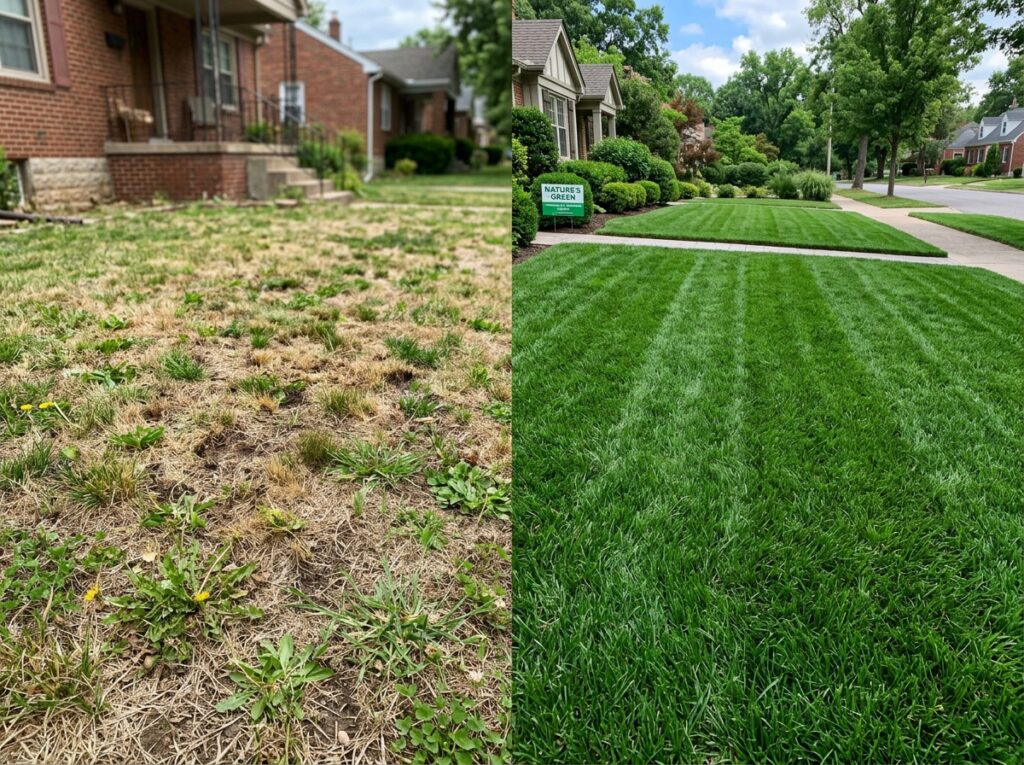
Crabgrass: The Most Common Rhode Island Lawn Problem
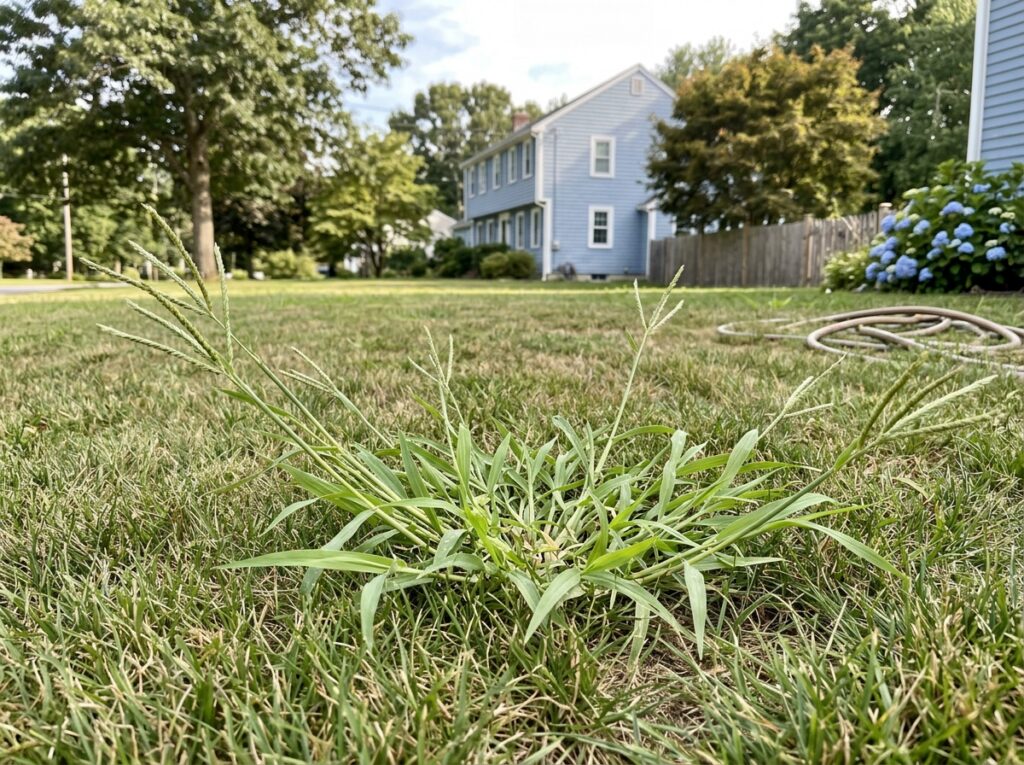
Crabgrass germinates when soil temperatures reach fifty-five degrees for several consecutive days, which in Rhode Island usually happens in mid to late April. By midsummer, it spreads in thick, light green clumps that stand out against the darker green of desirable grass. Crabgrass is an annual weed, meaning it dies with the first hard frost in fall. But before it dies, each plant drops thousands of seeds that will be waiting in the soil next spring.
The most effective control is prevention. A pre-emergent herbicide applied in April creates a chemical barrier in the top layer of soil that stops crabgrass seeds from sprouting. Timing is absolutely critical. Apply too early and the barrier breaks down before crabgrass season ends. Apply too late and the plants have already germinated and the pre-emergent does nothing. For existing crabgrass, post-emergent herbicides work best on young plants that are actively growing. By late summer, mature crabgrass is extremely tough to kill. The good news is that it dies with frost. The bad news is those seeds will be back unless you apply pre-emergent next spring.
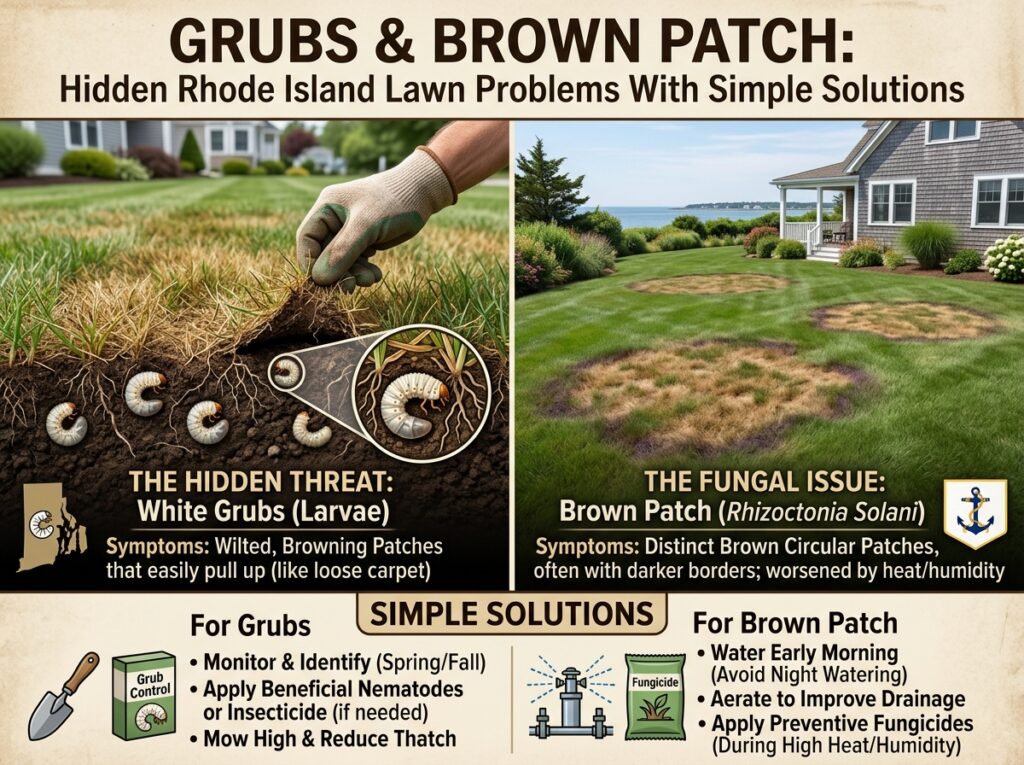
Grubs and Brown Patch: Hidden Rhode Island Lawn Problems With Simple Solutions
Grubs are the larvae of Japanese beetles and other beetles that feed on grass roots in late summer and early fall. The first sign is an irregular brown patch that feels spongy underfoot. If you grab the grass and pull, it lifts like a carpet because the roots underneath have been completely eaten. Dig up a square foot of turf. If you find more than five to ten white C-shaped grubs, treatment is needed. Apply preventive grub control in late June or early July to kill grubs as they hatch. Skunks and raccoons digging up your lawn at night are a telltale sign — they are after the grubs.
Brown patch fungus thrives in hot, humid Rhode Island summers. It appears as circular brown patches with a grayish smoke ring around the edge in early morning. The cause is almost always overwatering or evening watering. Water sitting on grass blades overnight creates perfect conditions for fungal growth. The solution is to water deeply and infrequently and only in the early morning. Fungicide should be a last resort.
Moss, Bare Spots, and Prevention
Moss grows where grass cannot compete. The underlying causes are shade, compacted soil, poor drainage, or low soil pH. Chemical moss killers provide only temporary relief. Prune trees to increase sunlight reaching the ground. Aerate to relieve compaction. Add lime if a soil test shows acidic conditions. In deep shade, replace struggling lawn with shade-tolerant groundcovers like pachysandra.
For bare spots, loosen the top inch of soil, scatter high-quality grass seed, tamp it gently, and keep consistently moist until germination. Fall is the best time to seed bare spots in Rhode Island. The best defense against all lawn problems is a thick, healthy lawn. Mow high, water deeply, fertilize at the right times, and aerate annually.
Fix Your Lawn Problems Today →
📞 (401) 336-6032 | 33 Carr St, Coventry, RI 02816