
Rhode Island Lawn Care Schedule: Proven Month-by-Month Guide for a Lush Lawn
A healthy, green lawn does not happen by accident. It happens because someone followed a plan. In Rhode Island, that plan needs to account for cold winters, humid summers, clay-heavy soils, and a growing season that is shorter than you might think. If you live in Coventry or anywhere in Kent County, this month-by-month lawn care schedule tells you exactly what to do and when to do it. At Doug Greenwood Landscaping Co., we have been caring for Rhode Island lawns since 1998. We know the local soil, the local weather patterns, and the local challenges that make lawn care here different from anywhere else. Here is the schedule we follow for our own maintenance clients.
March: Wake Up the Lawn
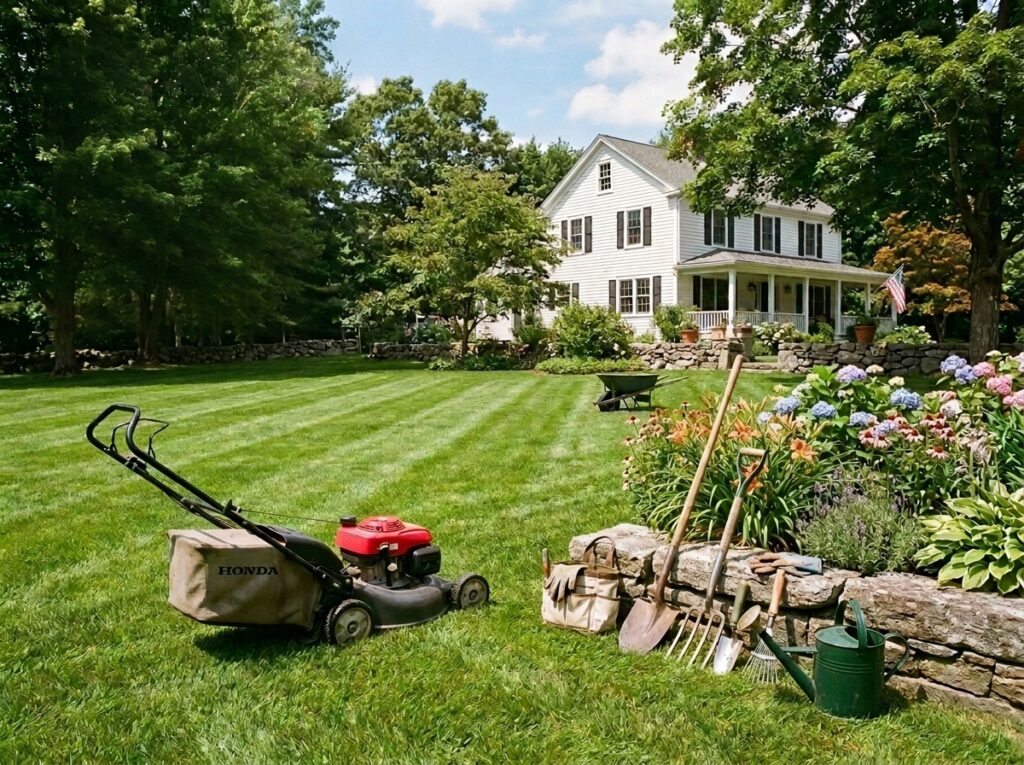
March in Rhode Island is unpredictable. One week it is forty degrees and raining. The next week there is snow on the ground. The key in March is to stay off the lawn when it is wet or frozen. Walking on saturated or frozen grass compacts the soil and damages the crowns of grass plants at the base. What you can do in March: remove any debris that blew in over the winter including branches, leaves, and trash that collected against fences and in corners. Lightly rake matted areas to prevent snow mold from spreading and to encourage air circulation. Have your mower blade sharpened and your equipment serviced so you are ready for the first cut when April arrives. If you want to get ahead of the spring rush, schedule your spring aeration and fertilization now. The best lawn care companies in Coventry book up fast in March and April.

April: First Cut and First Feed
April is when the real work begins. Once the soil has dried out enough that you can walk on it without leaving footprints, it is time for the first mow. Set your mower high, around three to three and a half inches. Cutting too short in spring shocks the grass and gives weeds an opening to establish. After the first mow, apply a slow-release nitrogen fertilizer with a crabgrass pre-emergent. In Rhode Island, crabgrass germinates when soil temperatures hit fifty-five degrees for several consecutive days, which usually happens in mid to late April. The pre-emergent creates a chemical barrier that stops crabgrass seeds from sprouting. Timing matters more than anything. Put it down too early and it wears off before crabgrass season ends. Put it down too late and the crabgrass has already germinated. April is also the best month for core aeration in Rhode Island. Aeration removes small plugs of soil, relieving compaction and allowing water, air, and nutrients to reach the root zone. If your lawn has heavy clay soil, which is common in Coventry, annual aeration makes a visible difference in thickness and color within weeks.
May: Weed Control and Mowing Discipline
By May, your lawn should be green and growing actively. Mow every five to seven days and never remove more than one-third of the grass blade in a single cut. This is the single most important mowing rule. Cutting too much at once stresses the grass, exposes the soil to sunlight, and invites weeds to move into the gaps. May is when broadleaf weeds like dandelions and clover become visible. Spot-treat with a selective herbicide or, if you prefer organic methods, hand-pull after a rain when the soil is soft and roots come out intact. Do not apply blanket weed killer unless you have a serious infestation covering a large percentage of the lawn. Healthy, thick grass naturally crowds out most weeds on its own. If you have not already done so, May is the last good window for spring aeration. After Memorial Day, the summer heat makes it harder for grass to recover from the stress of aeration.
June: Irrigation and Pest Awareness
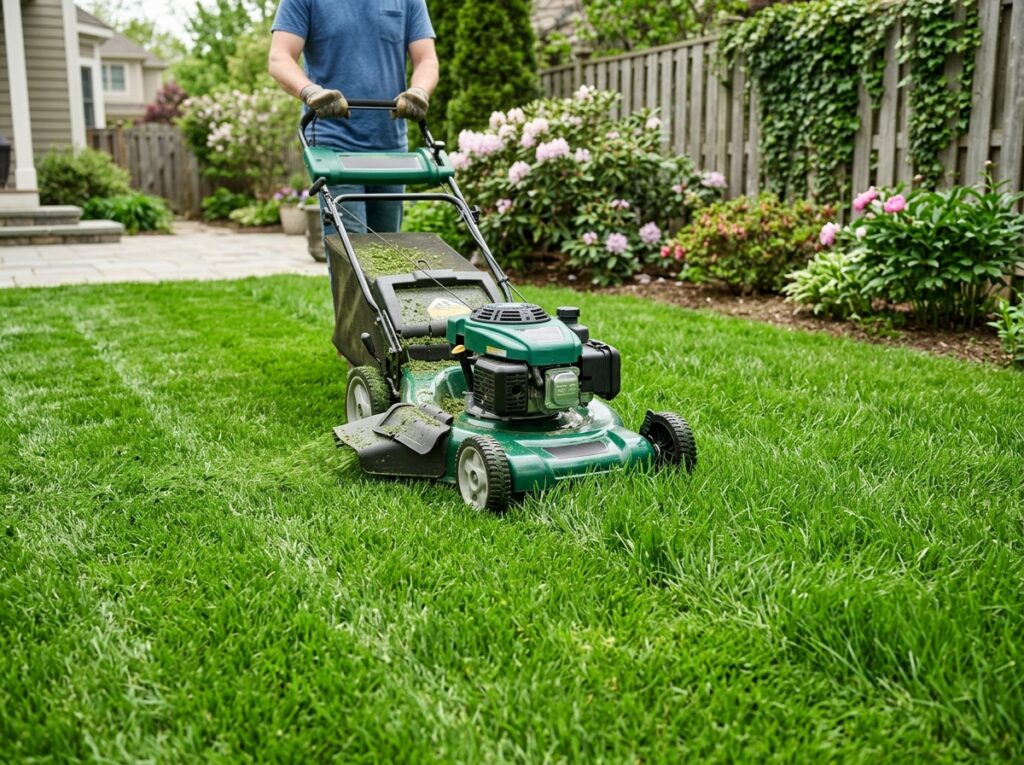
June marks the transition from vigorous spring growth to summer survival mode. Raise your mower height to three and a half or even four inches. Taller grass shades the soil surface, keeping roots cooler and reducing water loss through evaporation. Water deeply and infrequently rather than lightly and often. One inch of water per week, delivered in one or two deep watering sessions, encourages roots to grow deeper into the soil where temperatures are stable and moisture is more consistent. Shallow frequent watering creates shallow roots that cannot survive a Rhode Island heat wave. June is also when grubs begin actively feeding on grass roots. If you have had grub problems in past years, late June or early July is the time to apply a preventive grub control treatment. Signs of grub damage include irregular brown patches that lift easily like a carpet because the roots underneath have been eaten away.

September: The Best Month for Lawn Care
September is the single most important month for Rhode Island lawns. The summer heat breaks, nights cool down, and cool-season grasses enter their most active growth phase. Everything you do in September pays dividends for the next twelve months. Core aerate if you did not do it in spring. September aeration is actually better than spring aeration because the grass recovers faster in cool fall weather with warm soil. After aerating, overseed any thin or bare areas. The warm soil and cool air of September create ideal conditions for seed germination. Apply a fall fertilizer with higher potassium content to strengthen cell walls and prepare the grass for winter. Strong roots in September mean a faster green-up next March when your neighbors are still looking at brown grass.
Get Your Free Lawn Care Estimate →
📞 (401) 336-6032 | 33 Carr St, Coventry, RI 02816