
Landscape Design Ideas for Every Home
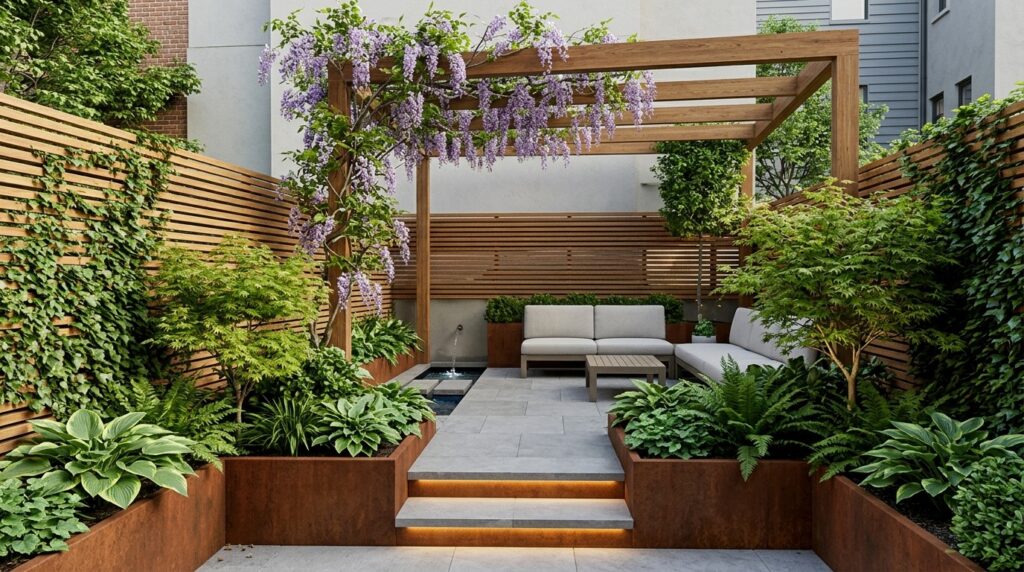
Every yard has potential.
Even the ones that feel too small, too plain, or too difficult to work with. The difference between a yard that feels unfinished and one that feels intentional usually comes down to one thing—design.
Not expensive materials. Not complicated features.
Just good design.
That’s why searching for landscape design ideas isn’t really about finding inspiration. It’s about finding direction. Ideas only work when they fit the space, the home, and the way people actually live.
The Real Problem: Too Many Ideas, No Clear Plan
Homeowners today have access to endless inspiration.
Photos, videos, and examples of beautiful landscapes are everywhere. But that abundance creates a different kind of problem. It becomes difficult to know what will actually work in your own yard.
The external problem is confusion—too many choices.
The internal problem is overwhelm: “Where do we even start?”
The philosophical problem is simple: your yard should feel like yours, not a copy of something that doesn’t fit.
Landscape design ideas only become valuable when they’re applied with purpose.
You’re the Hero — Your Yard Needs Clarity
Homeowners don’t need more ideas.
They need the right ones.
They want a yard that fits their home, supports their lifestyle, and feels natural instead of forced. They want something that looks good and works well without constant adjustments.
That’s where a professional landscaper becomes the guide.
At Doug Greenwood Landscaping Co., landscape design ideas are shaped around real properties. The goal isn’t to impress with trends—it’s to create spaces that feel right for the people who use them.
Why Design Starts With How You Use the Space
The best landscape design ideas don’t start with appearance.
They start with function.
How do you want to use your yard? Do you want a place to relax? Entertain? Let kids play? Grow plants? Every design decision flows from these answers.
When function is clear, design becomes focused. Without it, even beautiful ideas can feel disconnected.
Landscapers design spaces that support real-life use, not just visual appeal.
Creating Defined Spaces in Open Yards
One of the simplest and most effective design ideas is creating definitions.
Large, open yards often feel empty because they lack structure. Dividing the space into areas—without walls—gives it purpose. A seating area, a walkway, a planting zone—each serves a role.
These divisions don’t need to be obvious. Subtle changes in materials, elevation, or layout can create separation while keeping the space open.
Defined spaces make a yard feel organized and usable.
Why Balance Matters More Than Symmetry
Balance is often mistaken for symmetry.
While symmetry can work in some designs, most residential landscapes benefit from balance instead. Balance means visual weight is distributed evenly, even if elements are not identical.
A large tree on one side may be balanced by a group of smaller plantings on the other. A hardscape feature may be softened with greenery.
This balance creates harmony without making the yard feel rigid.
Using Pathways to Guide Movement
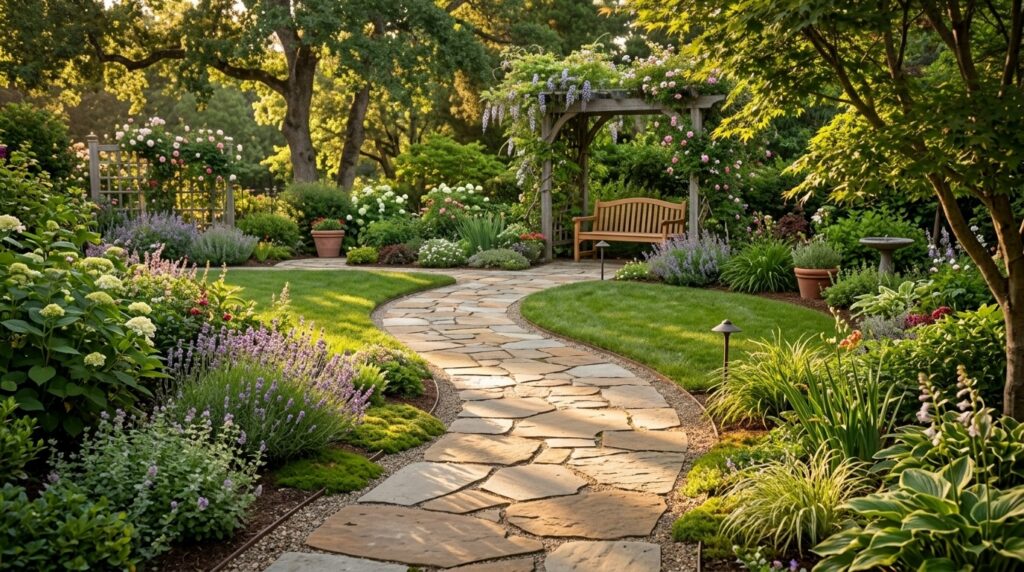
Pathways are one of the most practical landscape design ideas.
They do more than connect areas—they guide movement. They show people where to go without needing explanation. They also protect lawns from wear and create a sense of flow.
Well-designed pathways feel natural. They follow how people already move through space rather than forcing new patterns.
This subtle guidance makes the yard easier to use and more inviting.
Layering Plants for Depth and Interest
Planting design is about more than choosing individual plants.
It’s about layering.
Landscapers arrange plants by height, texture, and density to create depth. Taller elements form a backdrop. Medium plants fill space. Lower plants provide coverage and continuity.
This layering keeps the landscape visually interesting throughout the year, even when certain plants are not in bloom.
It also helps plants thrive by reducing competition and improving airflow.
Why Simplicity Often Works Best
Many homeowners assume more elements will create a better design.
In reality, simplicity often leads to stronger results.
A few well-placed features, supported by thoughtful planting, create clarity. Too many competing elements can make a yard feel cluttered and difficult to maintain.
Landscapers focus on restraint. They choose elements that serve a purpose and allow them to stand out.
Simple designs are easier to maintain and more enjoyable to live with.
Incorporating Hardscapes for Function
Hardscapes play a key role in landscape design.
They provide structure, create usable surfaces, and support the overall layout. Patios, walkways, and retaining elements all contribute to how the yard functions.
Without hardscapes, landscapes rely entirely on plants, which can limit usability.
Integrating hardscapes thoughtfully ensures the yard is both beautiful and practical.
Designing for Year-Round Appeal
Landscapes change with the seasons.
Designing with this in mind keeps the yard attractive beyond a single moment in time. Some elements provide color in spring, others in summer, and others add texture or structure in fall and winter.
Landscapers plan for this progression, ensuring the yard never feels empty.
Year-round appeal makes the landscape feel complete no matter the season.
Why Lighting Completes the Design
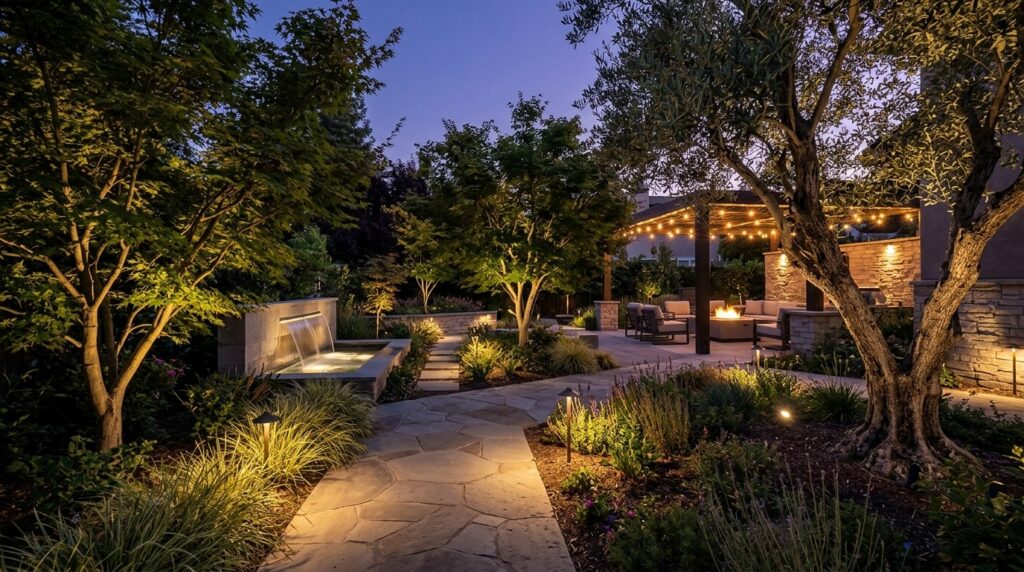
Landscape design doesn’t end at sunset.
Outdoor lighting extends the use of the yard and highlights key features after dark. It adds depth, improves safety, and creates atmosphere.
Lighting should feel subtle and intentional. It enhances what’s already there rather than overpowering it.
A well-lit landscape feels finished at all hours.
Avoiding Common Design Mistakes
Many design issues come from trying to do too much at once.
Mixing styles, overplanting, or ignoring flow can create confusion. These mistakes often stem from applying ideas without adapting them to the space.
Professional landscapers avoid this by focusing on cohesion. Every element supports the overall design instead of competing with it.
Consistency is what makes a landscape feel intentional.
The Simple Plan Behind Landscape Design
Landscape design follows a clear path.
First, the space is evaluated based on layout, sunlight, and use.
Next, ideas are selected and adapted to fit the property.
Finally, elements are arranged to create flow, balance, and function.
This process turns inspiration into a workable plan.
Why Local Knowledge Matters in Rhode Island
Landscape design is influenced by location.
Rhode Island’s climate, soil, and seasonal changes affect what works and what doesn’t. Design ideas that succeed elsewhere may struggle here without adjustment.
Local landscapers understand these conditions and tailor designs accordingly.
This ensures landscapes not only look good—but last.
A Landscape That Feels Right
The best landscape design ideas don’t stand out on their own.
They come together to create a space that feels natural, comfortable, and complete.
When design is done well, the yard doesn’t just look better—it works better. It becomes a place people want to spend time in, not just maintain.
If your yard feels like it’s missing something, the answer may not be more ideas.
It may be the right ones—applied the right way.