
If you’ve ever walked outside after a heavy rain and noticed gullies forming, mulch sliding away, or muddy puddles around your yard, you’ve seen erosion in action. It’s frustrating—and more than that, it’s a sign that your landscape is slowly losing its foundation.
At Doug Greenwood Landscaping Co., we’ve spent decades helping homeowners across Rhode Island combat erosion and restore balance to their outdoor spaces. Whether it’s a steep backyard slope, drainage along a driveway, or a bare patch near a downspout, there’s a science (and a little art) to keeping your soil right where it belongs.
In this article, we’ll pull back the curtain on erosion control—what it is, why it happens, and how professional landscapers keep it under control with methods that last.
Key Takeaways
- Erosion control isn’t just about saving soil—it’s about protecting your property’s beauty, stability, and long-term value.
- Landscapers use strategic combinations of grading, retaining walls, native plants, and drainage systems to keep soil in place.
- The right erosion control methods vary depending on your yard’s slope, soil type, and local climate.
- Proper design saves money by preventing costly foundation damage, muddy lawns, and landscape washouts.
What Is Erosion Control and Why It Matters
Erosion control is the process of preventing soil displacement caused by wind, water, or gravity. Think of it as landscape insurance—because when your soil moves, everything else follows.
Without proper management, erosion can:
- Undermine retaining walls and patios.
- Expose tree roots and kill plants.
- Create muddy, uneven lawns.
- Even threaten your home’s foundation.
For Rhode Island homeowners, where coastal storms and uneven terrain are common, erosion control isn’t just about aesthetics—it’s essential for safety and long-term home value.
Common Causes of Yard Erosion
Understanding what’s driving erosion helps determine how to stop it. The usual culprits include:
1. Poor Drainage
When rainwater isn’t directed away from your property, it carves paths through soil and mulch, washing nutrients downhill.
2. Bare or Compacted Soil
Soil without plant cover becomes an open invitation for erosion. Add compaction from foot traffic or machinery, and water can’t even soak in—it just runs off.
3. Steep Slopes
Gravity does its job too well. Without groundcover or terracing, sloped areas are the first to lose soil.
4. Improper Grading
If your property wasn’t graded correctly during construction, water might flow toward your home instead of away from it.
5. Heavy Rainfall and Storm Runoff
Rhode Island’s coastal climate means sudden downpours. That’s why landscapers here often use rain gardens, French drains, and riprap stonework to manage flow.
How Professional Landscapers Approach Erosion Control
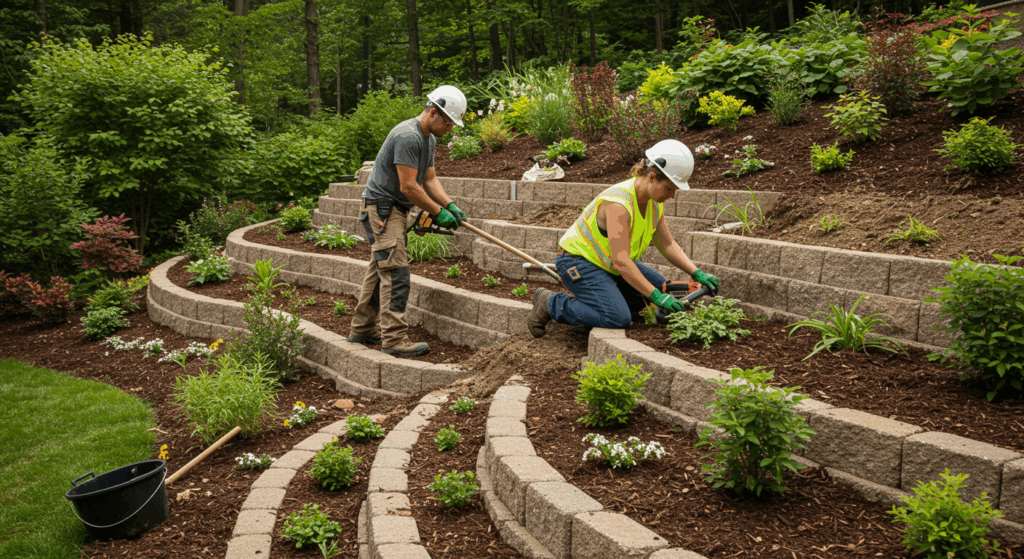
At Doug Greenwood Landscaping Co., we look at the entire property ecosystem. Erosion control isn’t a one-size-fits-all fix—it’s about layering multiple defenses that work together.
Here’s our process:
Step 1: Site Assessment
We evaluate slope, soil type, drainage flow, and plant coverage. Clay-heavy soils behave differently than sandy or loamy ones.
Step 2: Grading and Drainage Design
The land is reshaped so water naturally moves away from foundations. We might install French drains, catch basins, or swales to redirect runoff safely.
Step 3: Stabilization
Once drainage is under control, we stabilize exposed soil using erosion control mats, straw blankets, or hydroseeding (a mix of seed, mulch, and fertilizer sprayed over problem areas).
Step 4: Vegetation and Hardscaping
We add native grasses, groundcovers, or shrubs to hold the soil. On steep slopes, retaining walls, stone terraces, or boulder borders create permanent structural support.
Step 5: Maintenance
Every season brings changes—leaf buildup, freeze-thaw cycles, and heavy spring rains. We provide ongoing care plans to keep erosion solutions working for years.
Top 5 Methods for Erosion Control (Landscaper-Tested)
1. Retaining Walls
These not only prevent soil movement but add character and depth to your yard. Materials like natural stone, brick, or concrete blocks blend beautifully into Rhode Island landscapes.
2. Proper Drainage Systems
A good drainage plan includes French drains, channel drains, or swales—all designed to collect and redirect excess water without damaging your lawn.
3. Ground Cover Plants
Plants are nature’s best defense against erosion. Their roots hold the soil together while softening slopes. Creeping juniper, ivy, and switchgrass are popular options.
4. Mulching and Matting
Mulch helps absorb rain impact and slow down runoff. For larger areas, landscapers use erosion control blankets made from biodegradable fibers.
5. Rock Features (Riprap and Terracing)
Strategic rock placement breaks up water flow, reducing its speed and strength. Riprap—layers of large stone—works especially well near driveways, slopes, or lakefronts.
The Best Plants for Erosion Control
Plants that thrive in erosion-prone areas share a few key traits: strong root systems, drought tolerance, and fast growth.
Here are some of our top picks for Rhode Island homeowners:
- Creeping Phlox – Perfect for sunny slopes and adds vibrant spring color.
- Periwinkle (Vinca minor) – Great for shaded hillsides.
- Switchgrass (Panicum virgatum) – Native, hardy, and ideal for poor soil.
- Hostas – A favorite for shady, damp areas.
- Creeping Juniper – Evergreen coverage that keeps your landscape neat year-round.
Erosion Control for Different Homeowner Types
Young Homeowners (25–34)
You’re often working with small, manageable yards. Focus on budget-friendly solutions like groundcovers, mulching, and compact drainage fixes near patios or walkways.
Established Families (35–49)
With growing families and active outdoor spaces, consider retaining walls or play-area stabilization. Drainage management is key to keeping kids’ areas dry and safe.
Middle-Aged Professionals (50–64)
You value aesthetics and property investment. Combine decorative rock features with native planting for erosion control that doubles as landscape art.
Retirees (65+)
Ease of maintenance is everything. Choose low-maintenance plants and hardscaping that stabilize slopes without constant upkeep.
Commercial Clients (HOAs & Property Managers)
Focus on long-term ROI: drainage networks, erosion blankets, and uniform plantings across properties to maintain safety and compliance.
Local Spotlight: Rhode Island Erosion Control Challenges
From Coventry’s sloped lawns to Narragansett’s coastal properties, erosion is shaped by our New England weather. Freeze-thaw cycles, ocean winds, and dense clay soils make erosion control an ongoing priority.
At Doug Greenwood Landscaping Co., we understand local conditions because we live here. Our solutions are built for Rhode Island’s climate—durable, attractive, and eco-friendly.
Eco-Friendly and Sustainable Erosion Control
We believe that stopping erosion shouldn’t come at nature’s expense. Our team uses native plants, permeable materials, and organic soil stabilization techniques that protect both your property and the environment.
Techniques like rain gardens, bioswales, and natural stone edging not only manage runoff but also support local wildlife and pollinators.
Maintenance Tips to Prevent Erosion Year-Round
- Inspect after heavy storms – Catch early signs of runoff or pooling.
- Add mulch each spring – Keeps soil moist and stable.
- Trim vegetation strategically – Avoid leaving bare spots.
- Clean gutters and downspouts – Direct water safely away.
- Schedule seasonal landscape checks – Professional upkeep prevents minor erosion from becoming major repairs.
People Also Ask (FAQ)
What is the best method for erosion control?
The best method depends on your property’s slope and soil. However, a combination of grading, retaining walls, and groundcover plants is often most effective.
What are the five ways of controlling erosion?
- Proper drainage design
- Retaining walls
- Mulching and matting
- Native planting
- Rock barriers (riprap or terracing)
What are the three types of erosion control?
- Structural (retaining walls, terraces)
- Vegetative (grass, groundcovers)
- Hydrological (drainage systems, rain gardens)
How to stop erosion on a sloped yard?
Combine terracing, native grasses, and mulch blankets to slow water and hold soil. On steeper slopes, retaining walls or boulders may be needed.
What are the best plants for erosion control?
Creeping juniper, switchgrass, and periwinkle are landscaper favorites—strong roots, low maintenance, and great coverage.
Conclusion
Erosion control isn’t just about stopping dirt from sliding downhill—it’s about preserving your home’s foundation, protecting your landscape investment, and creating outdoor spaces that thrive season after season.
At Doug Greenwood Landscaping Co., we bring years of hands-on expertise, eco-friendly methods, and local Rhode Island experience to every project. Whether your property needs a full drainage overhaul or a few strategic slope fixes, our team can design solutions that last—beautifully and sustainably.Ready to protect your yard from erosion? Schedule a consultation today and discover how professional erosion control can transform your property’s stability and curb appeal.