
Best Trees for Rhode Island: Essential Selection and Planting Guide
The best trees are the longest-lived plants you will ever put in the ground. A well-chosen tree planted in the right spot can outlive you. It can shade your house in summer, block winter winds, filter air pollution, and add thousands of dollars to your property value. A poorly chosen tree, however, may drop branches on your roof, crack your driveway with invasive roots, and cost you money every year until you finally remove it.
At Doug Greenwood Landscaping Co., we have been planting trees across Coventry since 1998. Over more than twenty-five years, we have learned which trees thrive in Rhode Island’s climate and soil and which ones struggle regardless of how much care they receive. Here is our guide to choosing, planting, and caring for the right tree.
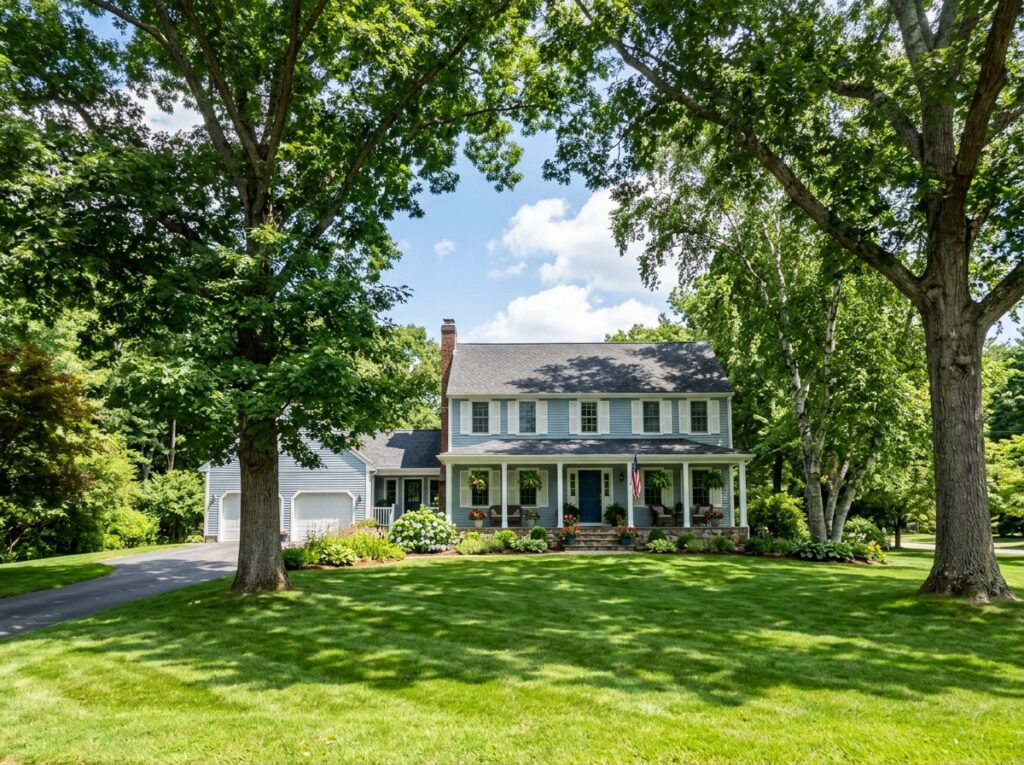
The Best Trees for Rhode Island Properties: Shade Trees
Red Maple is one of the most common native trees in Rhode Island and for good reason. It grows forty to sixty feet tall with a rounded crown. Fall color ranges from bright yellow to deep red depending on the individual tree. Red maple tolerates wet soils better than most shade trees, making it an excellent choice for Coventry properties with drainage issues or low-lying areas. It is also one of the first trees to flower in spring, providing early nectar for pollinators.
Sugar Maple is the classic New England shade tree. It grows sixty to seventy-five feet tall with a dense oval crown. Fall color is brilliant orange and gold that stops traffic in October. Sugar maple needs well-drained soil and does not tolerate compacted soil or road salt. Plant it in a yard with good deep soil, not in a narrow strip between the sidewalk and the street.
Northern Red Oak is a fast-growing native oak reaching sixty to seventy-five feet with a broad rounded crown. Dark green leaves turn russet red in fall. Highly adaptable to a range of soil conditions including the heavy clay soils common in parts of Coventry. It is one of the most dependable large trees for Rhode Island landscapes. Littleleaf Linden grows fifty to sixty feet with fragrant yellow flowers in June that attract bees from across the neighborhood. An excellent street tree for suburban settings.

The Best Trees for Rhode Island Properties: Ornamental and Evergreen
Eastern Redbud is a native understory tree that blooms pink-purple in April before its leaves emerge. It grows twenty to thirty feet tall, making it perfect for smaller Coventry lots where a full-size shade tree would overwhelm the space. Serviceberry offers four-season interest: white spring flowers, edible summer berries, brilliant orange-red fall color, and smooth gray bark in winter.
Kousa Dogwood blooms showy white bracts in June, later than native dogwood, and resists common dogwood diseases. For evergreens, Arborvitae is the go-to privacy screen. ‘Green Giant’ grows three to four feet per year to a mature height of forty to sixty feet. Eastern White Pine, Rhode Island’s state tree, grows quickly with soft blue-green needles. American Holly is a native broadleaf evergreen with spiny dark green leaves and red winter berries that feed birds.
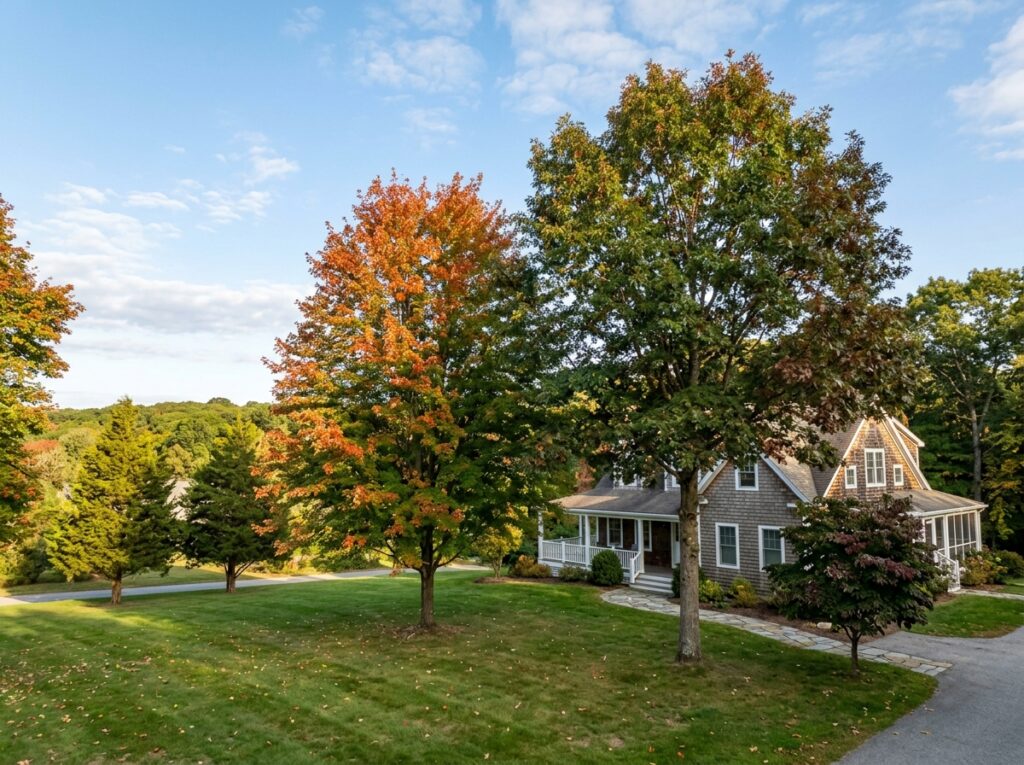
How to Plant the Best Trees for Rhode Island Properties
The most common mistake is planting too deep. The root flare where the trunk widens at the base must be visible above the soil line after planting. Dig a hole two to three times wider than the root ball but no deeper than the root ball itself. Set the tree in the hole so the root flare is at or slightly above ground level. Backfill with the original soil you dug out. Do not amend the backfill with compost or potting soil.
Water deeply once per week for the first two full growing seasons. A slow deep soaking encourages roots to grow down into the native soil. Stop watering in late fall so the tree hardens off properly for winter. A mature shade tree on the south or west side reduces air conditioning costs by fifteen to thirty percent. Evergreens on the north side block winter wind. Trees add three to fifteen percent to resale value.
Get Your Free Tree Consultation →
📞 (401) 336-6032 | 33 Carr St, Coventry, RI 02816