
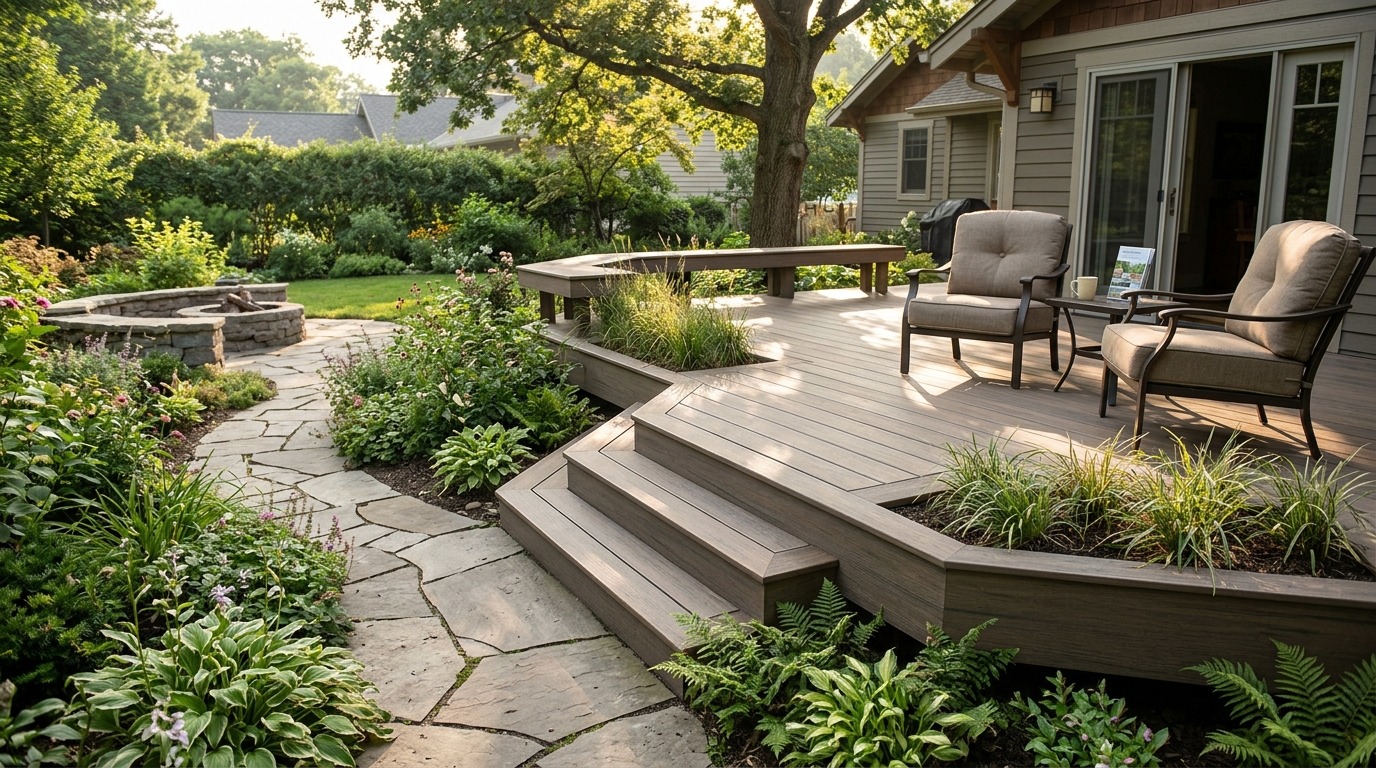
A backyard deck can change how a home is lived in.
It creates a place to step outside without leaving comfort behind. It becomes the setting for quiet mornings, family dinners, and evenings that stretch longer than planned. When designed well, a deck doesn’t feel like an addition—it feels inevitable, as if the yard was always meant to include it.
But not all decks feel that way.
Many homeowners build a deck only to realize later that something is off. It’s the wrong size. It sits in the wrong spot. It doesn’t connect naturally to the yard. Instead of becoming the heart of the backyard, it becomes just another surface.
The difference between a deck that works and one that doesn’t usually comes down to design.
This is why landscapers approach backyard deck design as part of the landscape, not a standalone structure.
The Real Problem: Decks That Don’t Belong
Most deck problems aren’t construction problems.
They’re planning problems.
A deck might be built solidly and still feel disconnected. It may technically function, but it doesn’t invite people to linger. Furniture placement feels awkward. Traffic patterns don’t make sense. The yard beyond the deck feels like a separate space instead of an extension.
The external problem homeowners notice is underuse.
The internal problem is disappointment: “We thought we’d use this more.”
The philosophical problem is simple: if you invest in outdoor living, it should actually improve how you live.
A backyard deck should feel like a natural transition between home and landscape—not a platform dropped into the yard.
You’re the Hero — Your Yard Needs Cohesion
Homeowners know what they want from a deck.
They want a space that feels comfortable, functional, and welcoming. A place that works for everyday life, not just special occasions. They want the deck to connect the house to the yard instead of separating them.
What they often don’t have is a clear vision for how that connection should work.
That’s where a professional landscaper becomes the guide.
At Doug Greenwood Landscaping Co., backyard deck designs are approached with the entire property in mind. The goal isn’t just to build a deck—it’s to create flow between indoor living and outdoor space.
Why Deck Design Starts With the Yard, Not the House
Many decks are designed by focusing only on the home.
While the house matters, the yard matters just as much. Sun exposure, slope, existing features, and how people move through the space all influence how a deck should be designed.
A deck that ignores the yard often feels isolated. One that responds to it feels integrated.
Landscapers evaluate how the deck will relate to lawns, gardens, walkways, and other outdoor features. This ensures the deck becomes part of a larger outdoor experience rather than a dead-end.
How Size Affects Comfort and Use
Deck size is one of the most common sources of regret.
Too small, and the space feels cramped once furniture is added. Too large, and it overwhelms the yard or feels empty when not fully in use.
Professional deck design considers how the space will actually be used. Is it for dining? Lounging? Entertaining? Quiet mornings? Family gatherings?
By designing around real behavior instead of assumptions, landscapers create decks that feel comfortable at all times—not just when they’re empty.
Elevation Changes Everything
The height of a deck affects how it feels.
Low decks feel connected to the yard, almost like an extension of the ground. Elevated decks offer views and separation but require thoughtful transitions to keep the space inviting.
Landscapers pay close attention to elevation. They consider how steps, railings, and sightlines influence movement and comfort. The goal is to make transitions feel natural, not abrupt.
A well-designed elevation turns a deck into a destination instead of a barrier.
Why Flow Matters More Than Features
Many homeowners focus on deck features—materials, railings, finishes.
These matter, but they don’t make a deck successful on their own.

Flow determines success.
Flow is how people move from the house to the deck, from the deck to the yard, and from one area of the deck to another. Poor flow creates bottlenecks and unused corners. Good flow encourages natural movement and conversation.
Landscapers design decks to support flow first. Features come second.
Materials Shape the Experience
Deck materials influence more than appearance.
They affect temperature, maintenance, and how comfortable the space feels underfoot. Some materials absorb heat. Others stay cooler. Some require frequent upkeep. Others weather naturally over time.
Landscapers help homeowners choose materials that match how the deck will be used and how much maintenance they’re comfortable with.
The right materials make the deck enjoyable long after installation—not just visually appealing at first.
Backyard Decks as Outdoor Rooms
The best decks don’t feel like platforms.
They feel like rooms.
Defined spaces within a deck—such as dining areas, seating zones, or quiet corners—make the space more usable and inviting. These “rooms” don’t require walls. They’re created through layout, furniture placement, and connection to surrounding features.
Professional design gives decks structure without confinement, allowing them to feel open yet purposeful.
How Decks Enhance Landscape Design
A backyard deck should work with the landscape, not compete with it.
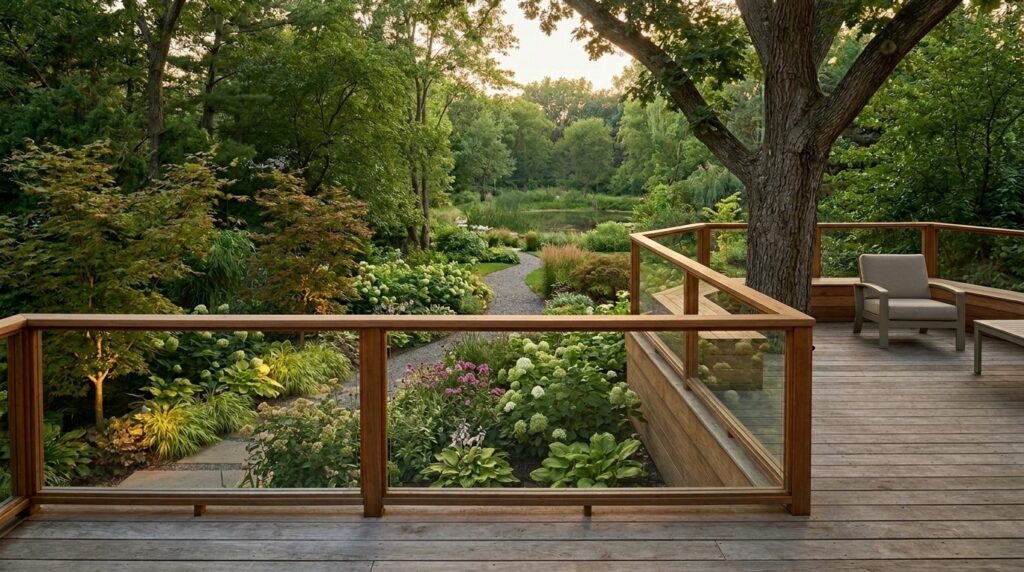
When designed correctly, the deck frames views, highlights plantings, and directs attention outward. It becomes a vantage point rather than a focal distraction.
Landscapers design decks to enhance what’s already there—trees, gardens, and natural features—so the entire yard feels cohesive.
This integration is what separates custom deck design from generic construction.
Avoiding Common Deck Design Mistakes
Many deck issues show up after installation.
The deck blocks important views. It sits in constant sun with no relief. It feels exposed or disconnected. Furniture doesn’t fit the space comfortably.
These problems aren’t inevitable. They’re the result of skipping design planning.
Professional landscapers avoid these mistakes by thinking through how the deck will be used in real life—across seasons, times of day, and changing needs.
The Simple Plan Behind Backyard Deck Design
A successful backyard deck follows a clear process.
First, the yard is evaluated for layout, sun, and flow.
Next, the deck is designed to connect home and landscape naturally.
Finally, materials and details are selected to support long-term use.
This plan ensures the deck feels intentional and balanced from day one.
Why Backyard Decks Matter in Rhode Island
Rhode Island’s seasons make outdoor living especially valuable.
Warm months are precious, and decks help homeowners make the most of them. At the same time, weather changes demand durable design and materials that hold up over time.
Local knowledge matters when designing decks that perform well here. Understanding sun angles, moisture, and seasonal use leads to better results and longer-lasting enjoyment.
A Deck That Feels Like It Belongs
A backyard deck shouldn’t feel like an add-on.
It should feel like the space you were missing.
When designed by a professional landscaper, a backyard deck becomes more than a structure. It becomes a connector—between indoors and outdoors, between people and place.
If your yard feels underused or disconnected, the solution may not be more landscaping.
It may be a deck designed to bring everything together.