
Lawn Insect and Disease Control in Coventry RI: Protect Your Grass
You water, you mow, you fertilize — and still, patches of your lawn turn brown or die for no obvious reason. The culprit is often hidden: insects feeding on the roots, or a fungal disease spreading through the grass. At Doug Greenwood Landscaping Co., we diagnose and treat lawn insects and diseases for Coventry and Kent County homeowners, protecting your lawn before the damage becomes irreversible.
Common Lawn Insects in Rhode Island
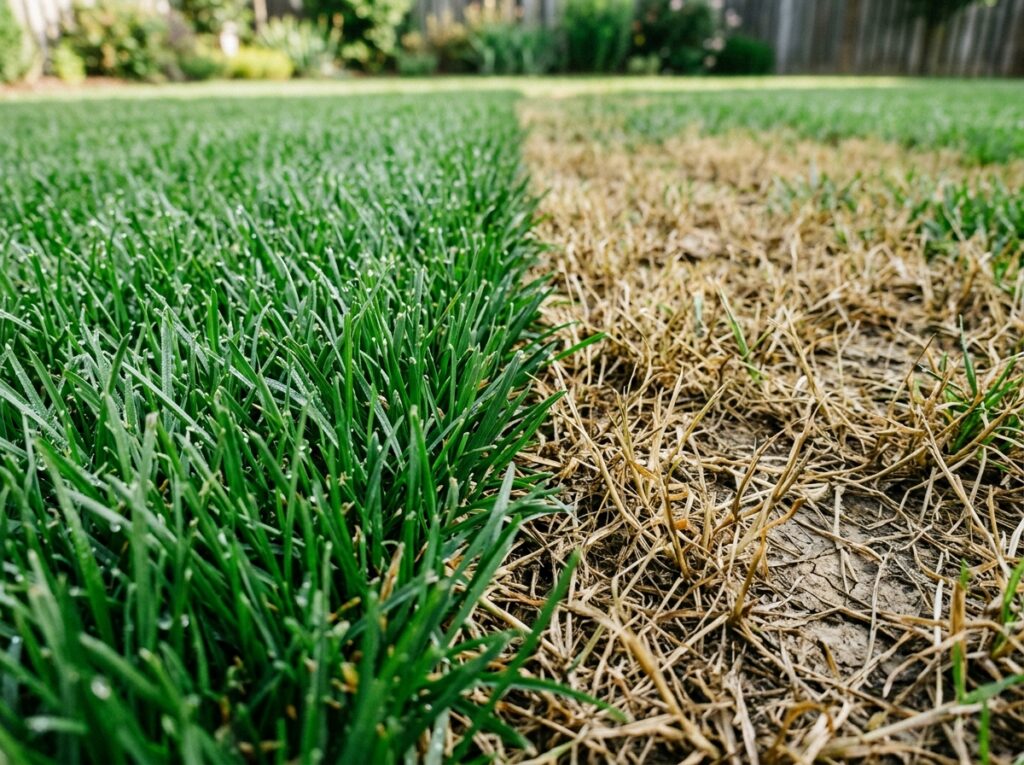
Grubs are the most destructive lawn insect in our area. These are the larvae of Japanese beetles and other beetles, and they feed on grass roots just below the soil surface. A grub infestation shows up as irregular brown patches that lift up easily like a carpet, because the roots have been eaten away. Left untreated, grubs can destroy large sections of lawn in a single season. Other common pests include chinch bugs, sod webworms, and billbugs, each causing their own distinct pattern of damage.
The key to insect control is early detection. We inspect your lawn for signs of infestation, identify the specific pest, and apply targeted treatment at the right stage of the insect’s life cycle. Preventative grub control in early summer is far more effective — and far cheaper — than trying to repair a destroyed lawn later.
Lawn Diseases and Fungus
Rhode Island’s humid summers create perfect conditions for lawn fungus. Brown patch, dollar spot, and red thread are the most common diseases we see in Coventry lawns. They appear as discolored rings, spots, or patches that spread over time. Fungal diseases are often triggered or worsened by overwatering, poor drainage, or mowing with dull blades. Treating the disease requires both addressing the underlying conditions and applying the right fungicide when necessary.
Our Treatment Approach
We take a systematic approach to lawn health. First, we identify the specific problem through inspection. Then we apply the correct treatment — insecticide for pests, fungicide for disease — at the proper time and rate. Finally, we recommend cultural practices that prevent recurrence, such as adjusting watering, improving drainage, aerating compacted soil, and mowing at the correct height. Treating the cause, not just the symptom, is what keeps your lawn healthy long-term.
Don’t Let Pests Destroy Your Lawn
Lawn insects and diseases can quickly turn a beautiful lawn into a patchy mess, but early professional treatment stops the damage and helps your grass recover. Doug Greenwood Landscaping Co. has been protecting Rhode Island lawns since 1998. If your lawn has brown patches, thinning areas, or just does not look right, let us diagnose the problem and recommend a solution.
The Life Cycle of Grubs and Why Timing Matters
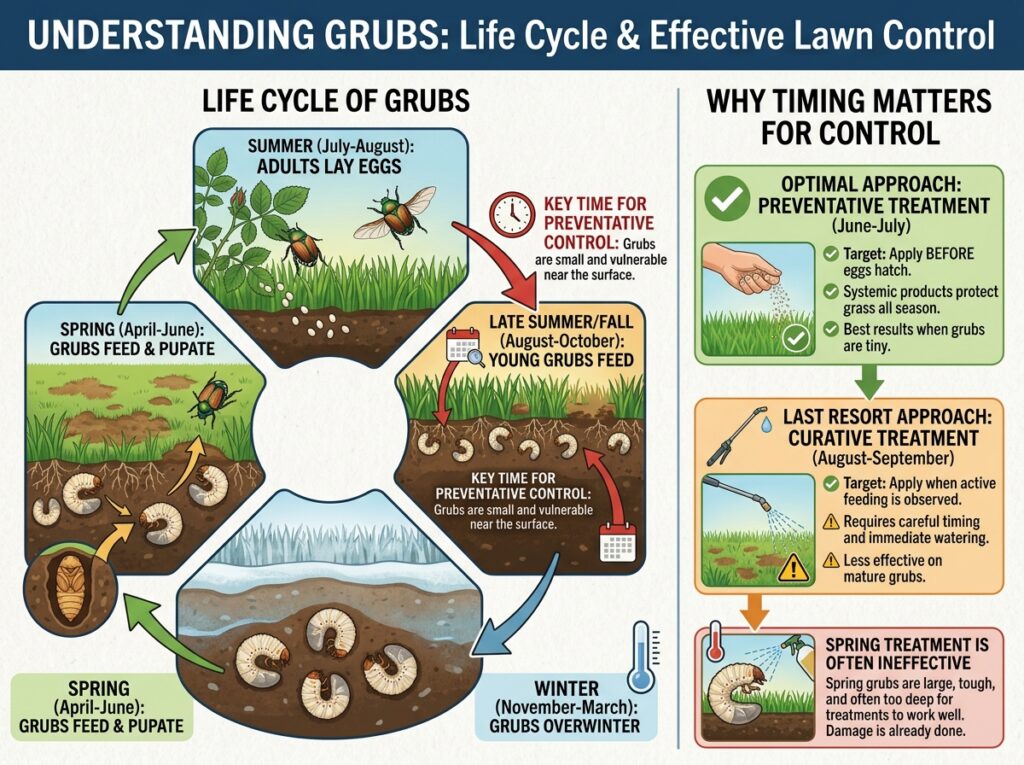
Understanding the grub life cycle is key to effective control. Adult Japanese beetles emerge in early summer and lay eggs in your lawn. Those eggs hatch into grubs in mid to late summer, and the young grubs feed voraciously on grass roots through the fall before burrowing deeper to survive winter. In spring, they rise toward the surface to feed briefly before pupating into adult beetles, and the cycle begins again.
This timing dictates when treatment is most effective. Preventative treatments applied in early summer, before eggs hatch, stop grubs before they can cause damage. Curative treatments applied in late summer and early fall kill actively feeding grubs but require the damage to already be underway. That is why we recommend a preventative approach — it is cheaper, more effective, and protects your lawn before problems start.
Diagnosing the Problem: Inspection Comes First
Before we apply any treatment, we identify exactly what is causing your lawn’s distress. Brown patches can be caused by grubs, but they can also be caused by drought, dog urine, fungal disease, or simple compaction. Treating the wrong problem wastes time and money and does not fix your lawn. Our team inspects your lawn, examines affected areas closely, and sometimes tests the soil or examines the roots to confirm the diagnosis before recommending a course of action.
Protect Your Lawn With Expert Care
Lawn insects and diseases can quickly turn a beautiful lawn into a patchy mess, but early professional treatment stops the damage and helps your grass recover. Doug Greenwood Landscaping Co. has been protecting Rhode Island lawns since 1998. If your lawn has brown patches, thinning areas, or just does not look right, let us diagnose the problem and recommend a solution. Contact us today for a professional lawn health assessment.
Other Common Rhode Island Lawn Pests
Beyond grubs, several other insects trouble local lawns. Chinch bugs feed on grass blades, injecting a toxin that causes yellow patches that spread in hot, dry weather. Sod webworms are small caterpillars that chew grass blades at night, leaving ragged, thin areas. Billbugs are weevils whose larvae feed inside the grass stem, causing dead patches that resemble drought stress. Each requires accurate identification and a specific treatment approach — which is why professional diagnosis matters so much.
The Value of a Proactive Lawn Care Plan
Reactive treatment is always more expensive than prevention. By the time you notice large brown patches, the damage is already done and repair will take time. A proactive lawn care plan — regular inspections, preventative treatments, and good cultural practices — keeps problems from developing in the first place. Doug Greenwood Landscaping Co. can build a year-round plan that protects your lawn and gives you peace of mind. Contact us today to get started.
Why Local Experience Matters
Rhode Island’s specific combination of humid summers, clay soils, and cool-season grasses creates a distinct set of lawn challenges that differ from other regions. A lawn care provider who understands these local conditions — the timing of grub emergence in Kent County, the fungal diseases that thrive in our summer humidity, the grass varieties that grow best in our soil — can diagnose and treat problems far more effectively than a generic service. Doug Greenwood Landscaping Co. has been working with Rhode Island lawns since 1998. That local experience means we know what to look for and how to fix it, right the first time.
If your lawn is showing signs of trouble, do not wait for the damage to spread. Contact Doug Greenwood Landscaping Co. today. We will identify the problem, treat it effectively, and help you build a lawn that stays healthy and beautiful season after season.

The Science of a Healthy Lawn
A healthy lawn is not an accident — it is the result of understanding how grass grows, what it needs, and what threatens it. We bring that understanding to every lawn we care for. From soil biology to insect life cycles to fungal disease patterns, we apply real knowledge to keep your lawn healthy. This science-based approach is why our lawns resist problems better and recover faster when issues do occur.
You do not need to become a lawn scientist — that is our job. You just need a partner who understands lawn health and cares about your property. Contact Doug Greenwood Landscaping Co. today and let us put that knowledge to work for your lawn.
Frequently Asked Questions About Lawn Health
How do I know if I have grubs?
The telltale sign is an irregular brown patch where the grass lifts up easily, like a carpet, because the roots have been eaten. You may also notice skunks or raccoons digging in your lawn at night — they are hunting for grubs. If you see these signs, contact us for an inspection.
Can a damaged lawn recover?
Yes. With proper treatment to eliminate the pest or disease and good cultural care — watering, fertilization, and overseeding — most lawns recover within a season. The key is catching the problem early before large areas are destroyed.
Are lawn treatments safe for pets and children?
When applied correctly by licensed professionals, lawn treatments are safe. We use products responsibly, apply them at the correct rates, and provide clear guidance on when it is safe to return to the treated area.
What causes brown patch fungus?
Brown patch thrives in hot, humid conditions, especially when lawns are overwatered or watered in the evening. Keeping water on the grass overnight creates perfect conditions for fungal growth. Proper watering habits — early morning, deep and infrequent — are the best prevention.
How can I prevent lawn problems in the first place?
The best defense is a thick, healthy lawn. Proper mowing height, deep infrequent watering, regular fertilization, annual aeration, and overseeding all build a lawn that resists pests and disease naturally. We can help you establish a maintenance program that keeps your lawn healthy year-round.