
Fall Landscape Preparation: Ultimate Guide to Protect Your Rhode Island Yard
Fall in Rhode Island is beautiful. The leaves turn, the air cools, and for a few weeks in October the entire state looks like a postcard. But for homeowners, fall is also the most important season for landscape maintenance. What you do between September and November determines how your lawn and landscape look next spring. At Doug Greenwood Landscaping Co., fall is our busiest season for a reason. Coventry homeowners who invest in fall preparation save money on spring repairs, avoid costly winter damage, and enjoy a faster green-up when warm weather returns. Here is our complete fall preparation checklist.
Leaf Removal: More Important Than You Think
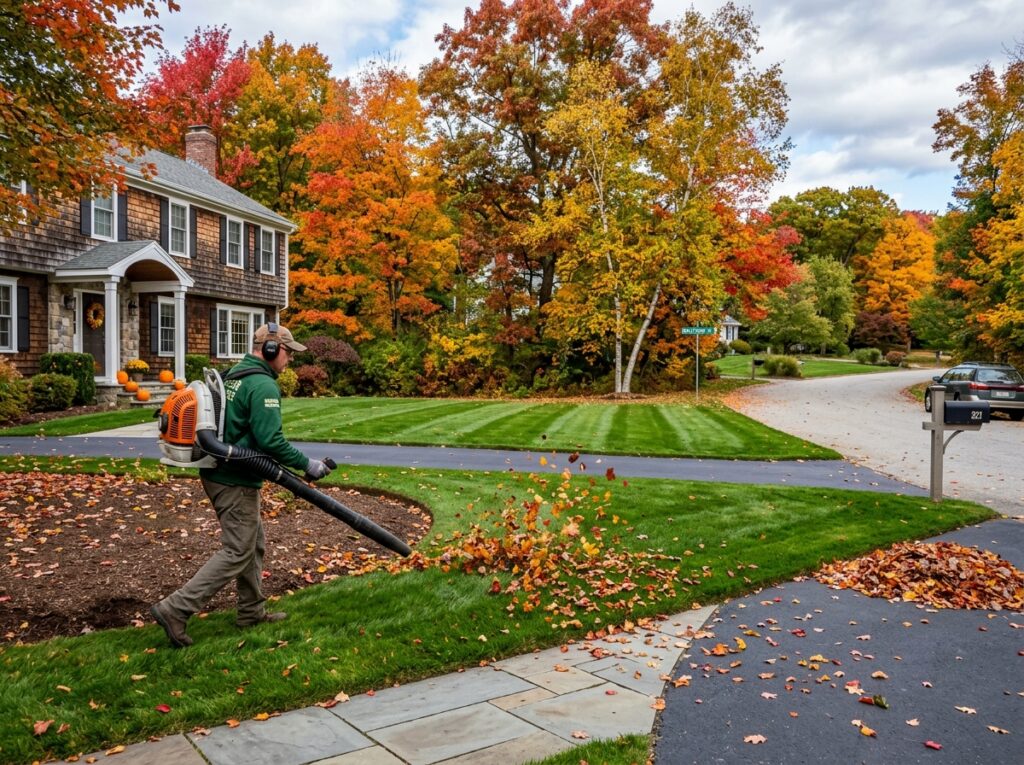
Leaves are the most visible fall task and the one most people underestimate. A thin layer of mulched leaves adds organic matter to the soil and is good for the lawn. A thick layer of wet leaves smothers grass, blocks sunlight, promotes snow mold, and creates a breeding ground for fungal diseases that will be waiting when the snow melts. In Coventry, most properties have mature trees that drop more leaves than any lawn can handle naturally. You have three options: rake and bag, mulch with your mower, or hire a professional cleanup service. Mulching works well for light leaf cover. For heavy cover, which is typical in Rhode Island, removal followed by a final mulch pass produces the best results. Do not wait until every leaf has fallen before you start. Leaves that sit on the lawn for weeks trap moisture against the grass blades and block the last weeks of fall sunlight. A mid-season cleanup in October followed by a final cleanup in November keeps the lawn breathing through the fall.
Winterize Irrigation and Fall Aeration
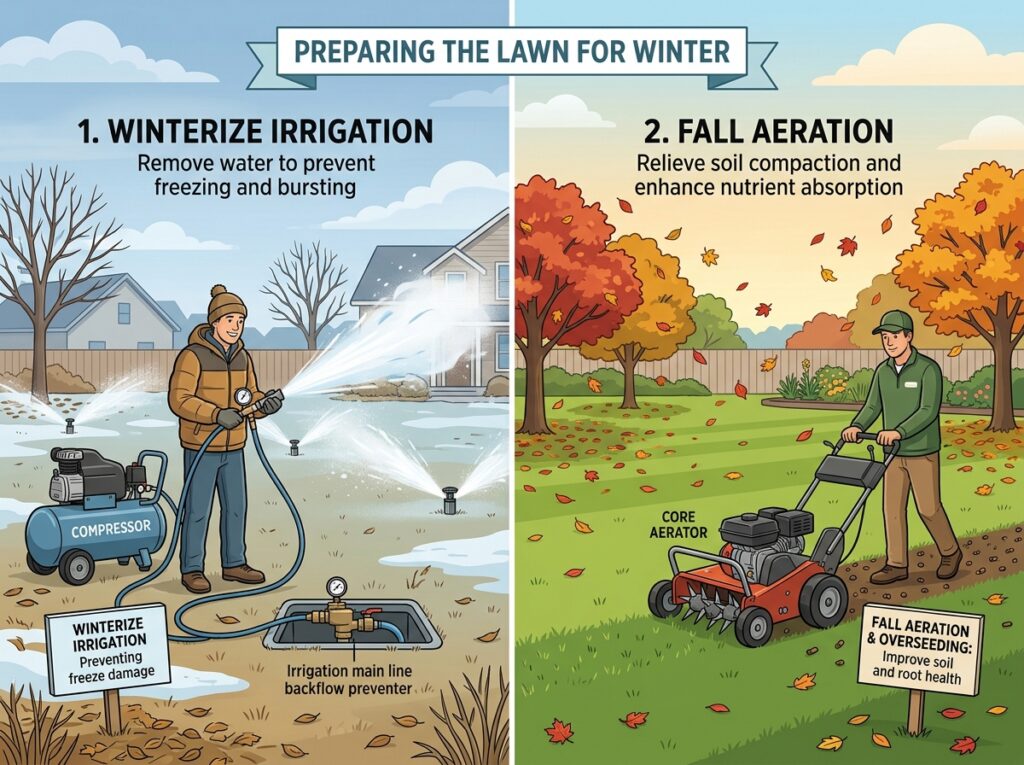
Water left in irrigation lines freezes, expands, and cracks PVC pipes and sprinkler heads. By the time you discover the damage in spring, you are looking at hundreds of dollars in repairs. Proper winterization involves shutting off the water supply, draining the backflow preventer, and blowing out each zone with compressed air until only air comes out of the heads. In Coventry, irrigation systems should be winterized by mid-October. September is the best month for core aeration in Rhode Island. The summer heat has broken and the soil is still warm, which means grass roots grow rapidly into the holes left by aeration. Following aeration with overseeding fills in thin areas. Apply a winterizer fertilizer higher in potassium to strengthen cell walls.
Pruning, Mulching, and Cutting Back
Fall is the right time to prune most deciduous trees and shrubs. Remove dead, diseased, or crossing branches first. Apply winter mulch after the ground begins to freeze in late November, not before — mulching too early traps heat and delays dormancy. Wrap young trees with trunk guards and burlap-wrap broadleaf evergreens. Cut back most perennials to two to three inches but leave ornamental grasses and seed-head plants standing for winter interest and wildlife. Disconnect hoses, drain ceramic pots, shut off outdoor spigot valves, and mark driveway edges with reflective stakes so you know where to plow after the first snow.
Schedule Your Fall Cleanup Today →
📞 (401) 336-6032 | 33 Carr St, Coventry, RI 02816