
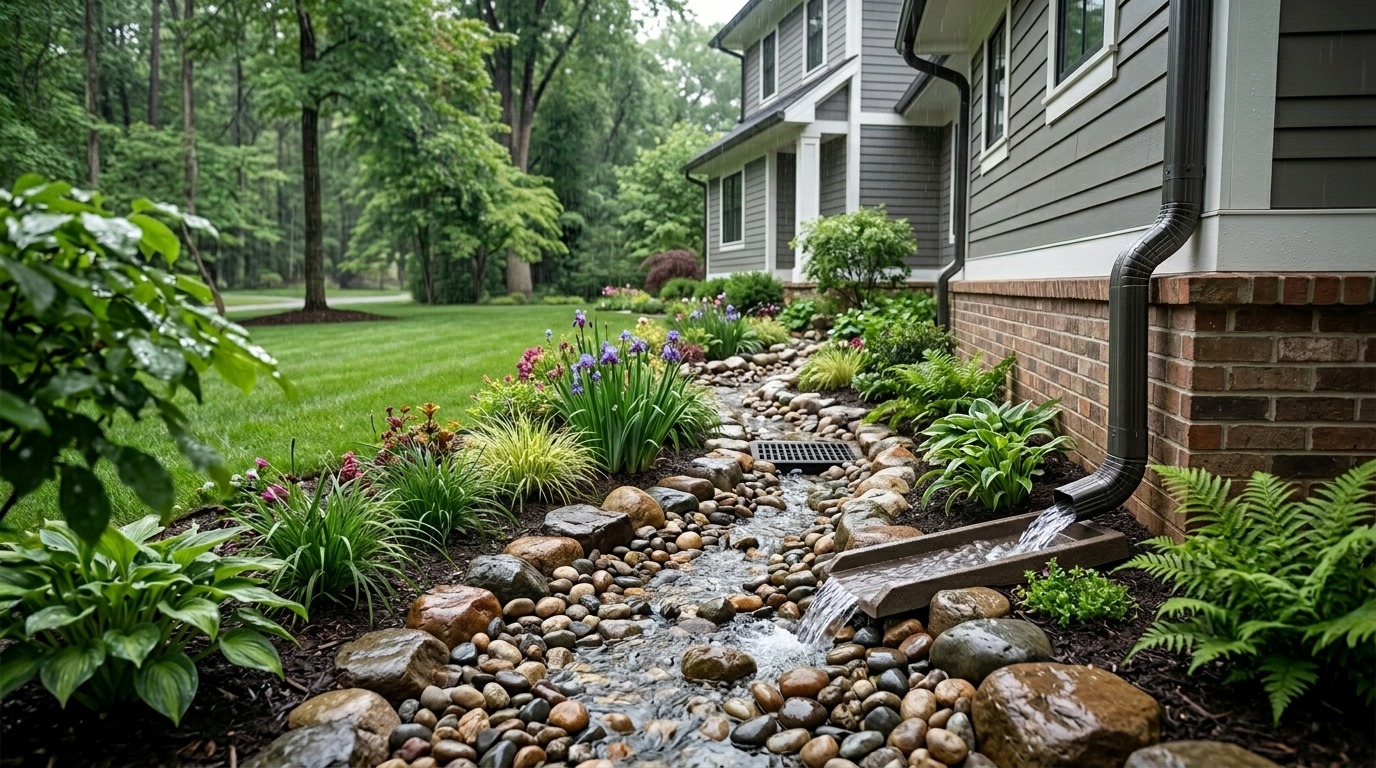
Rain doesn’t just fall—it moves.
And once it hits your roof, it moves fast.
Gutters are designed to catch that water and guide it away from your home. But what happens after that is just as important as the gutters themselves. If water isn’t properly directed once it reaches the ground, it can create a chain reaction of problems that affect your yard, your foundation, and your landscape.
This is where gutter drainage landscaping becomes essential.
It’s not just about moving water away—it’s about managing where it goes next.
The Real Problem: Water Has Nowhere to Go
Most gutter systems work fine at the roofline.
The issue starts at the bottom.
Downspouts release concentrated water in a small area. Without proper planning, that water saturates the soil, erodes landscaping, and begins to travel in unintended directions. Over time, it may pool near the foundation, damage plant beds, or carve paths through the yard.
The external problem is visible: puddles, erosion, or muddy areas.
The internal problem is concern: “Is this damaging my home?”
The philosophical problem is simple: water should be controlled—not left to cause problems.
Gutter drainage landscaping solves this by giving water a clear, safe path.
You’re the Hero — Your Home Needs Protection
Homeowners don’t think about drainage every day.
But they notice when something feels off—when water collects where it shouldn’t, when soil washes away, or when plants struggle near downspouts.
What they need isn’t a temporary fix.
They need a system.
That’s where a professional landscaper becomes the guide.
At Doug Greenwood Landscaping Co., gutter drainage landscaping is designed to protect both the home and the surrounding yard. The goal isn’t just to move water—it’s to manage it in a way that supports long-term stability.
Why Gutters Alone Aren’t Enough
Gutters solve only part of the problem.
They collect water from the roof and direct it downward, but they don’t determine where that water ultimately ends up. Without proper ground-level drainage, the water simply shifts from one problem area to another.
This is why some homes experience erosion or pooling despite having functional gutters.
Landscapers look beyond the gutter system to address the full path of water flow—from roof to ground to final drainage point.
How Concentrated Water Damages Landscapes
When water exits a downspout, it’s concentrated.
Instead of spreading out naturally, it hits the ground with force. This repeated impact breaks down soil structure, displaces mulch, and weakens plant roots. Over time, the area becomes compacted or eroded, making it even harder for water to absorb properly.
This cycle leads to visible damage and ongoing maintenance issues.
Gutter drainage landscaping prevents this by dispersing water safely and evenly.
Why Foundation Protection Starts Outside
Water near a foundation is a long-term risk.
Even small amounts, when repeated over time, can lead to cracks, moisture buildup, and structural concerns. The problem often begins quietly, with water collecting just a few feet from the home.
Proper drainage moves water farther away, reducing pressure on the foundation and preventing gradual damage.
Landscapers design drainage systems with this protection in mind, ensuring water is redirected before it becomes a problem.
The Role of Grading in Gutter Drainage
Water follows the path of least resistance.
If the ground slopes toward the house, water will move in that direction—regardless of where gutters are placed. This is why grading plays such an important role in gutter drainage landscaping.
Landscapers evaluate how the land slopes and adjust it when necessary. Even small grading changes can significantly improve water movement and prevent pooling.
Proper grading works with gravity instead of fighting it.
Why Drainage Solutions Must Be Customized
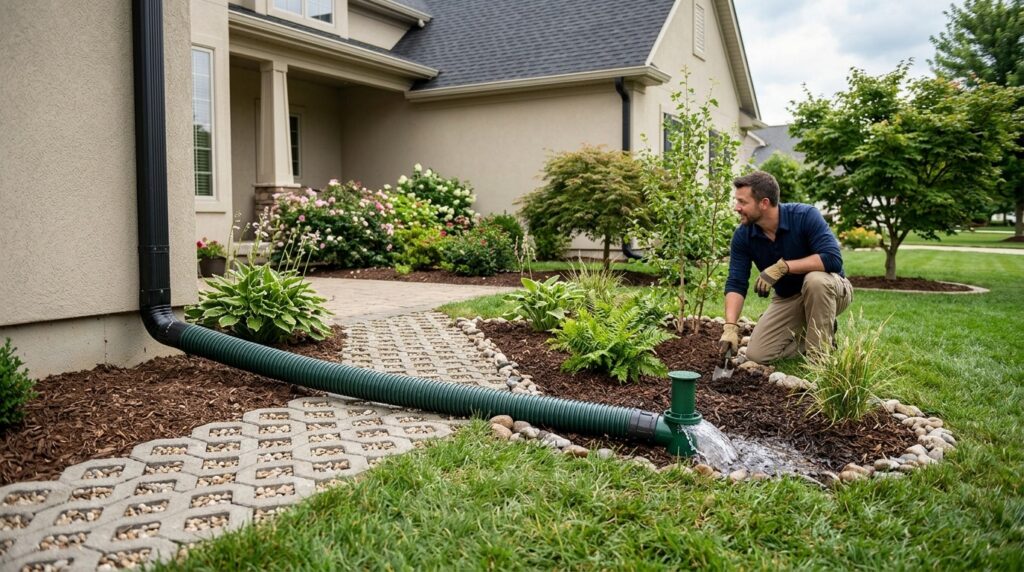
No two properties handle water the same way.
Soil type, yard layout, existing landscaping, and surrounding structures all influence how water behaves. A solution that works for one home may fail completely on another.
This is why effective gutter drainage landscaping is always customized.
Landscapers design systems based on how water actually moves through your property, not based on generic solutions.
How Landscapers Think About Water Flow
Landscapers don’t just look at where water collects.
They look at where it comes from, how it travels, and where it should go.
This full-picture approach allows them to design drainage systems that handle both everyday rain and heavier storms. Instead of reacting to problems, they prevent them.
Understanding water flow is what makes professional drainage solutions effective and lasting.
Why DIY Drainage Fixes Often Fall Short
Gutter drainage issues can seem simple.
A splash block here. A short extension there. These fixes may help temporarily, but they rarely address the full problem.
Without understanding grading, soil absorption, and long-term water patterns, DIY solutions often shift the problem instead of solving it.
Professional landscapers take a system-based approach, ensuring all elements work together.
The Long-Term Benefits of Proper Drainage
When gutter drainage is handled correctly, the entire landscape benefits.
Soil remains stable. Plants grow more consistently. Maintenance becomes easier. Water no longer creates surprise issues after storms.
Most importantly, the home itself stays protected.
These benefits add up over time, making proper drainage one of the most valuable investments in a property.
The Simple Plan Behind Gutter Drainage Landscaping
Professional drainage follows a clear process.
First, the property is evaluated to understand how water moves from the roof to the ground.
Next, solutions are designed to redirect and disperse water safely.
Finally, the landscape is adjusted to support long-term performance.
This plan ensures water is managed at every stage—not just at the gutter.
Why Drainage Matters in Rhode Island
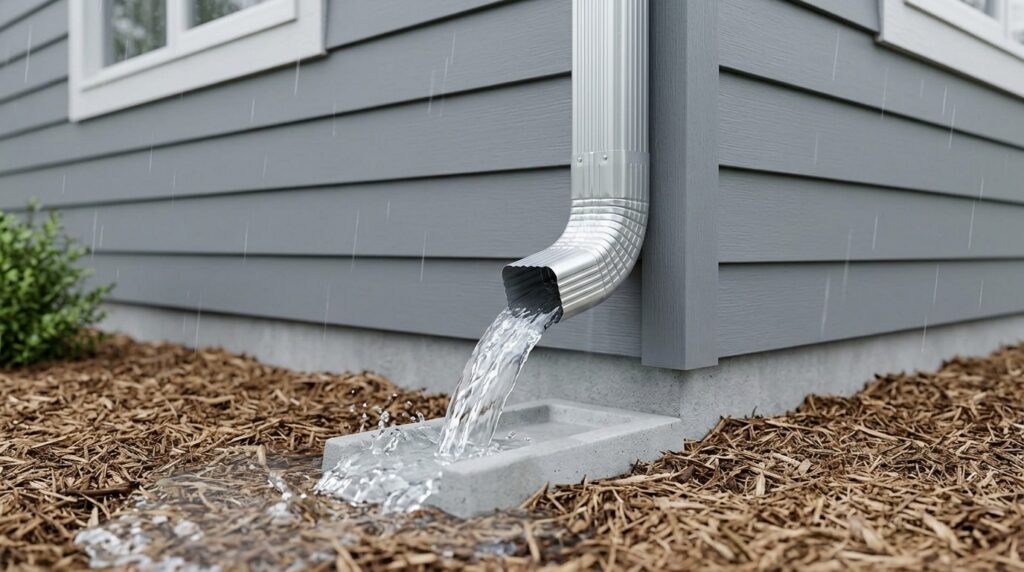
Rhode Island’s weather creates constant drainage challenges.
Heavy rain, snowmelt, and seasonal temperature changes all affect how water behaves. Soil conditions can shift quickly, especially after storms.
Local landscapers understand these patterns and design drainage systems that hold up under changing conditions.
This regional experience makes a measurable difference in performance.
A Yard That Handles Water the Right Way
Water isn’t the problem.
Uncontrolled water is.
With proper gutter drainage landscaping, rain becomes manageable instead of destructive. It flows where it should, supports the landscape, and protects the home.
If water has been creating issues around your property, the solution isn’t more temporary fixes.
It’s a plan that works from top to bottom.